

NASA ISRO NISAR Satellite launched by GSLV-F16 on 30 July 2025 marks a new era in Earth observation. Learn how this dual-frequency radar satellite will aid in climate monitoring, disaster prediction, and development planning.
ISRO’s Historic Launch of Earth Observation Satellite NISAR
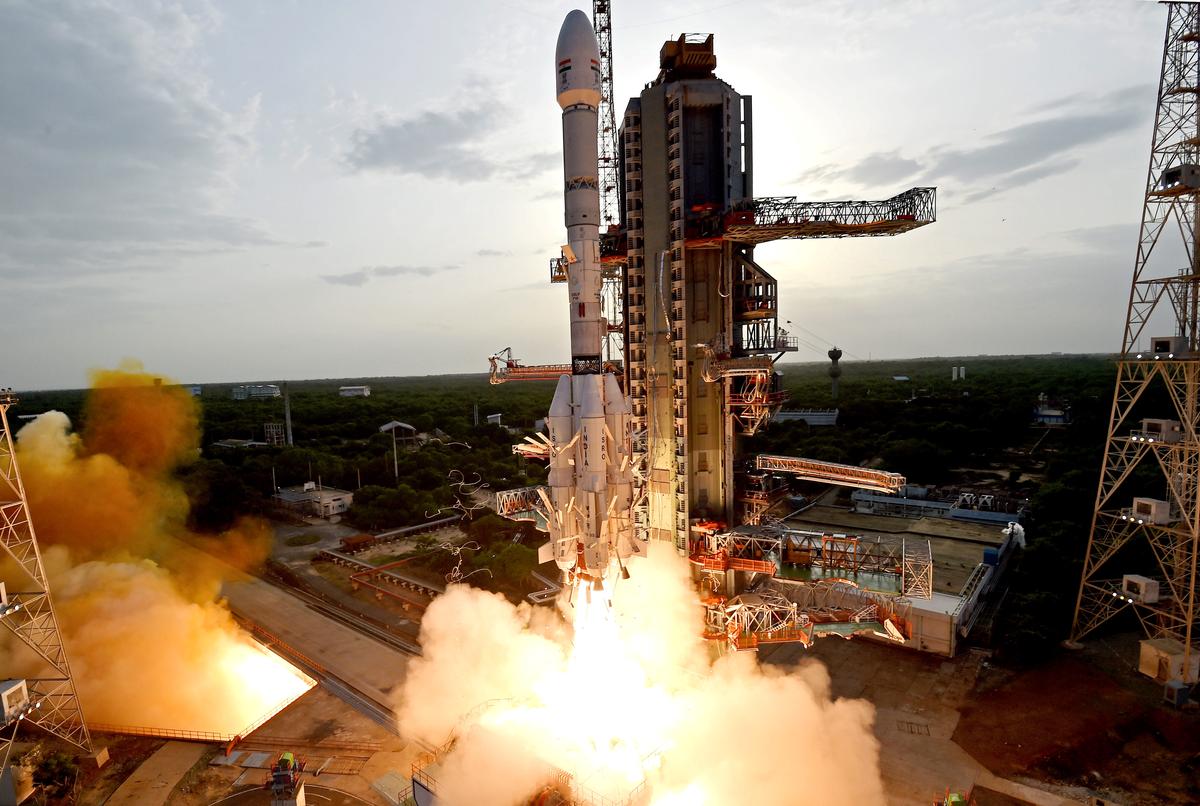
India on 30 July 2025 achieved a landmark in space research by successfully launching the Nasa‑ISRO Synthetic Aperture Radar (NISAR) satellite from its Satish Dhawan Space Centre aboard the GSLV‑F16 rocket
Joint NASA‑ISRO Mission for Earth Observation
Developed as a joint collaboration between NASA and ISRO, NISAR marks the first mission with dual-frequency Synthetic Aperture Radar (SAR)—an L‑band radar by NASA and an S‑band radar by ISRO—integrated on a single satellite
Precision Monitoring of Earth’s Surface
Operating in a sun‑synchronous polar orbit at approximately 747 km altitude, NISAR can revisit nearly all land and ice-covered areas globally every 12 days, detecting surface movements as small as 1 cm, regardless of weather or light conditions
Technical and Financial Overview
The mission, with an estimated cost of US $1.3 – 1.5 billion, is funded predominantly by NASA (~US $1.2 billion) and partially by ISRO (~US $90–91 million) This project underscores a decade-long partnership beginning in the early 2010s and formalized in 2014
Strategic Impacts and Applications
NISAR supports critical applications such as monitoring glacial melt, forest biomass, groundwater changes, and seismic or volcanic activities. Its data is expected to revolutionize disaster response, urban planning, agriculture, coastal management, and more, supporting science-based national development
First GSLV Mission to Sun‑Synch Orbit
For ISRO this marks the 18th GSLV mission and the 12th using cryogenic Mk II variant, and notably the first GSLV mission successfully deploying a satellite into sun‑synchronous polar orbit
Commissioning Phase and Future Predictions
Currently in a 90‑day commissioning phase, NISAR is in final calibration and system validation. Full mission operations are slated to begin by October 2025, with a planned mission lifespan of 3 to 5 years
Why This News Is Important
Enhanced Disaster Preparedness and Climate Action
With its centimeter‑level accuracy and all-weather SAR capability, NISAR provides critical real‑time data for identifying early warning signs of earthquakes, floods, landslides, glacial retreats, and coastal erosion. Timely insights can save lives and infrastructure, making it an essential tool for disaster risk management and climate resilience across India and globally
Strengthening India‑US Scientific Diplomacy
The mission symbolizes deepening scientific and diplomatic relations between India and the United States. It showcases India’s growing prowess in low‑cost, high‑impact space missions and underlines the strategic importance of international cooperation in tackling global challenges
Boost to National Exam Relevance
For aspirants preparing for state and national-level competitive exams, topics such as Earth observation, space diplomacy, satellite technology, and climate monitoring are increasingly relevant in general studies, current affairs, science, infrastructure, and disaster management sections.
Historical Context
Long-Term Collaboration and Delays
The NISAR mission traces back to early strategic discussions in the 2010s, gaining formal momentum with the 2014 NASA‑ISRO agreement. Though initially scheduled for launch in March 2024, the mission was delayed due to technical modifications—including the application of a reflective coating on NISAR’s radar reflector, requiring transport to JPL in California and back
GSLV Programme Milestone
NISAR is a milestone in the evolution of India’s Geosynchronous Satellite Launch Vehicle (GSLV) programme, particularly marking the first successful placement of a heavy payload into sun-synchronous polar orbit by a GSLV-Mk II variant, highlighting ISRO’s growing expertise in cryogenic propulsion and multi-stage rocket systems
Key Takeaways from NISAR Mission
Key Takeaways from NISAR Satellite Launch
| Sr No. | Key Takeaway |
|---|---|
| 1 | NISAR is the first satellite with dual‑frequency SAR jointly developed by NASA (L‑band) and ISRO (S‑band). |
| 2 | It was launched on 30 July 2025 using ISRO’s GSLV‑F16 into a sun‑synchronous polar orbit. |
| 3 | Capable of centimeter‑level surface movement detection, through clouds and day/night cycles. |
| 4 | Costing US $1.3–1.5 billion, mostly funded by NASA, it exemplifies international space collaboration. |
| 5 | NISAR’s applications include climate tracking, disaster readiness, urban planning, and agricultural mapping. |
FAQs: Frequently Asked Questions
1. What is the NISAR satellite?
NISAR (NASA-ISRO Synthetic Aperture Radar) is a joint Earth observation satellite developed by NASA and ISRO, designed to track environmental changes, natural disasters, and surface deformations with high precision.
2. Why is the NISAR mission important?
It is the world’s first dual-frequency SAR satellite, enabling all-weather, day-night observation of Earth’s surface changes with centimeter-level accuracy. It helps in disaster management, climate monitoring, and infrastructure development.
3. When and where was NISAR launched?
NISAR was launched on 30 July 2025 from the Satish Dhawan Space Centre (SDSC), Sriharikota using ISRO’s GSLV-F16 rocket.
4. What are the applications of NISAR for India?
NISAR will be instrumental in glacier monitoring, forest biomass measurement, groundwater change tracking, urban planning, agriculture, flood forecasting, and seismic activity analysis.
5. How is this relevant for government exam aspirants?
NISAR is relevant to subjects like General Science, Geography, Environment & Ecology, and Current Affairs, often asked in UPSC, State PSCs, Railways, SSC, Banking, Defence, and Teaching exams.
Some Important Current Affairs Links

