
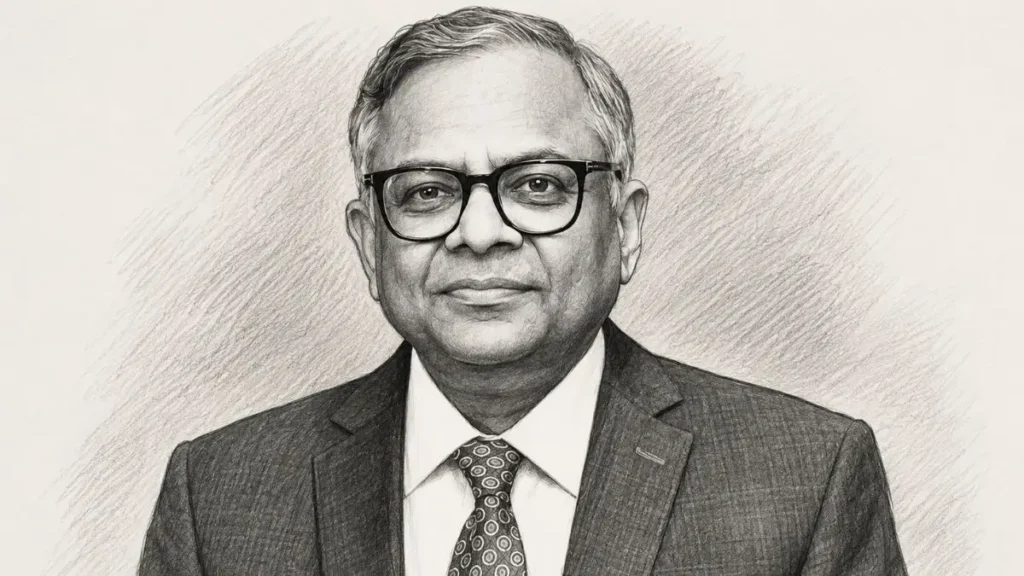
N Chandrasekaran Tata Sons chairman update: Know why N. Chandrasekaran will not seek reappointment, his tenure end date, Tata Sons succession process and key exam facts.
N Chandrasekaran Announces Decision to Leave Tata Sons Leadership
Natarajan Chandrasekaran, popularly known as N. Chandrasekaran, has announced that he will not seek reappointment as Chairman of Tata Sons after his current tenure ends on February 20, 2027. The announcement marks a significant leadership transition for the Tata Group, one of India’s largest and most diversified business conglomerates. Chandrasekaran has also asked the Tata Sons board to begin the succession process to facilitate a smooth transition.
Reason Behind Chandrasekaran’s Decision
The decision followed the absence of unanimous support for extending Chandrasekaran’s tenure. According to the details reported after his announcement, the Sir Dorabji Tata Trust and Sir Ratan Tata Trust had supported a further five-year term, but the proposal considered by the Tata Sons Nomination and Remuneration Committee and the board did not receive unanimous support when it was discussed on February 24, 2026. Chandrasekaran subsequently decided not to offer himself for reappointment.
Chandrasekaran’s Long Association with the Tata Group
Chandrasekaran began his career with the Tata Group in 1987. He later became Chief Executive Officer and Managing Director of Tata Consultancy Services (TCS) in 2009 and assumed the chairmanship of Tata Sons in 2017. His elevation was particularly significant because he became the first professional executive from outside the traditional Tata family leadership structure to head the group.
Expansion of Tata Group Under His Leadership
During Chandrasekaran’s tenure, the Tata Group expanded its activities across several strategically important sectors, including technology, automobiles, steel, aviation, defence, electronics and semiconductors. His chairmanship also coincided with major initiatives involving Air India and the group’s increasing focus on advanced manufacturing and technology-oriented businesses.
Tata Sons and Its Importance
Tata Sons is the principal holding and investment company of the Tata Group. It has an important role in coordinating the group’s strategic interests and holds significant stakes in major Tata companies. The wider group has businesses spanning information technology, automobiles, steel, power, aviation, defence, electronics and consumer industries. Major Tata companies include TCS, Tata Motors, Tata Steel, Tata Power and Air India.
Tata Trusts and Corporate Governance
The leadership change has also drawn attention to the relationship between Tata Sons and Tata Trusts. Tata Trusts are the controlling shareholder of Tata Sons, with the trusts collectively holding a majority stake. Questions concerning board representation, strategic direction and the future leadership of Tata Sons have therefore become important aspects of the succession discussion.
Succession Process Becomes the Next Major Focus
Chandrasekaran has requested that the board begin the succession process without delay. Tata Trusts have subsequently moved to establish a panel to recommend the next Chairman of Tata Sons, emphasizing the importance of a smooth and timely leadership transition. The identity of the next chairman will be closely watched because Tata Sons oversees a large and strategically significant business ecosystem.
Why This Development Matters for India’s Corporate Sector
The change at the top of Tata Sons is important beyond the Tata Group because it highlights issues of corporate governance, succession planning, shareholder influence and board decision-making. For students preparing for banking, business, economics, civil services and other government examinations, the development provides a useful current-affairs example of how ownership structures and corporate governance can influence leadership decisions.
Important Exam Facts at a Glance
For competitive examinations, students should remember that N. Chandrasekaran became Chairman of Tata Sons in 2017, his current tenure is scheduled to end on February 20, 2027, and he has decided not to seek reappointment. Tata Sons is the principal holding company of the Tata Group, while Tata Trusts remain its controlling shareholder. The development is primarily associated with corporate governance, leadership succession and the structure of one of India’s major business groups.
Why This News Is Important
Significance for Corporate Governance
N. Chandrasekaran’s decision is important because it brings corporate governance and leadership succession into focus. The episode demonstrates how the relationship between a company’s board, shareholders and key stakeholders can influence decisions concerning senior leadership. Such concepts are particularly relevant for banking, economics, commerce and civil services examinations.
Importance for the Indian Economy
The Tata Group operates across numerous sectors that contribute significantly to India’s industrial and economic landscape. Its businesses include information technology, automobiles, steel, aviation, power, defence and electronics. Therefore, a leadership change at Tata Sons can have wider implications for corporate strategy and investor sentiment.
Relevance to Competitive Examinations
Government-exam aspirants should connect this development with topics such as corporate governance, holding companies, business leadership, shareholder rights and succession planning. Questions may ask about Chandrasekaran’s position, the year he became Tata Sons Chairman, his tenure-ending date or the role of Tata Sons within the Tata Group.
Leadership Transition at a Major Conglomerate
The succession process is significant because Tata Sons acts as the principal investment company of the Tata Group. The next chairman will inherit responsibility at a time when the group is pursuing major initiatives in aviation, semiconductors, electronics and other strategic sectors.
Wider Governance Debate
The development has also renewed attention on the balance between Tata Sons’ board and Tata Trusts. Tata Trusts’ controlling ownership makes their role important in major governance decisions. The situation therefore provides an important real-world case study of the interaction between ownership, board governance and executive leadership.
Historical Context: Tata Sons and N. Chandrasekaran
Evolution of Tata Sons
Tata Sons was established in 1917 and evolved into the principal holding company of the Tata Group. Over time, the Tata Group developed from its early industrial businesses into a diversified conglomerate with operations across numerous sectors in India and internationally.
Chandrasekaran’s Rise Within Tata
N. Chandrasekaran joined the Tata Group in 1987 and built his career primarily in the technology business. He became CEO and Managing Director of TCS in 2009, leading one of India’s most prominent information technology companies. His experience in technology and management later positioned him for the top leadership role within Tata Sons.
Appointment as Tata Sons Chairman in 2017
Chandrasekaran became Chairman of Tata Sons in 2017, succeeding Ratan Tata. His appointment represented an important transition in the group’s leadership because he was a professional executive rather than a member of the Tata family. He was subsequently reappointed, and his tenure involved major strategic decisions and expansion across several industries.
Tata Group’s Major Strategic Developments
During Chandrasekaran’s chairmanship, the Tata Group strengthened its presence in areas such as aviation, defence, electronics and semiconductors while continuing its established businesses in technology, automobiles and steel. The group also undertook the integration and turnaround of Air India after its acquisition by the Tata Group.
Current Leadership Transition
In 2026, the question of Chandrasekaran’s further reappointment became a major governance issue. Although the Tata Trusts supported another five-year term, the proposal did not receive unanimous board support. Chandrasekaran subsequently announced that he would complete his existing term but would not seek reappointment after February 20, 2027. Tata Trusts has since begun the process of recommending a successor.
Key Takeaways from N Chandrasekaran Steps Down as Tata Sons Chairman
| S. No. | Key Takeaway |
|---|---|
| 1 | N. Chandrasekaran has decided not to seek reappointment as Chairman of Tata Sons after his current term ends on February 20, 2027. |
| 2 | Chandrasekaran became Chairman of Tata Sons in 2017, after serving as CEO and Managing Director of TCS. |
| 3 | The decision followed the absence of unanimous board support for extending his tenure beyond February 2027. |
| 4 | Tata Sons is the principal holding and investment company of the Tata Group, with interests spanning technology, automobiles, steel, aviation, defence and other sectors. |
| 5 | The development has made succession planning and corporate governance major areas of focus as Tata Trusts and Tata Sons work toward a leadership transition. |
FAQs
1. Who is N. Chandrasekaran?
N. Chandrasekaran is an Indian business executive who has served as the Chairman of Tata Sons since 2017. Before becoming Chairman of Tata Sons, he was the CEO and Managing Director of Tata Consultancy Services (TCS).
2. When did N. Chandrasekaran become Chairman of Tata Sons?
N. Chandrasekaran became Chairman of Tata Sons in 2017.
3. When will N. Chandrasekaran’s current tenure as Tata Sons Chairman end?
His current tenure is scheduled to end on February 20, 2027.
4. Why is N. Chandrasekaran stepping down as Tata Sons Chairman?
Chandrasekaran has decided not to seek reappointment after the completion of his current term. The decision followed the absence of unanimous support for extending his tenure.
5. What is Tata Sons?
Tata Sons is the principal holding and investment company of the Tata Group. It plays a central role in guiding the group’s strategic interests.
6. Which company did N. Chandrasekaran lead before becoming Chairman of Tata Sons?
He served as the CEO and Managing Director of Tata Consultancy Services (TCS) before becoming Chairman of Tata Sons.
7. When did N. Chandrasekaran join the Tata Group?
N. Chandrasekaran joined the Tata Group in 1987.
8. What is the role of Tata Trusts in Tata Sons?
Tata Trusts are the controlling shareholder of Tata Sons and therefore have an important role in major governance and leadership matters concerning Tata Sons.
9. Who was N. Chandrasekaran’s predecessor as Chairman of Tata Sons?
Ratan Tata preceded N. Chandrasekaran as Chairman of Tata Sons.
10. Which sectors are associated with the Tata Group?
The Tata Group has businesses across sectors including information technology, automobiles, steel, power, aviation, defence, electronics, consumer products and financial services.
11. Why is the Tata Sons leadership transition important for competitive exams?
The development is relevant to questions concerning corporate governance, business leadership, succession planning, holding companies, Tata Group and the Indian corporate sector.
12. What is the key governance issue associated with Chandrasekaran’s reappointment?
The key issue was the lack of unanimous support for extending his tenure as Chairman of Tata Sons.
Some Important Current Affairs Links

