
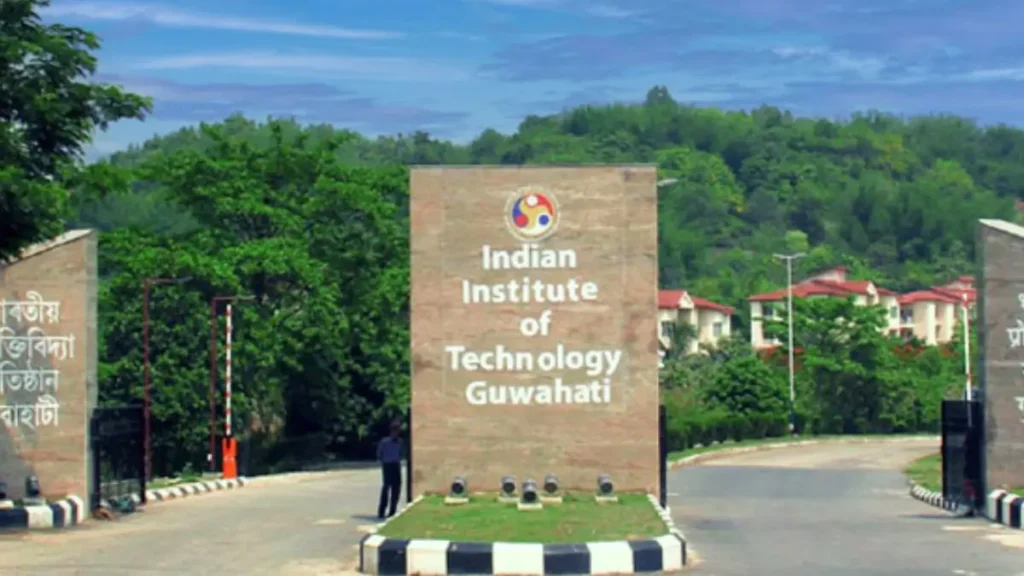
MXene-based hydrogen production and desalination technology by IIT Guwahati offers a dual solution for clean energy and water scarcity, important for UPSC and competitive exams.
IIT Guwahati Develops MXene-Based Material for Clean Hydrogen and Desalination
Introduction to the Breakthrough Innovation
The Indian Institute of Technology Guwahati has achieved a significant scientific breakthrough by developing a novel MXene-based material capable of producing clean hydrogen fuel while simultaneously enabling seawater desalination. This dual-purpose innovation marks a major step toward addressing two of the most pressing global challenges—clean energy generation and water scarcity.
What is MXene-Based Material?
MXenes are advanced two-dimensional materials composed of transition metal carbides, nitrides, or carbonitrides. These materials are known for their exceptional electrical conductivity, large surface area, and catalytic properties. The newly developed MXene-based material acts as an efficient catalyst, facilitating hydrogen production through water splitting while also supporting desalination processes.
Dual Functionality: Hydrogen Production and Water Desalination
One of the most remarkable aspects of this innovation is its dual functionality. The material enables hydrogen production via electrolysis with reduced energy requirements, making it highly efficient compared to conventional methods. At the same time, it can purify seawater through solar-powered desalination techniques. This integration of clean energy production with water purification offers a sustainable solution for regions facing both energy shortages and water scarcity.
Importance for Clean Energy Transition
Hydrogen is widely regarded as a clean fuel of the future because it emits only water when burned. The development of cost-effective and energy-efficient hydrogen production technologies is essential for transitioning away from fossil fuels. The MXene-based catalyst developed by IIT Guwahati significantly reduces energy consumption, making hydrogen production more viable on a large scale.
Environmental and Economic Benefits
This innovation holds immense environmental and economic potential. By combining hydrogen production and desalination into a single process, it reduces operational costs and resource consumption. It also minimizes environmental impact by utilizing renewable energy sources such as solar power. This could play a crucial role in achieving sustainable development goals related to clean energy and water accessibility.
Applications and Future Scope
The technology can be deployed in coastal regions, remote areas, and arid zones where freshwater and energy resources are limited. It has potential applications in industries, power generation, and water treatment systems. With further research and scaling, this innovation could become a cornerstone of future green energy infrastructure.

Why This News is Important
Boost to India’s Clean Energy Mission
The development supports India’s push toward green hydrogen under its clean energy initiatives. Hydrogen is a key component of India’s long-term strategy to reduce carbon emissions and achieve energy security. This breakthrough strengthens India’s position in global clean energy research.
Addressing Water Scarcity Challenges
India and many parts of the world face acute water shortages. A technology that can simultaneously desalinate seawater while producing energy offers a transformative solution. It is especially relevant for coastal states and drought-prone regions.
Innovation in Material Science
The use of MXene highlights the growing importance of advanced materials in solving real-world problems. This innovation demonstrates how nanotechnology and material science can contribute to sustainable development.
Relevance for Competitive Exams
For aspirants preparing for exams like UPSC, SSC, Banking, and State PCS, this topic is important under science & technology, environment, and current affairs. It reflects advancements in renewable energy and sustainable technologies.
Historical Context
Evolution of Hydrogen Energy
Hydrogen has long been considered a clean alternative to fossil fuels. Traditional methods of hydrogen production, such as steam methane reforming, are carbon-intensive. Over time, researchers have focused on green hydrogen produced through electrolysis using renewable energy sources.
Development of Desalination Technologies
Desalination has been used for decades to convert seawater into potable water. Conventional methods like reverse osmosis are energy-intensive and costly. The integration of renewable energy into desalination processes is a relatively recent advancement.
Emergence of MXene Materials
MXenes were discovered in the early 21st century as a new class of two-dimensional materials. Due to their high conductivity and catalytic properties, they have been widely researched for applications in energy storage, sensors, and water purification.
India’s Advancements in Sustainable Technology
Institutions like IITs have been at the forefront of developing innovative technologies for clean energy and environmental sustainability. This latest breakthrough builds upon years of research in nanotechnology and renewable energy systems.
Key Takeaways from This News
| S.No. | Key Takeaway |
|---|---|
| 1 | IIT Guwahati developed a MXene-based material with dual functionality |
| 2 | The material can produce clean hydrogen fuel efficiently |
| 3 | It also enables seawater desalination using solar energy |
| 4 | The innovation supports sustainable energy and water solutions |
| 5 | It is important for exams under science, environment, and technology topics |
FAQs (Frequently Asked Questions)
1. What is MXene material?
MXene is a class of two-dimensional materials made from transition metal carbides, nitrides, or carbonitrides. It is known for high electrical conductivity, large surface area, and excellent catalytic properties, making it useful in energy and environmental applications.
2. What is the main achievement of IIT Guwahati in this news?
IIT Guwahati has developed a MXene-based material that can simultaneously produce clean hydrogen fuel and desalinate seawater, offering a dual solution for energy and water challenges.
3. Why is hydrogen considered a clean fuel?
Hydrogen is considered a clean fuel because it produces only water as a by-product when burned, unlike fossil fuels that emit carbon dioxide and other pollutants.
4. How does this technology help in desalination?
The MXene-based material enables solar-powered desalination, reducing energy consumption compared to traditional methods like reverse osmosis.
5. What are the applications of this innovation?
This technology can be used in coastal regions, industries, renewable energy systems, and water purification plants, especially in water-scarce and energy-deficient areas.
6. Why is this news important for competitive exams?
It is important under Science & Technology, Environment, and Sustainable Development topics, which are frequently asked in exams like UPSC, SSC, Banking, and State PCS.
7. What is green hydrogen?
Green hydrogen is hydrogen produced using renewable energy sources like solar or wind power through electrolysis, making it environmentally sustainable.
8. What are the advantages of MXene over traditional materials?
MXene offers higher efficiency, better conductivity, and enhanced catalytic performance, making it suitable for advanced energy and water solutions.
Some Important Current Affairs Links

