
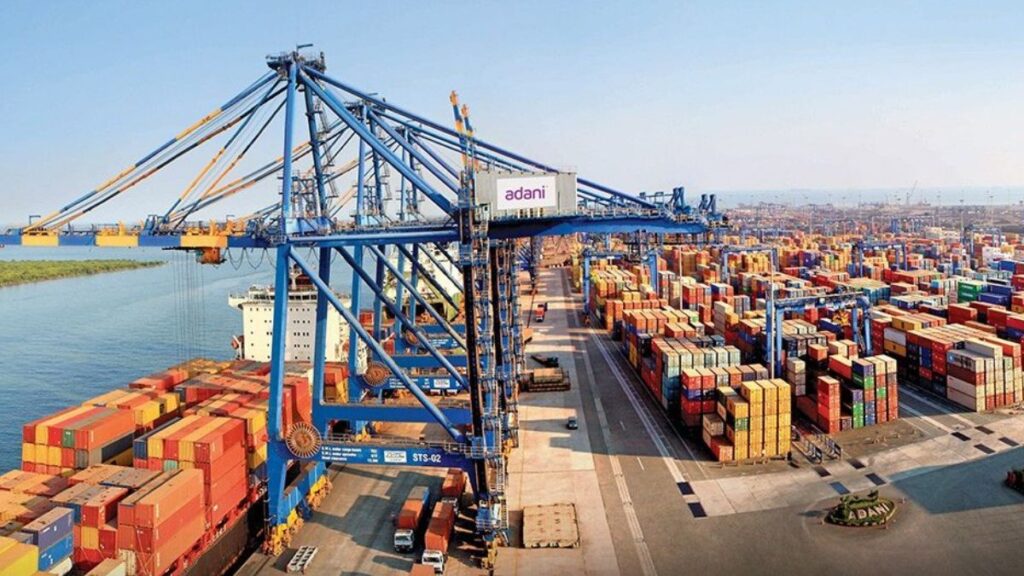
Mundra Port Record achieves record automobile exports and highest liquid cargo handling in January 2026, highlighting India’s trade growth and infrastructure strength.
📈 Record‑Breaking Performance at Mundra Port in January 2026: Automobile Exports and Liquid Cargo Hit New Highs
Overview: Mundra Port’s Exceptional January Performance
Mundra Port in Gujarat has made headlines in February 2026 after registering record‑breaking milestones in both automobile exports and liquid cargo handling in January, underscoring India’s rising export capacity and maritime trade strength. The port, operated by Adani Ports and Special Economic Zone Limited (APSEZ), achieved its highest monthly automobile export volume and set new benchmarks in liquid cargo throughput. These developments spotlight India’s expanding trade footprint and the pivotal role of world‑class port infrastructure in enhancing global competitiveness.
Mundra Port: India’s Maritime Powerhouse
Mundra Port is one of India’s premier commercial ports and the largest cargo handling port in the country. Located on the west coast in Gujarat, it serves as a key gateway for both exports and imports. The port’s strategic location, strong rail‑road connectivity, and specialized terminals have made it a primary choice for shipping various cargo types, including vehicles and petrochemicals.
Unprecedented Automobile Export Figures
In January 2026, Mundra Port handled a record 25,762 automobiles through its roll‑on/roll‑off (RoRo) terminal at the Adani Mundra Container Terminal (CT2). This figure surpassed its previous best set in May 2024, demonstrating sustained and growing global demand for Indian‑manufactured vehicles. Major automakers such as Maruti Suzuki and Toyota used the port as a key export hub for overseas markets spanning Africa, Europe, East Asia, Australia, and the Middle East.
Single Vessel Loading Record
Adding to its accomplishments, the port also set a new single‑vessel vehicle loading record, with 5,701 cars loaded onto a single ship. This operational efficiency required meticulous coordination of yard operations, vessel planning, and safety protocols, highlighting the port’s technological and logistical capabilities.
Surge in Liquid Cargo Throughput
Alongside automobile exports, Mundra Port’s liquid cargo terminal handled 1.120 million tonnes of cargo in January 2026, marking its highest monthly throughput to date. The cargo comprised energy products, industrial liquids, and chemical shipments. This record not only surpassed the previous high from December 2025 but also demonstrated the port’s capacity to manage different cargo streams simultaneously.
Implications for India’s Trade and Economy
Mundra Port’s performance reflects India’s broader export‑led growth trajectory, backed by focused infrastructure development and policy support geared toward improving logistics efficiency. Ports like Mundra are central to reducing shipping costs, improving turnaround times, and boosting the competitiveness of Indian goods in global markets.

🧠 Why This News Matters for Competitive Exams
Importance for Government Job Aspirants
Understanding developments in India’s infrastructure, trade, and economy is crucial for several competitive exams — including UPSC, SSC, banking (IBPS/SBI), railways, teaching, and defence services — as these topics often feature under national economy, industry growth, and government policy sections.
Indicator of Economic Growth
Mundra Port’s record performance signals strength in India’s export sector, which directly influences macroeconomic indicators like GDP growth, trade balance, and foreign exchange earnings. Questions related to India’s trade infrastructure, export hubs, and economic drivers often appear in reasoning, general studies, and economics sections.
Global Demand for Indian Manufactured Goods
The surge in automobile exports reflects India’s rising manufacturing prowess, particularly in the automobile industry, which has strategic importance for employment generation and industrial growth. Competitive exams frequently include questions on India’s key manufacturing sectors and their contributions to the economy.
Logistics and Infrastructure Priorities
Mundra Port’s performance also highlights India’s progress in logistics infrastructure, an area of focus in government schemes and policy discussions (such as logistics efficiency, multimodal connectivity, and port modernization). Aspiring civil servants and policy analysts must be familiar with how such developments impact trade and supply chains.
📜 Historical Context: India’s Maritime Infrastructure Evolution
India’s Port Development Journey
Ports have long been a cornerstone of India’s trade framework. Historically, Indian ports like Mumbai, Kolkata, and Chennai handled trade primarily during the colonial period. Modern independent India focused on developing deep‑water ports to handle increasing trade volumes. Over the decades, the government introduced reforms to modernize port operations, improve cargo handling efficiency, and promote private participation.
The Rise of Mundra Port
Mundra Port started operations in the early 2000s and has rapidly risen to become India’s leading commercial port. Its growth was fueled by substantial investment in infrastructure, adoption of technology, integration with rail and road networks, and establishment of specialized terminals for container, RoRo, and liquid cargo. This approach enabled Mundra to cater to diverse cargo needs efficiently and outpace older ports in throughput.
APSEZ and Logistics Expansion
The port’s operator, Adani Ports and Special Economic Zone Limited (APSEZ), has expanded its operations across multiple Indian and overseas ports, strengthening India’s maritime logistics capacity. Continuous investment and expansion strategies have enabled record cargo volumes, making Mundra a benchmark for other ports in the region.
📊 Key Takeaways from Record‑Breaking Month! Mundra Port Shines with Automobile & Liquid Cargo Surge
| S.No | Key Takeaway |
|---|---|
| 1. | Mundra Port recorded its highest‑ever monthly automobile exports in January 2026 with 25,762 vehicles shipped. |
| 2. | The port set a new single‑vessel loading record by loading 5,701 vehicles in one movement. |
| 3. | Mundra Port’s liquid cargo handling touched 1.120 million tonnes, the highest monthly throughput. |
| 4. | The surge underscores India’s growing export demand and manufacturing capabilities, particularly in automobiles. |
| 5. | This achievement highlights the importance of modern port infrastructure in supporting India’s trade and economic growth. |
FAQs: Frequently Asked Questions
1. What record did Mundra Port achieve in January 2026?
Mundra Port recorded its highest-ever monthly automobile exports with 25,762 vehicles and highest liquid cargo throughput of 1.120 million tonnes.
2. Which types of cargo contributed to Mundra Port’s record-breaking performance?
The port excelled in automobile exports through RoRo terminals and liquid cargo including petroleum products and industrial chemicals.
3. Which terminal at Mundra Port handles automobile exports?
The Adani Mundra Container Terminal (CT2) is responsible for handling automobile exports, particularly through Roll-on/Roll-off (RoRo) operations.
4. How does Mundra Port contribute to India’s economy?
By improving export efficiency, handling high volumes of automobiles and liquid cargo, and serving as a major maritime gateway, Mundra Port boosts trade, foreign exchange earnings, and supports industrial growth.
5. What countries receive automobile exports from Mundra Port?
Indian automobiles exported from Mundra Port reach markets in Africa, Europe, East Asia, Australia, and the Middle East.
6. Who operates Mundra Port?
Adani Ports and Special Economic Zone Limited (APSEZ) operates Mundra Port, India’s largest private port, with advanced infrastructure for cargo handling.
7. Why is Mundra Port considered strategically important?
Its deep-water terminals, multi-modal connectivity, and high cargo-handling capacity make it a critical hub for India’s global trade.
Some Important Current Affairs Links

