
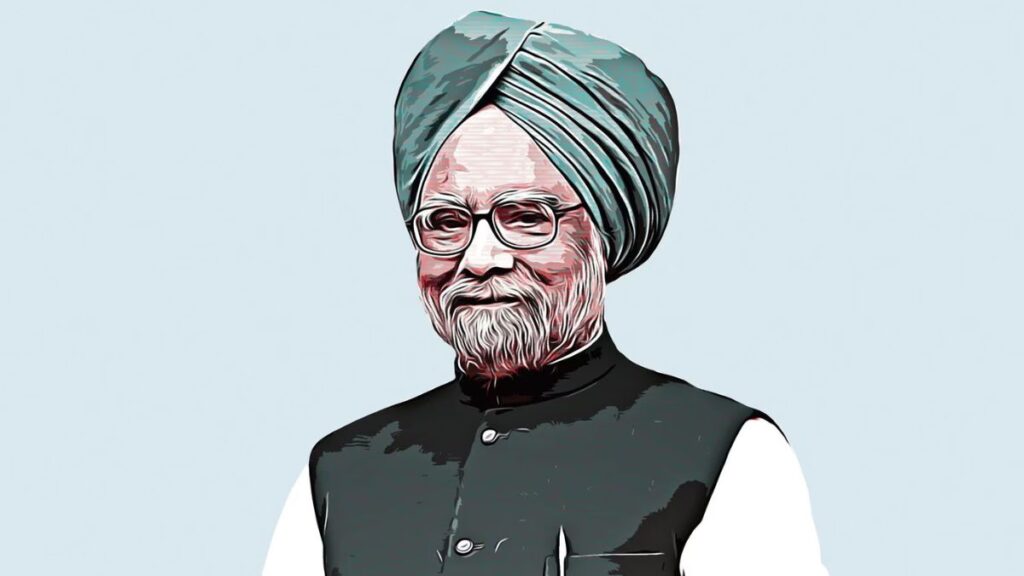
Manmohan Singh posthumously receives the P V Narasimha Rao Memorial Award for his economic contributions, including the 1991 reforms and national development policies.
Dr. Manmohan Singh Posthumously Honoured with P. V. Narasimha Rao Memorial Award for Economics
Recognition of Lifetime Contribution to India’s Economy
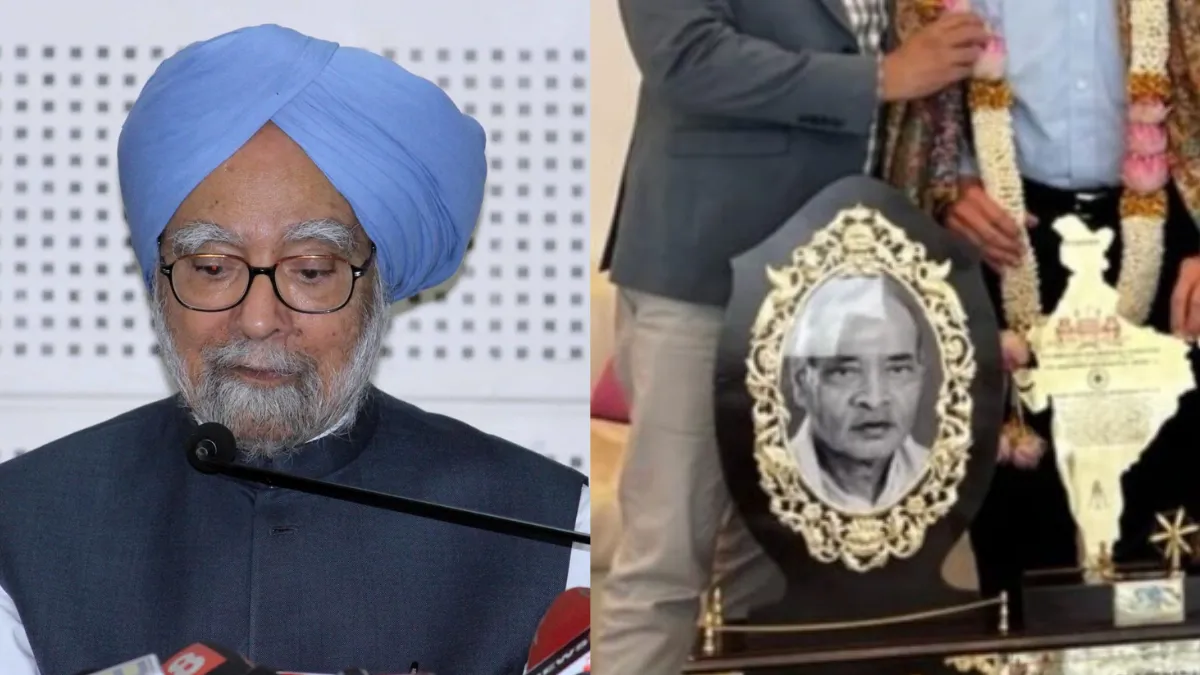
On 10 September 2025, former Prime Minister and eminent economist Dr. Manmohan Singh was posthumously awarded the P. V. Narasimha Rao Memorial Award for Economics in recognition of his transformative contributions to India’s economic reforms and his role in nation-building. The award acknowledges Singh’s long career as an economic technocrat, public servant, and policymaker.
Presentation and Ceremony Details
The award was presented by Montek Singh Ahluwalia, former Deputy Chairman of India’s Planning Commission. On Singh’s behalf, his wife, Gursharan Kaur, accepted the honour at a ceremony in New Delhi.Key dignitaries present included officials from the P. V. Narasimha Rao Memorial Foundation (PVNMF) — K. Ramchandra Murthy (President), Madhamchetty Anil Kumar (General Secretary) among others.
Why this Award and Its Significance
The P. V. Narasimha Rao Memorial Award is instituted by the P. V. Narasimha Rao Memorial Foundation, based in Hyderabad, to honour individuals with outstanding achievements in economics, public policy, governance, and national development. Dr. Singh’s selection is especially apt due to his role in the liberalization of the Indian economy in the early 1990s, his work in various high offices (Finance Minister, Governor of RBI, etc.), and his later tenure as Prime Minister.
Legacy of Reforms and Public Policy
Dr. Singh is widely remembered for pivotal policy shifts during his career. As Finance Minister under P. V. Narasimha Rao, he was central to India’s 1991 economic reforms — liberalization, globalization, and privatization. As Prime Minister (2004-2014), his administration also emphasized social welfare schemes, strengthening institutions, and balancing growth with equity. The award thus reflects both his macro-economic and socio-economic contributions.
Why this News is Important
Relevance to Economic Policy and Governance Themes
For students preparing for government exams like UPSC, State PSCs, banking, defence, etc., this news underscores the continuing importance India places on economic reforms, liberalization, and public policy. Understanding historical reforms and the contributions of key economists is often tested in General Studies papers (Economy, Polity, History). This award highlights those contributions and reinforces their significance in current policymaking discourse.
Recognition of Legacy and Role Models
Awards like the P. V. Narasimha Rao Memorial Award tie the present to important historical figures. Recognising someone like Dr. Manmohan Singh posthumously adds to the narrative students must know — who were the architects of major reforms, what roles they played, and how their policies continue to influence India’s economy today. This is valuable for essay writing, interviews, and comprehension of India’s developmental trajectory.
Current Affairs and Static GK Intersection
This is an example of where static/factual GK (e.g., who awarded it, who the award is named for, what reforms Dr. Singh led) intersects with current affairs (the event, date, persons present). Such items often show up in prelims (MCQ), mains (essay, GS papers), and interviews. Being aware of recent recognitions helps in staying updated in “awards & honours” sections of exam syllabuses.
Historical Context
P. V. Narasimha Rao and the Reform Era
Pamulaparti Venkata Narasimha Rao served as Prime Minister from 1991-1996, a period marked by one of the most significant shifts in India’s economic history. Facing a severe balance of payments crisis and fiscal instability, the Rao government, with Dr. Manmohan Singh as Finance Minister, initiated sweeping reforms: deregulation, liberalization of trade, opening up to foreign investment, reforms in public sector undertakings, dismantling of the “Licence Raj,” and reforms in financial and industrial sectors. These laid the foundation for India’s growth acceleration in subsequent decades.
Dr. Manmohan Singh’s Economic Journey
Dr. Singh had long been part of India’s economic machinery: Chief Economic Adviser, Secretary in Finance, Governor of the Reserve Bank of India, and later the Deputy Chairman of the Planning Commission. His academic credentials (with degrees from Cambridge and Oxford) and technocratic reputation lent credibility to reform efforts. As Finance Minister, his policies in the early 1990s were controversial but transformative. Later, as Prime Minister (2004-2014), he steered India through global economic changes, social welfare expansions, and development programmes while trying to maintain macroeconomic stability.
Award and Memorial Foundation
The P. V. Narasimha Rao Memorial Foundation was established to preserve the memory of Rao, often called the “Father of Indian Economic Reforms.” The foundation confers the memorial award annually to individuals who have made outstanding contributions in economics, governance or public policy spheres.
Key Takeaways from “Manmohan Singh Honoured with P. V. Narasimha Rao Memorial Award”
| S. No. | Key Takeaway |
|---|---|
| 1. | Recipient: Dr. Manmohan Singh was posthumously awarded the P. V. Narasimha Rao Memorial Award for Economics. |
| 2. | Presenter: The award was given by Montek Singh Ahluwalia. |
| 3. | Accepted by: His wife, Gursharan Kaur, accepted the award on his behalf in New Delhi. |
| 4. | Awarding body: P. V. Narasimha Rao Memorial Foundation, Hyderabad. The award is meant to honour contributions in economics, public policy, governance or national development. |
| 5. | Legacy & impact: Dr. Singh’s major roles include being Finance Minister during 1991 reforms, tenure as PM (2004-14), and contributions in institution building and welfare schemes |
FAQs: Frequently Asked Questions
1. Who was awarded the P. V. Narasimha Rao Memorial Award for Economics in 2025?
Dr. Manmohan Singh, former Prime Minister of India, was posthumously awarded for his contributions to economics and economic reforms.
2. Who presented the award to Dr. Singh’s family?
Montek Singh Ahluwalia, former Deputy Chairman of the Planning Commission, presented the award.
3. Who accepted the award on behalf of Dr. Manmohan Singh?
The award was accepted by his wife, Gursharan Kaur, during the ceremony in New Delhi.
4. What is the significance of the P. V. Narasimha Rao Memorial Award?
The award recognizes individuals with outstanding achievements in economics, public policy, governance, and national development.
5. What were Dr. Manmohan Singh’s key contributions to India’s economy?
He was pivotal in the 1991 economic reforms, liberalization, globalization, and privatization of the Indian economy, and as Prime Minister (2004–2014), he oversaw social welfare schemes and economic policy continuity.
6. Where is the P. V. Narasimha Rao Memorial Foundation located?
It is based in Hyderabad, India.
7. When did Dr. Manmohan Singh serve as Prime Minister of India?
He served from 2004 to 2014.
8. What is the historical relevance of P. V. Narasimha Rao?
Rao was the 9th Prime Minister of India (1991–1996) and is known as the “Father of Indian Economic Reforms” for initiating liberalization and structural reforms in India.
Some Important Current Affairs Links

