
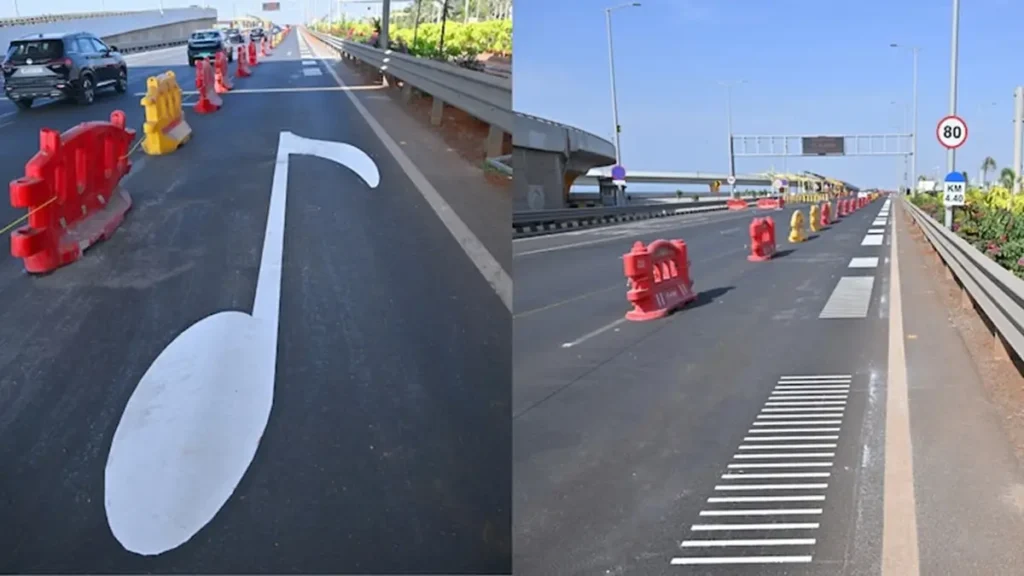
India first musical road inaugurated on Mumbai Coastal Road plays “Jai Ho” for vehicles. Learn about its features, technology, safety benefits, and exam relevance.
🚗 India’s First Musical Road Inaugurated on Mumbai’s Coastal Road
In a unique blend of engineering innovation, cultural appeal, and road safety, India’s first musical road was inaugurated on February 11, 2026, on the Chhatrapati Sambhaji Maharaj Coastal Road in Mumbai, Maharashtra. This innovative initiative has made the coastal expressway not just a route for travel but also an auditory experience for motorists.
The 500‑metre southbound stretch between Nariman Point and Worli has been specially engineered with patterned grooves — also known as rumble strips — on the road surface. When vehicles drive over this segment at a designated speed of 60–80 km/h, vibrations between the tyres and these grooves produce the iconic melody of “Jai Ho,” composed by A. R. Rahman for the film Slumdog Millionaire.
The introduction of this melody road was overseen by the Brihanmumbai Municipal Corporation (BMC) and inaugurated by Maharashtra Chief Minister Devendra Fadnavis and Deputy Chief Minister Eknath Shinde, who personally experienced the musical drive.
This music‑producing road illustrates how infrastructure can enhance the overall commuter experience by integrating technology, entertainment, and safety. Advance warning signboards have been placed at 500 m, 100 m, and 60 m intervals before the musical stretch to ensure drivers can adjust their speed safely.
🛣️ Technical and Functional Insight
The song emerges not through external speakers but through precision‑cut grooves in the asphalt surface. As car tyres roll over these grooves, tiny vibrations are generated and interpreted as sound inside the vehicle cabin — meaning the melody is audible primarily to passengers, reducing external noise pollution.
This concept is inspired by similar musical roads implemented globally in countries like Japan, South Korea, Hungary, and the UAE, where roadway design fosters positive driving behaviour, such as maintaining consistent speed.
The musical road forms part of the larger Mumbai Coastal Road Project, designed to improve connectivity between the southern and western suburbs of Mumbai while reducing travel time and traffic congestion.

📌 Why This News Is Important for UPSC Aspirants
This development is significant from multiple perspectives for UPSC and Civil Services prep — particularly under General Studies Paper III (Infrastructure, Transport & Safety) and GS Paper I (Modern India).
First, it highlights how innovative infrastructure can promote road safety, a key focus area of national transport policy. By encouraging drivers to maintain a specific speed to experience the music, this road uses behavioural design principles to reduce reckless driving — aligning with the government’s broader road safety objectives.
Second, the project serves as a case study in the integration of technology and public utility. It demonstrates how urban infrastructure can be more than functional — capable of enhancing citizen experience and contributing to sustainable transport solutions.
Third, this initiative reflects global best practices, as similar roads are already present internationally. Comparing India’s approach with other countries provides aspirants with material for international practices in road engineering — a common topic in Essay and GS III.
Finally, the debate around cultural representation in the choice of the song (e.g., demands to play a Marathi tune) showcases the interplay between regional identity, politics, and infrastructure. Such intersections are frequently tested in UPSC mains and personality tests.
🕰️ Historical Context: Musical Roads Around the World
The concept of musical roads dates back to Japan in 2007, where engineers first experimented with tire‑groove physics to create sound patterns on pavements. Since then, rumble‑strip‑based musical roads have been developed in several countries, including South Korea, Hungary, the United States, and the UAE.
These roads are usually designed to address issues such as driver fatigue and speed regulation by rewarding drivers with a pleasant auditory experience when they maintain a target speed.
In India, infrastructure projects traditionally focus on functional aspects such as improved connectivity, reduced travel time, and economic impact. The musical road represents a novel urban design approach — bringing cultural elements and safety enhancements into standard transport corridors. This is the first instance of such an innovation in the country, marking a shift toward creative public infrastructure solutions.
📋 Key Takeaways from India’s First Musical Road
| S. No. | Key Takeaway |
|---|---|
| 1. | India’s first musical road inaugurated on Mumbai’s Coastal Road. |
| 2. | A 500‑metre stretch plays the tune “Jai Ho” when vehicles drive over it at 60–80 km/h. |
| 3. | The musical effect is produced through rumble strips that generate sound via tyre vibrations. |
| 4. | The initiative aims to enhance road safety and commuter experience. |
| 5. | Similar musical roads exist globally, and India’s version reflects integration of culture and technology. |
FAQs: Frequently Asked Questions
Q1. What is India’s first musical road?
India’s first musical road is a specially designed 500‑metre stretch on Mumbai’s Coastal Road that plays the tune “Jai Ho” when vehicles drive over it at 60–80 km/h. The melody is generated through rumble strips on the road.
Q2. Where is the musical road located?
It is located on the Chhatrapati Sambhaji Maharaj Coastal Road in Mumbai, Maharashtra, between Nariman Point and Worli.
Q3. Who inaugurated India’s first musical road?
The musical road was inaugurated by Maharashtra Chief Minister Devendra Fadnavis and Deputy Chief Minister Eknath Shinde on February 11, 2026.
Q4. How does the musical road work?
The road has grooves cut into the asphalt surface. When tyres roll over these grooves at the designated speed, vibrations produce the melody, audible inside the vehicle cabin.
Q5. Why was the song “Jai Ho” chosen for the musical road?
“Jai Ho” was selected for its global recognition and iconic status in Indian culture, although there has been public debate about using a regional Marathi song instead.
Q6. Are there similar musical roads globally?
Yes. Countries like Japan, South Korea, Hungary, UAE, and the United States have musical roads designed to enhance safety and provide auditory experience while driving.
Q7. What is the purpose of India’s musical road?
It aims to promote road safety, encourage drivers to maintain specific speeds, enhance commuter experience, and integrate cultural elements with infrastructure innovation.
Some Important Current Affairs Links

