
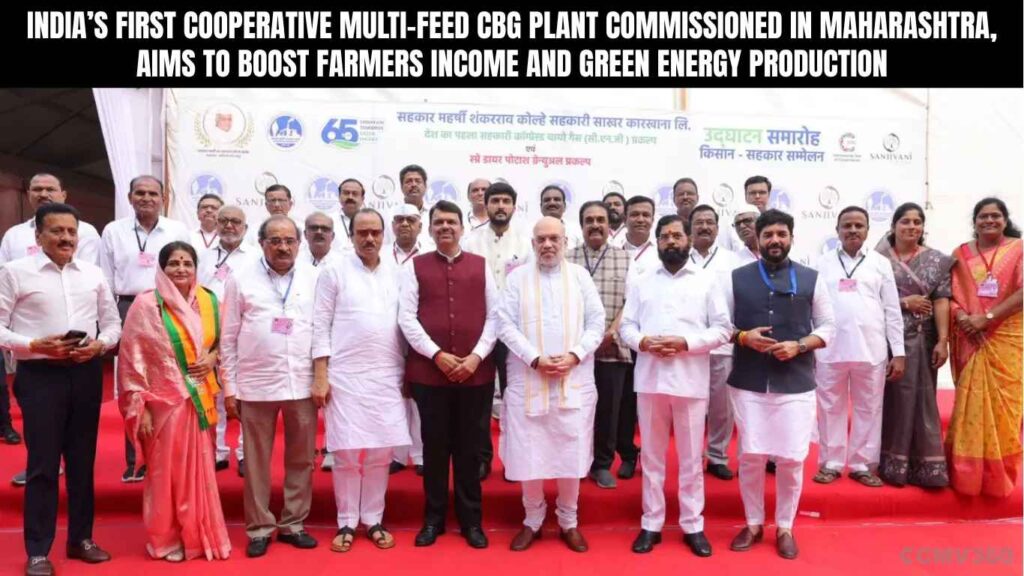
India cooperative CBG project launched at Kopargaon produces 12 tonnes of CBG and 75 tonnes of potash daily, promoting renewable energy, sustainable agriculture, and farmer empowerment in Maharashtra.
India’s First Cooperative-Run CBG & Potash Project Launched at Kopargaon
On October 5, 2025, Union Home and Cooperation Minister Amit Shah inaugurated India’s pioneering cooperative-run Compressed Biogas (CBG) and potash granule production facility at the Sahakar Maharshi Shankarrao Kolhe Cooperative Sugar Factory in Kopargaon, Maharashtra. This ₹55 crore project marks a significant step towards integrating renewable energy, sustainable agriculture, and cooperative economics.
Project Overview
The facility is designed to produce 12 tonnes of CBG and 75 tonnes of potash granules daily by processing agricultural by-products such as jaggery and molasses. This initiative aims to reduce India’s dependency on imported fertilizers and fossil fuels, aligning with the Atmanirbhar Bharat vision. The project operates under a cooperative model, ensuring local farmers and stakeholders have ownership and share in the benefits, promoting inclusive rural development.
Strategic Importance
The project is supported by the National Cooperative Development Corporation (NCDC), which plans to replicate this model in 15 additional sugar mills. This expansion is expected to enhance energy self-reliance, boost farmer incomes, and promote a circular economy by converting agricultural waste into valuable products. The initiative also aligns with India’s commitment to achieving net-zero emissions by 2070.
Government Initiatives
In addition to the CBG project, the government has enhanced Minimum Support Prices (MSP) for key crops and plans to establish 1,000 processing units to supply high-quality seeds to farmers. These measures aim to strengthen cooperatives, women’s self-help groups, and credit societies in the rural economy, fostering sustainable agricultural practices and economic growth.
Challenges and Considerations
While the project presents numerous benefits, it also faces challenges such as ensuring a consistent supply of quality feedstock, maintaining technical reliability, and managing operational costs. Addressing these challenges will be crucial for the long-term success and scalability of the initiative.

Why This News Is Important
National Impact
This project represents a significant advancement in India’s renewable energy sector, demonstrating the potential of integrating cooperative models with sustainable practices. By producing CBG and potash granules domestically, the initiative reduces reliance on imports, contributing to energy security and economic stability.
Rural Development
The cooperative model ensures that local farmers and communities benefit directly from the project, promoting inclusive growth and empowerment. The establishment of processing units and enhancement of MSPs further support rural development by providing farmers with better resources and market access.
Environmental Sustainability
The project aligns with India’s environmental goals by promoting a circular economy, reducing waste, and decreasing greenhouse gas emissions. The production of CBG from agricultural waste contributes to cleaner energy solutions, supporting the nation’s commitment to achieving net-zero emissions by 2070.
Historical Context
Evolution of Cooperative Sugar Mills
Cooperative sugar mills have a long-standing presence in Maharashtra, serving as a model for collective agricultural enterprises. The Sahakar Maharshi Shankarrao Kolhe Cooperative Sugar Factory in Kopargaon has been at the forefront of integrating innovative practices to enhance productivity and sustainability.
Government Support for Cooperatives
The Indian government has consistently supported cooperative models through various policies and initiatives, recognizing their role in promoting rural development and economic growth. The establishment of the CBG and potash granule facility reflects the government’s commitment to strengthening the cooperative sector and fostering sustainable agricultural practices.
Key Takeaways from “India’s First Cooperative-Run CBG & Potash Project Launched at Kopargaon”
| S.No | Key Takeaway |
|---|---|
| 1. | India’s first cooperative-run CBG and potash granule facility inaugurated in Kopargaon, Maharashtra. |
| 2. | The project produces 12 tonnes of CBG and 75 tonnes of potash daily from agricultural by-products. |
| 3. | Supported by the National Cooperative Development Corporation (NCDC) for replication in 15 additional sugar mills. |
| 4. | Government initiatives include enhanced MSPs and establishment of 1,000 processing units to support farmers. |
| 5. | The project promotes a circular economy, reducing waste and contributing to environmental sustainability. |
FAQs: Frequently Asked Questions
1. What is the India’s first cooperative-run CBG and potash project?
India’s first cooperative-run Compressed Biogas (CBG) and potash granule production facility was inaugurated at Sahakar Maharshi Shankarrao Kolhe Cooperative Sugar Factory in Kopargaon, Maharashtra. It produces CBG and potash from agricultural by-products.
2. Who inaugurated the CBG and potash project at Kopargaon?
Union Home and Cooperation Minister Shri Amit Shah inaugurated the facility on October 5, 2025.
3. How much CBG and potash does the facility produce daily?
The plant produces 12 tonnes of Compressed Biogas (CBG) and 75 tonnes of potash granules per day.
4. What is the cost of the project?
The project is implemented at a cost of ₹55 crore.
5. Which organization is supporting the replication of this cooperative model?
The National Cooperative Development Corporation (NCDC) supports the project and plans to replicate it in 15 more sugar mills across India.
6. What is the significance of producing CBG and potash locally?
It reduces India’s dependence on imported fertilizers and fossil fuels while promoting renewable energy and sustainable agriculture.
7. How does this project benefit farmers?
The cooperative model ensures farmers have ownership and receive a share of profits, enhancing rural income and economic empowerment.
8. How does the project contribute to environmental sustainability?
It promotes a circular economy by converting agricultural waste into valuable products and reduces greenhouse gas emissions.
9. What other government initiatives support farmers along with this project?
The government has enhanced Minimum Support Prices (MSPs) and plans to establish 1,000 processing units for high-quality seeds and crop processing.
10. How does this project align with India’s net-zero emissions target?
The production of CBG from agricultural by-products provides clean energy solutions that reduce reliance on fossil fuels, supporting India’s goal to achieve net-zero emissions by 2070.
Some Important Current Affairs Links

