
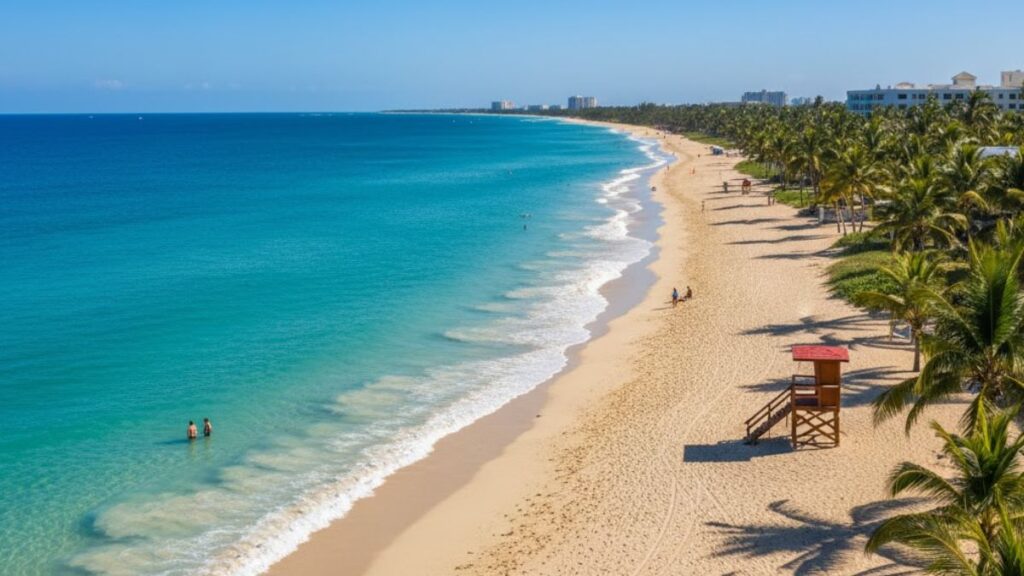
Blue Flag beaches in Maharashtra: Shrivardhan, Nagaon, Parnaka, Guhagar, and Ladghar earn global recognition in 2025, promoting eco-tourism, safety, and environmental sustainability.
🌊 Maharashtra’s Coastal Pride: Five Beaches Awarded Blue Flag Certification
In a significant environmental achievement, five beaches in Maharashtra—Shrivardhan, Nagaon, Parnaka, Guhagar, and Ladghar—have been honored with the prestigious Blue Flag certification. This international eco-label, awarded by the Foundation for Environmental Education (FEE), Denmark, recognizes beaches that meet stringent criteria in environmental education, water quality, safety, environmental management, and public amenities.
🏖️ The Blue Flag Certification: A Global Standard
The Blue Flag certification is a globally recognized eco-label awarded to beaches, marinas, and sustainable tourism operators that meet 33 strict criteria. These criteria encompass environmental education and information, water quality, environmental management, safety and services, and social responsibility. The certification aims to promote sustainable tourism and environmental conservation.
🌱 Significance for Maharashtra
The inclusion of these five beaches elevates Maharashtra’s status as a leader in sustainable coastal tourism. It underscores the state’s commitment to preserving its natural heritage while promoting eco-friendly tourism practices. The certification also serves as a model for other coastal regions in India, demonstrating that environmental sustainability and tourism can go hand in hand.
📌 Why This News is Important
🏞️ Promoting Sustainable Tourism
The Blue Flag certification encourages the development of sustainable tourism practices, ensuring that natural resources are preserved for future generations. It also boosts local economies by attracting eco-conscious tourists.
🌍 Aligning with Global Environmental Standards
By achieving Blue Flag status, Maharashtra aligns with global environmental standards, showcasing its commitment to environmental conservation and sustainable development.
🧑🤝🧑 Enhancing Community Engagement
The certification process involves local communities, fostering a sense of responsibility and encouraging active participation in environmental conservation efforts.
📚 Educational Opportunities
The Blue Flag program includes environmental education and information, providing opportunities for learning and raising awareness about environmental issues among visitors and locals.
🛡️ Ensuring Public Safety
The certification mandates safety measures such as lifeguards, first-aid facilities, and emergency plans, ensuring a safe environment for beachgoers.
🕰️ Historical Context
The Blue Flag program was launched in France in 1985 and has since expanded globally. India joined the program in 2018, aiming to promote sustainable coastal tourism and environmental conservation. Prior to the recent additions, India had several Blue Flag-certified beaches, including Radhanagar Beach in the Andaman and Nicobar Islands and Kadmat Beach in Lakshadweep. The recent addition of five beaches from Maharashtra marks a significant milestone in India’s journey towards sustainable tourism.
✅ Key Takeaways from “Five Maharashtra Beaches Earn Blue Flag Global Recognition”
| S.No | Key Takeaway |
|---|---|
| 1 | Maharashtra’s Shrivardhan, Nagaon, Parnaka, Guhagar, and Ladghar beaches have received the prestigious Blue Flag certification. |
| 2 | The Blue Flag certification is awarded by the Foundation for Environmental Education (FEE), Denmark, based on 33 stringent criteria. |
| 3 | The certification promotes sustainable tourism, environmental conservation, and community involvement. |
| 4 | These beaches are now part of India’s growing list of Blue Flag-certified beaches, showcasing the country’s commitment to environmental sustainability. |
| 5 | The achievement underscores Maharashtra’s leadership in promoting eco-friendly tourism practices. |
FAQs: Blue Flag Certification for Maharashtra Beaches
Q1: What is the Blue Flag certification?
A1: Blue Flag certification is an international eco-label awarded by the Foundation for Environmental Education (FEE), Denmark, to beaches and marinas that meet high standards of environmental management, safety, water quality, and education.
Q2: Which five beaches in Maharashtra received the Blue Flag certification?
A2: Shrivardhan, Nagaon, Parnaka, Guhagar, and Ladghar beaches.
Q3: How many criteria must a beach meet to earn the Blue Flag certification?
A3: A beach must meet 33 stringent criteria covering environmental education, water quality, environmental management, safety, and services.
Q4: Why is Blue Flag certification important for tourism?
A4: It promotes sustainable tourism, ensures safe and clean beaches, involves community participation, and aligns local beaches with global environmental standards.
Q5: When did India first join the Blue Flag program?
A5: India joined the Blue Flag program in 2018.
Q6: Name some other Blue Flag-certified beaches in India.
A6: Radhanagar Beach (Andaman & Nicobar Islands), Kadmat Beach (Lakshadweep), and others across coastal states.
Q7: How does the Blue Flag program benefit local communities?
A7: It creates awareness about environmental conservation, encourages local participation, and can boost eco-tourism, generating employment and sustainable income.
Some Important Current Affairs Links

