
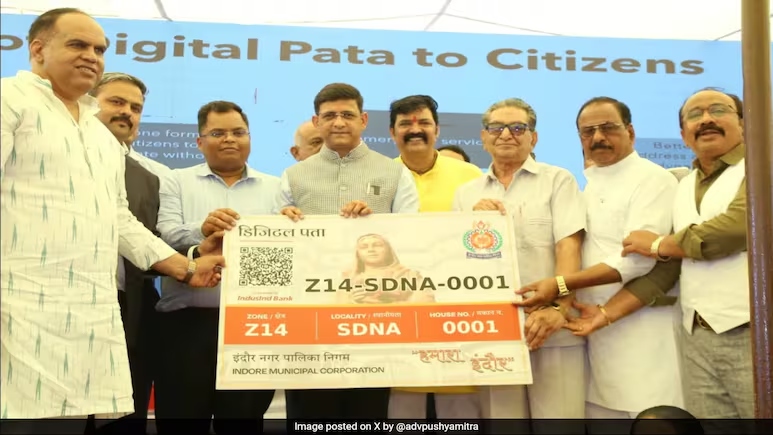
Indore launches India’s first QR code-based digital house address system linked with Digipin and GPS, improving urban governance and smart city delivery.
Indore Launches India’s First QR‑Based Digital House Address System
Introduction to Indore’s Digital Address Initiative
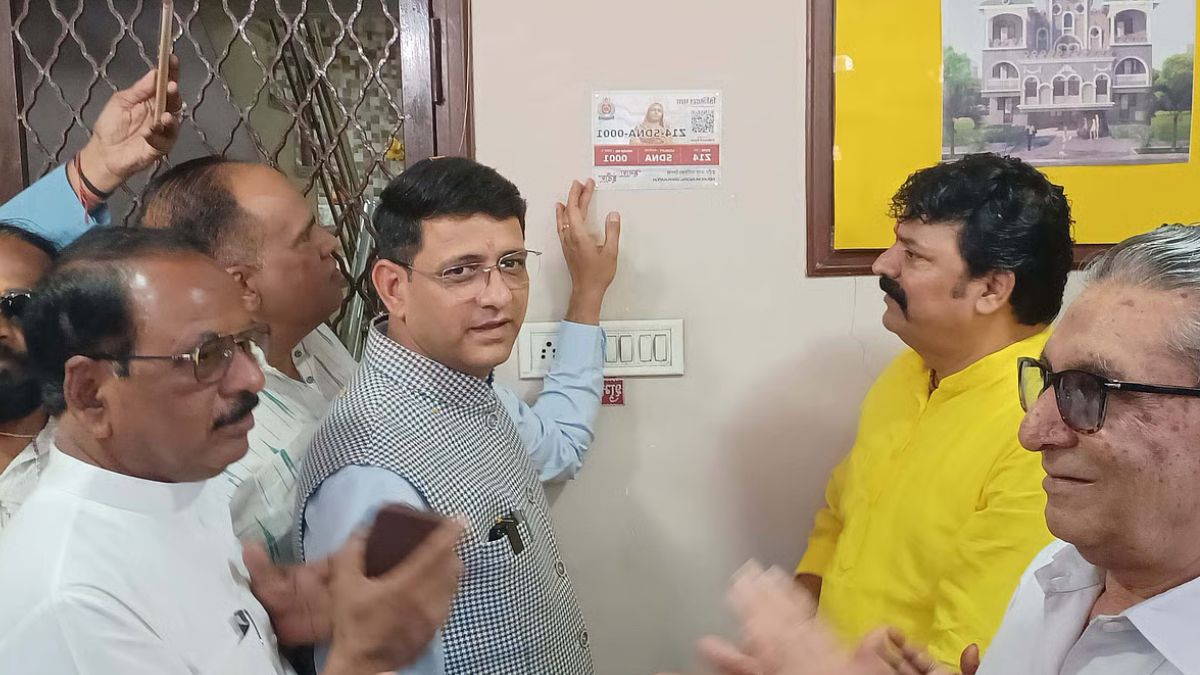
Indore Municipal Corporation (IMC) has pioneered India’s first ever QR‑based Digital House Address Project, marking a significant leap in smart city governance The initiative involves installing durable metallic plates with unique QR codes outside every residence. Launched on June 29 in Ward 82, Sudama Nagar, this pilot aims to revolutionize address identification and citizen service delivery
How the System Functions
Each QR plate is linked to a GPS-enabled digital address via the government’s Digipin (Digital Postal Index Number) system. Residents, delivery services, and emergency responders can scan the QR code using a smartphone, instantly accessing precise location data and property details
Citizen Empowerment Through Smart Governance
The digital address connects directly to municipal services. Users can:
- Pay property and water taxes.
- Lodge civic complaints (e.g., waste, streetlights).
- Request emergency services with pinpoint accuracy.
This integration enhances accountability, transparency, and administrative responsiveness.
Technology Integration and Security Measures
Under the hood, the QR codes tie into a centralized database managed by the IMC, integrated with national postal (Digipin) and GIS servers. The robust metallic plates are designed to withstand tampering, ensuring long-term reliability. Citizens can share feedback, prompting iterative improvements based on real-world use.
Future Outlook and Replication Potential
If successful, Indore’s model could pave the way for digital address systems across India—especially in tier‑2 and tier‑3 cities. The system’s potential extends to e‑commerce logistics, drone deliveries, healthcare, and disaster management. The QR platform could also integrate with Aadhaar or DigiLocker for enhanced services.
Why This News Matters for Exam Aspirants
Significance in Smart City Governance
This initiative is a prime example of real-world implementation of digital governance and smart city principles, which are common in syllabi for GS Paper III (Governance, Technology in Governance).
Relevance Across Sectors
- Police & Defence: Enhances emergency response, crucial for public safety and disaster management.
- Banking & Railways: Optimizes KYC processes and service delivery via accurate location tracking.
- Civil Services & Teaching: Useful case study in urban planning, welfare, and digital inclusion.
Exam Focus: Scheme Integration & Initiatives
The project aligns with central government goals—such as the Digital India and Smart Cities missions. Understanding how local-level pilots support national frameworks strengthens answers in essay-type questions and interviews.
Historical Context: Digital Addressing in India
Before Indore’s pilot, digital addressing was largely confined to postal index codes and informal GPS tagging by private players. Address databases were fragmented, and rural zones lacked standardized systems. The government’s Bind & Remap India initiative piloted digital addresses in select villages, but none at city-wide scale with QR implementation.
Indore’s integration with Digipin—a national digital postal code system—marks a more cohesive governance-driven approach. It bridges earlier local pilots and central efforts by introducing scalable, technology-driven urban infrastructure. This system builds on earlier GIS-based e-governance models, providing granular precision and citizen engagement.
Key Takeaways from “Indore’s QR‑based Digital House Address System”
| No. | Key Takeaway |
|---|---|
| 1 | India’s first QR-based digital address pilot launched in Indore’s Ward 82 (Sudama Nagar) on June 29, 2025. |
| 2 | Unique QR plates installed on houses link to Digipin and GPS for precise digital addresses. |
| 3 | Serves as gateway for property tax payment, civic complaints, and streamlined municipal services. |
| 4 | Strong tech integration includes national postal code system (Digipin), GIS, and tamper-proof QR plates. |
| 5 | High replication potential for other urban and rural areas; critical for UPSC/PCS tech-in-governance topics. |
FAQs: Frequently Asked Questions
1. What is the QR-based digital address system launched in Indore?
It is a unique house-addressing system where every residence is provided a metallic plate embedded with a QR code that links to a GPS-enabled digital address.
2. Which department launched India’s first digital house address system?
The Indore Municipal Corporation (IMC) launched this initiative under its Smart City project.
3. What is Digipin?
Digipin stands for Digital Postal Index Number. It is a GPS-tagged digital address system integrated with the national postal database.
4. How can residents benefit from this system?
Residents can pay taxes, register complaints, access services, and navigate accurately via QR code scanning using a smartphone.
5. Is this system secure and tamper-proof?
Yes. The QR plates are made of durable metal and designed to be tamper-resistant, ensuring long-term usability.
6. How is this relevant for government exam preparation?
This is a live case study of digital governance, Smart City implementation, and civic-tech innovation—topics frequently asked in GS Papers, essays, and interviews.
7. Can this model be replicated in rural areas?
Yes. The model has the potential to scale in rural and tier-2/tier-3 urban settings for effective public service delivery and address verification.
Some Important Current Affairs Links

