
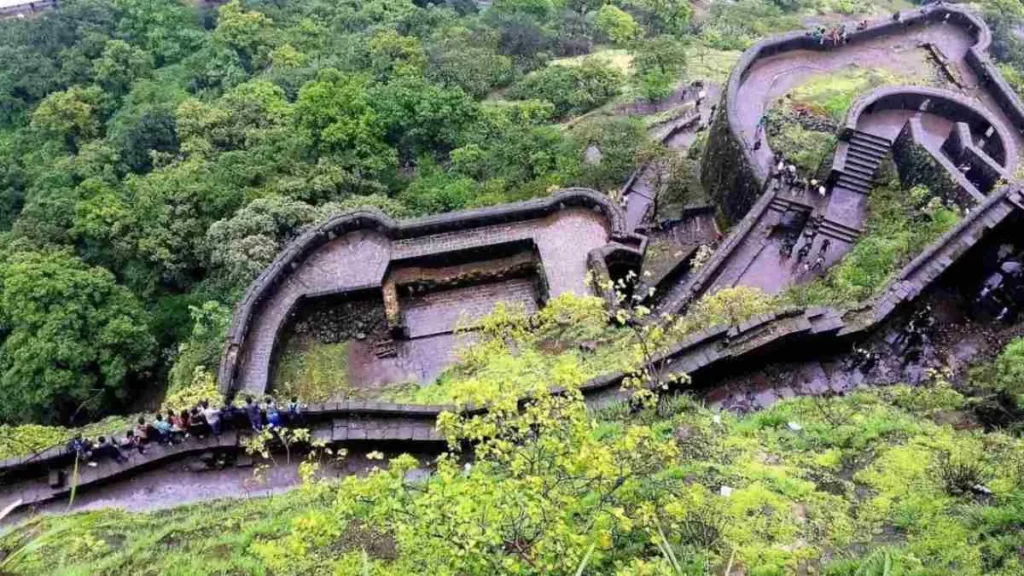
Lohagad Fort history for UPSC explained with its strategic importance, association with Chhatrapati Shivaji Maharaj, Treaty of Purandar, UNESCO recognition, key facts, MCQs, and exam-oriented current affairs for UPSC, SSC, Banking, Railways, Defence, and State PSC aspirants.
Introduction
Lohagad Fort, popularly known as the “Iron Fort,” is one of Maharashtra’s most historically significant hill forts. Located near Lonavala in Pune district, this magnificent fortress has stood as a symbol of military strength, strategic planning, and architectural excellence for centuries. Perched at an elevation of about 1,033 metres above sea level in the Sahyadri mountain range, Lohagad played a crucial role in controlling trade routes between the Deccan Plateau and the Konkan coast. Today, it is not only a major tourist attraction but also an important topic for competitive examinations due to its association with the Maratha Empire and Chhatrapati Shivaji Maharaj.
Strategic Location and Importance
Lohagad Fort occupies a commanding position overlooking the ancient trade routes connecting the Deccan region with the Konkan coast. Because of its naturally fortified location, rulers considered it one of the strongest defensive forts in western India. The fort’s name, “Lohagad,” literally means “Iron Fort,” reflecting its reputation for strength and resilience.
The fort is situated near Visapur Fort, with both forts connected by a narrow ridge. Together, they formed an effective defensive network that monitored the movement of traders and invading armies across the Western Ghats. Its elevated position provided clear visibility of the surrounding valleys and mountain passes, making it difficult for enemy forces to launch surprise attacks. The Maharashtra Tourism Department highlights the fort’s strategic value and its long association with several ruling dynasties.
Historical Journey Through Dynasties
The history of Lohagad Fort spans several centuries. Historians believe that the fort was originally constructed during the 10th century CE and later came under the control of various powerful dynasties, including the Chalukyas, Rashtrakutas, Yadavas, Bahamanis, Nizams, Mughals, and finally the Marathas.
Its strategic location made it highly desirable for successive rulers. Every dynasty strengthened its fortifications and adapted the structure according to changing military needs. As a result, Lohagad evolved into one of the most formidable military forts in the Deccan region.
Association with Chhatrapati Shivaji Maharaj
Lohagad Fort occupies a special place in Maratha history because of its close association with Chhatrapati Shivaji Maharaj. In 1648, Shivaji Maharaj captured the fort from the ruling powers and incorporated it into the expanding Maratha Kingdom.
However, under the Treaty of Purandar signed in 1665 between Shivaji Maharaj and the Mughal Empire, the fort had to be surrendered temporarily. Five years later, in 1670, Shivaji Maharaj successfully recaptured Lohagad and restored it to Maratha control.
Historical records suggest that the fort was later used to store wealth acquired during the famous Surat campaign, making it an important treasury fort of the Maratha Empire.
Architectural Excellence
One of the most remarkable aspects of Lohagad Fort is its engineering. Built primarily using locally available basalt stone, the fort blends naturally with the surrounding mountains.
The structure includes:
- Massive defensive walls
- Four impressive entrance gates:
- Ganesh Darwaja
- Narayan Darwaja
- Hanuman Darwaja
- Maha Darwaja
- Large water reservoirs
- Bastions for surveillance
- Ancient pathways designed to slow enemy movement
A unique feature of the fort is the famous “Vinchukata” (Scorpion’s Tail), a long fortified spur extending from the main fort. This structure served both defensive and surveillance purposes while offering commanding views of the valleys below.
Cultural and Tourism Importance
Today, Lohagad Fort attracts thousands of visitors, especially during the monsoon season. It has become one of Maharashtra’s most popular trekking destinations because of its relatively easy climb and breathtaking views.
Recognising its historical importance, conservation authorities continue to undertake restoration and safety measures to preserve the monument for future generations. The Archaeological Survey of India has recently improved visitor safety by installing and repairing protective railings in vulnerable sections of the fort.
UNESCO Recognition
Lohagad Fort has gained additional international recognition through its inclusion in the “Maratha Military Landscapes of India,” which has been inscribed on UNESCO’s World Heritage List. This recognition highlights the exceptional military architecture and strategic planning demonstrated by the Maratha fort network.
Significance for Competitive Examinations
Questions related to Maratha history, forts of Maharashtra, UNESCO World Heritage Sites, military architecture, and Chhatrapati Shivaji Maharaj frequently appear in UPSC, State PSCs, SSC, Railways, Defence, Banking, Police, and Teaching examinations.
Candidates should remember Lohagad’s strategic role in controlling trade routes, its association with Shivaji Maharaj, its four historic gateways, and its importance as a treasury fort.
Why This News is Important
Importance from the Examination Perspective
Lohagad Fort has gained renewed attention because of growing national interest in India’s historical heritage and the recognition of Maratha military architecture on the global stage. Such topics are increasingly featured in current affairs sections of competitive examinations.
Questions may focus on UNESCO World Heritage Sites, historical monuments, important forts, medieval Indian history, cultural heritage, and tourism development.
Importance for Indian Heritage
The fort represents India’s rich military engineering traditions and demonstrates how geography was effectively utilised for defence. It also reflects the administrative and strategic capabilities of the Maratha Empire under Shivaji Maharaj.
Relevance for Government Exams
Students preparing for UPSC Civil Services, State PSCs, SSC CGL, CHSL, Banking, Railways, NDA, CDS, CAPF, Police, CTET, State TETs, and other competitive examinations should study Lohagad Fort as part of Indian history, art and culture, geography, and current affairs. Knowledge of important forts often appears in both objective and descriptive examinations.
Historical Context
Early Origins
Lohagad Fort is believed to have originated during the 10th century CE and later came under the control of multiple dynasties due to its strategic location in the Western Ghats.
Maratha Expansion
The fort became particularly significant during the rise of the Maratha Empire. Shivaji Maharaj recognised its military importance and incorporated it into his network of hill forts that formed the backbone of Maratha defence.
Modern Conservation
Today, Lohagad is protected as an important heritage monument. Conservation efforts by government agencies aim to preserve its architecture while promoting sustainable tourism and public awareness of India’s rich historical legacy.
Key Takeaways from This News
| S. No. | Key Takeaway |
|---|---|
| 1 | Lohagad Fort is located near Lonavala in Pune district, Maharashtra, at an elevation of about 1,033 metres. |
| 2 | The fort was an important military stronghold controlling trade routes between the Deccan Plateau and the Konkan coast. |
| 3 | Chhatrapati Shivaji Maharaj captured the fort in 1648, lost it under the Treaty of Purandar (1665), and recaptured it in 1670. |
| 4 | The fort is famous for its four historic gates and the distinctive Vinchukata (Scorpion’s Tail) fortification. |
| 5 | Lohagad is part of the UNESCO-recognised Maratha Military Landscapes of India, highlighting its global historical significance. |
Frequently Asked Questions (FAQs)
1. Where is Lohagad Fort located?
Lohagad Fort is located near Lonavala in Pune district of Maharashtra in the Sahyadri (Western Ghats) mountain range.
2. Why is Lohagad Fort known as the “Iron Fort”?
It is called the “Iron Fort” because of its exceptionally strong fortifications and its ability to withstand repeated attacks by enemy forces.
3. At what height is Lohagad Fort situated?
The fort is situated at an elevation of approximately 1,033 metres (3,389 feet) above sea level.
4. Which Maratha ruler is most closely associated with Lohagad Fort?
Lohagad Fort is closely associated with Chhatrapati Shivaji Maharaj, who captured it in 1648 and recaptured it in 1670 after temporarily surrendering it under the Treaty of Purandar.
5. Under which treaty was Lohagad Fort handed over to the Mughals?
The fort was surrendered to the Mughals under the Treaty of Purandar signed in 1665.
6. Why was Lohagad Fort strategically important?
It controlled the ancient trade routes connecting the Deccan Plateau with the Konkan coast and served as an important military and treasury fort.
7. What is the famous “Vinchukata” at Lohagad Fort?
Vinchukata, meaning “Scorpion’s Tail,” is a long fortified spur extending from the main fort that served defensive and surveillance purposes.
8. Which neighbouring fort is connected to Lohagad Fort?
Lohagad Fort is connected to Visapur Fort through a narrow ridge.
9. Which mountain range is Lohagad Fort part of?
It is part of the Sahyadri Hills, also known as the Western Ghats.
10. Why is Lohagad Fort important for competitive examinations?
The fort is frequently asked about in UPSC, State PSC, SSC, Railways, Banking, Defence, Police, and Teaching examinations because of its historical significance, association with Shivaji Maharaj, military architecture, and UNESCO recognition.
11. Which UNESCO-recognised heritage grouping includes Lohagad Fort?
Lohagad Fort is included in the UNESCO-recognised “Maratha Military Landscapes of India.”
12. Which subjects in competitive exams commonly include questions about Lohagad Fort?
Questions are generally asked in Indian History, Art & Culture, Medieval India, Geography, Tourism, and Current Affairs.
Some Important Current Affairs Links

