
Largest State in India by Area & Population: Key Facts for Government Exams
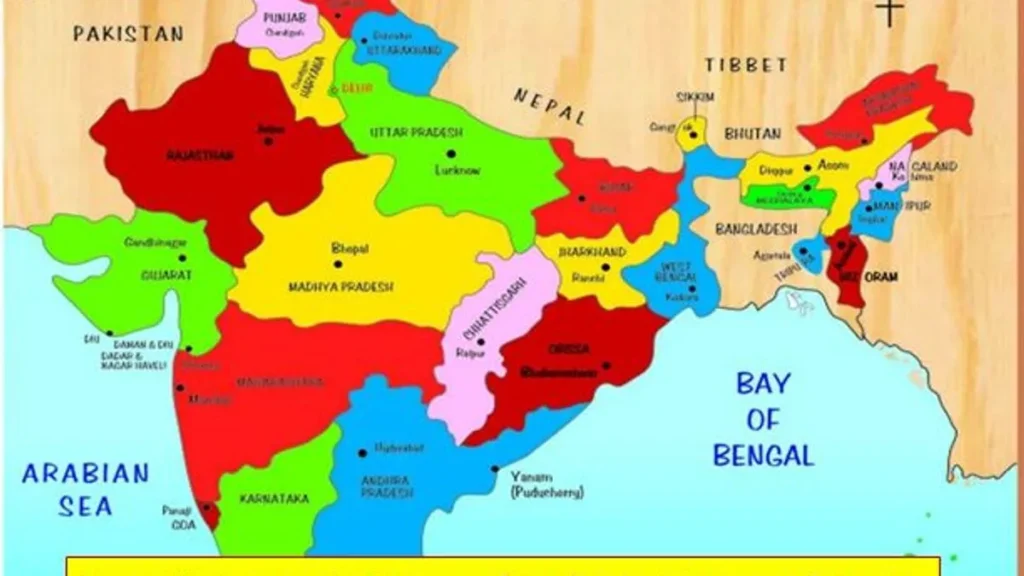
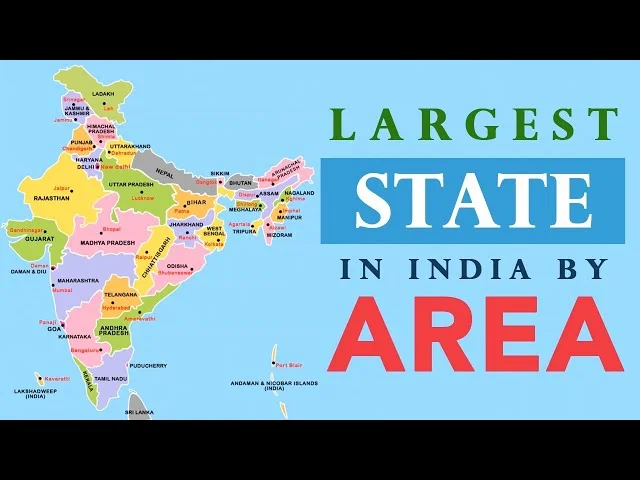
India, a nation renowned for its diversity, comprises 28 states and 8 Union Territories, each contributing uniquely to its rich tapestry. Among these, Rajasthan stands out as the largest state by area, while Uttar Pradesh holds the distinction of being the most populous. Understanding these states’ geographical and demographic significance is essential for aspirants preparing for various government examinations.
Rajasthan: The Largest State by Area
Rajasthan, situated in the northwestern part of India, covers an expansive area of 342,239 square kilometers, making it the largest state in the country. It shares its borders with five Indian states—Punjab, Haryana, Uttar Pradesh, Madhya Pradesh, and Gujarat—and also has an international boundary with Pakistan. The state’s terrain is predominantly arid, encompassing the Thar Desert, India’s most extensive desert region. Despite its aridity, Rajasthan boasts diverse landscapes, including the Aravalli Range, one of the oldest mountain ranges globally, and fertile plains that support agriculture. The state’s capital, Jaipur, known as the “Pink City,” is famed for its rich history, architectural marvels, and vibrant culture.
Uttar Pradesh: The Most Populous State
Uttar Pradesh (UP), located in northern India, is the country’s most populous state, with a population exceeding 199 million as per the 2011 census. Covering an area of 240,928 square kilometers, it ranks fourth in terms of size. UP shares its borders with nine states and the country of Nepal, highlighting its strategic significance. The state’s capital, Lucknow, is renowned for its historical significance, cultural heritage, and architectural grandeur. Uttar Pradesh plays a pivotal role in India’s politics, economy, and culture, being the birthplace of several ancient civilizations and religions, including Hinduism and Buddhism. The fertile Gangetic plains make it an agricultural hub, producing significant quantities of wheat, sugarcane, and rice.
Significance in Competitive Examinations
For candidates preparing for government exams, knowledge about India’s largest states by area and population is crucial. Such information forms the foundation of general awareness sections in exams like the Civil Services, SSC, Banking, and other state-level tests. Understanding the geographical and demographic nuances of states like Rajasthan and Uttar Pradesh can aid in answering questions related to Indian polity, economy, and geography. Moreover, these states’ unique cultural and historical backgrounds often feature in questions pertaining to art, culture, and history.
Why This News is Important
Relevance to Government Exam Aspirants
Staying updated with current affairs and fundamental facts about India’s geography and demography is vital for government exam aspirants. Questions related to the largest states by area and population frequently appear in competitive examinations, testing candidates’ general knowledge and awareness. A thorough understanding of such topics not only helps in answering direct questions but also provides context for more complex queries related to India’s administrative and political structure.
Implications for Policy and Planning
The size and population of a state significantly influence its policy-making and administrative strategies. For instance, Rajasthan’s vast area with arid zones requires specific policies for water conservation and desert management. In contrast, Uttar Pradesh’s dense population necessitates focused efforts on infrastructure development, healthcare, and education. Understanding these aspects is crucial for aspirants aiming for administrative roles, as it provides insight into the challenges and priorities of different states.
Historical Context
Formation and Evolution of States
Post-independence, India underwent significant reorganization of state boundaries to accommodate linguistic, cultural, and administrative considerations. Rajasthan was formed in 1949 by merging various princely states, leading to its current expansive form. Uttar Pradesh, formerly known as the United Provinces, was renamed in 1950 and has since evolved as a critical state in India’s political landscape. These historical developments have shaped the current geographical and demographic profiles of the states, influencing their roles in contemporary India.
Key Takeaways from India’s Largest States by Area and Population
| S.No | Key Takeaway |
|---|---|
| 1 | Rajasthan is the largest state in India by area, covering 342,239 square kilometers. |
| 2 | Uttar Pradesh is the most populous state, with over 199 million residents as per the 2011 census. |
| 3 | Rajasthan’s terrain includes the Thar Desert and the Aravalli Range, offering diverse landscapes. |
| 4 | Uttar Pradesh’s fertile plains make it a significant agricultural hub in India. |
| 5 | Knowledge of these states is essential for competitive exam aspirants, especially in general awareness sections. |
Important FAQs for Students from this News
1. Which state is the largest in India by area?
Rajasthan is the largest state in India by area, encompassing 342,239 square kilometers.
2. Which state has the highest population in India?
Uttar Pradesh holds the highest population in India, with over 199 million residents as per the 2011 census.
3. What is the capital of Rajasthan?
The capital of Rajasthan is Jaipur, also known as the “Pink City.”
4. Why is Uttar Pradesh significant in India’s agriculture?
Uttar Pradesh’s fertile Gangetic plains make it a leading producer of crops like wheat, sugarcane, and rice, contributing substantially to India’s agriculture.
5. How does the size of a state affect its administration?
The size and population of a state influence its administrative strategies, policy-making, resource allocation, and infrastructure development to address unique regional challenges.
Some Important Current Affairs Links

