
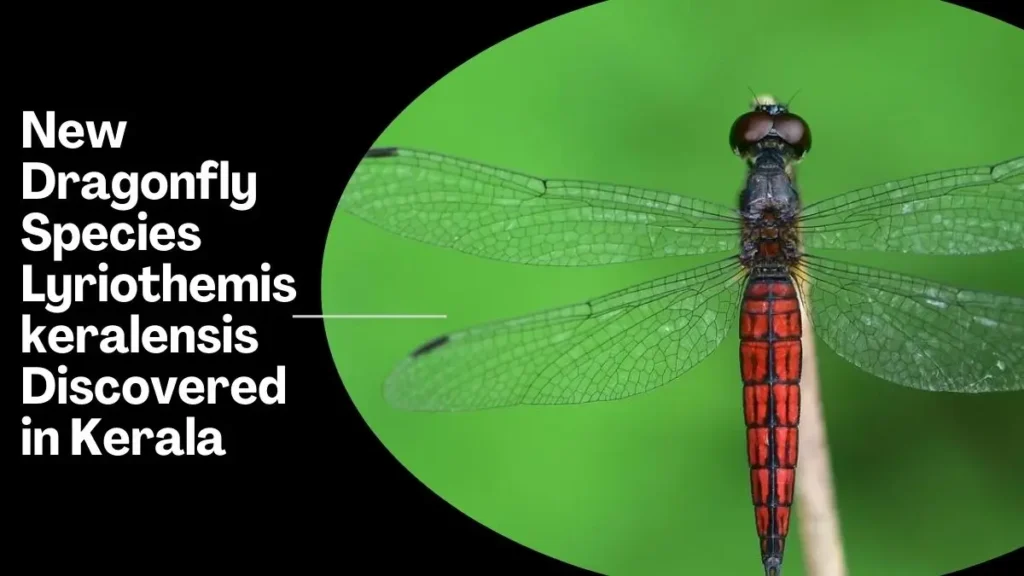
Lyriothemis keralensis dragonfly discovery in Kerala highlights India’s rich biodiversity, new insect species research, and conservation importance for competitive exam preparation.
New Dragonfly Species Lyriothemis keralensis Discovered in Kerala
Introduction: A Groundbreaking Discovery in Kerala’s Biodiversity
In an impressive breakthrough for Indian biodiversity research, scientists have identified a new dragonfly species named Lyriothemis keralensis from the coastal plains of Kerala. This discovery marks a significant addition to India’s documented insect fauna and showcases the richness of the region’s ecology.
The Slender Bombardier: Identity and Naming
Commonly referred to as the “Slender Bombardier,” Lyriothemis keralensis was first observed in Kerala’s Varappetty region in 2013. For years, it was misidentified as another dragonfly species, Lyriothemis acigastra, also known as the “Little Bloodtail.” However, after more than a decade of dedicated research, detailed morphological and behavioural studies confirmed that this population represents a distinct species unique to India.
Research and Publication
The research team behind the discovery included noted zoologists and odonate experts Dr. Dattaprasad Sawant, Dr. A. Vivek Chandran, Renjith Jacob Mathews, and Dr. Krushnamegh Kunte. Their study has been published in the International Journal of Odonatology, providing formal scientific documentation of the species’ characteristics and taxonomic status.
Distinct Characteristics and Features
Lyriothemis keralensis displays several unique physical traits that set it apart from similar dragonflies:
- Size: Approximately 3 cm in length.
- Male Appearance: Deep blood-red abdomen with black markings.
- Female Appearance: Broader body with yellow and black patterning.
- Anatomy: Distinctive tail and genital structures different from related species.
These distinctive features were critical in reclassifying it as a new species rather than a variant.
Unusual Habitat Preferences
Unlike most dragonflies that thrive in forested or undisturbed ecosystems, L. keralensis is adapted to human-modified landscapes. Researchers found it predominantly in shaded irrigation canals, seasonal pools, and plantations — including pineapple and rubber cultivation areas — rather than in protected forests. This unusual habitat preference challenges traditional assumptions about where unique biodiversity exists.
Ecological and Conservation Implications
The discovery underlines how agricultural landscapes can support significant biodiversity, emphasizing the need for conservation measures beyond official protected areas. Since Lyriothemis keralensis depends on specific microhabitats created by seasonal water bodies, changes in land use or farming practices could impact its survival.
Conclusion: A Spotlight on Biodiversity in Human Landscapes
The identification of Lyriothemis keralensis not only adds to India’s odonate diversity but also serves as a reminder that scientific exploration can still uncover new species in well-populated regions. For students preparing for government exams, this discovery is vital in topics such as biodiversity, taxonomy, ecology, and conservation strategy.

📌 Why This News Is Important for Exam Aspirants
Relevance to Biodiversity and Ecology Syllabus
This discovery of Lyriothemis keralensis is significant for several aspects of the Indian environment and biodiversity segments of competitive exams:
- It expands understanding of species diversity in India, particularly within the order Odonata, which includes dragonflies and damselflies.
- It shows that new biological discoveries are ongoing, even in regions with long-term scientific observation. This highlights the depth and complexity of India’s ecosystems.
Conservation and Policy Implications
The species’ habitat — in agricultural and human-influenced landscapes — brings attention to modern conservation challenges:
- Conservation beyond forests: Biodiversity protection is not limited to national parks; agricultural and rural landscapes also hold unique life forms.
- Microhabitat dependence: The species thrives in temporary water bodies and shaded canals, underscoring the importance of microhabitats in ecological balance.
Scientific and Geographic Importance
Since Lyriothemis keralensis was misunderstood for over a decade, this story also demonstrates:
- The importance of detailed scientific study, taxonomy, and museum specimen analysis.
- How Kerala’s coastal regions are rich in undocumented biodiversity — relevant for geography and biodiversity mapping sections.
For UPSC, SSC, banking, teaching, railways, and defence exams, this news tests candidates’ ability to integrate environmental science with conservation policy and biodiversity insights.
🧠 Historical Context: Dragonfly Taxonomy and Indian Biodiversity
Dragonflies belong to the order Odonata, a group of flying insects that includes dragonflies and damselflies. They are known for their aerial agility and play crucial roles in ecological food webs as predators of smaller insects, including pests and mosquitoes.
In India, over 500 odonate species have been documented across diverse habitats, from the Himalayan foothills to the coastal plains and Western Ghats biodiversity hotspot. Discoveries of new odonate species continue to enrich scientific understanding of India’s biological wealth.
Historically, many species were identified through painstaking fieldwork involving direct observation, specimen collection, and comparison with museum reference samples. The recent discovery of Lyriothemis keralensis continues this tradition, showing that taxonomy remains a dynamic field with discoveries possible even in human-dominated landscapes.
📋 Key Takeaways from Lyriothemis keralensis Discovery
| S.No. | Key Takeaway |
|---|---|
| 1 | A new dragonfly species named Lyriothemis keralensis was discovered in Kerala. |
| 2 | The species is commonly known as the “Slender Bombardier.” |
| 3 | It was first observed in 2013 and misidentified as Lyriothemis acigastra. |
| 4 | The discovery was published in the International Journal of Odonatology. |
| 5 | L. keralensis thrives in shaded irrigation canals and seasonal farm pools, highlighting biodiversity in agricultural landscapes. |
FAQs: Frequently Asked Questions for Exam Preparation
Q1. What is Lyriothemis keralensis and why is it in the news?
Lyriothemis keralensis is a newly discovered species of dragonfly found in Kerala. It is in the news because it adds to India’s biodiversity records and highlights the importance of research in insect taxonomy and conservation.
Q2. In which Indian state was the new dragonfly species discovered?
The species was discovered in Kerala, particularly in agricultural landscapes and shaded irrigation canals of the coastal plains.
Q3. To which insect order does this dragonfly belong?
It belongs to the order Odonata, which includes dragonflies and damselflies. Members of this order are important ecological indicators and predators of pests.
Q4. What is the common name given to this new species?
The species is commonly referred to as the “Slender Bombardier,” based on its slender body and distinctive appearance.
Q5. Why is the discovery important for biodiversity conservation?
The discovery shows that even human-modified agricultural landscapes can support rare and unique species. It emphasizes the need to extend conservation efforts beyond protected forests.
Q6. In which scientific journal was the discovery published?
The findings were published in the International Journal of Odonatology, a peer-reviewed journal focusing on dragonfly research.
Q7. How does this discovery help students preparing for competitive exams?
It is relevant to topics like biodiversity, ecology, conservation, taxonomy, and environmental science, which are frequently asked in UPSC, SSC, banking, railways, and state PSC exams.
Q8. What type of habitat does Lyriothemis keralensis prefer?
Unlike many dragonflies that prefer forests, it thrives in shaded canals, plantations, and seasonal water bodies in agricultural areas.
Some Important Current Affairs Links

