
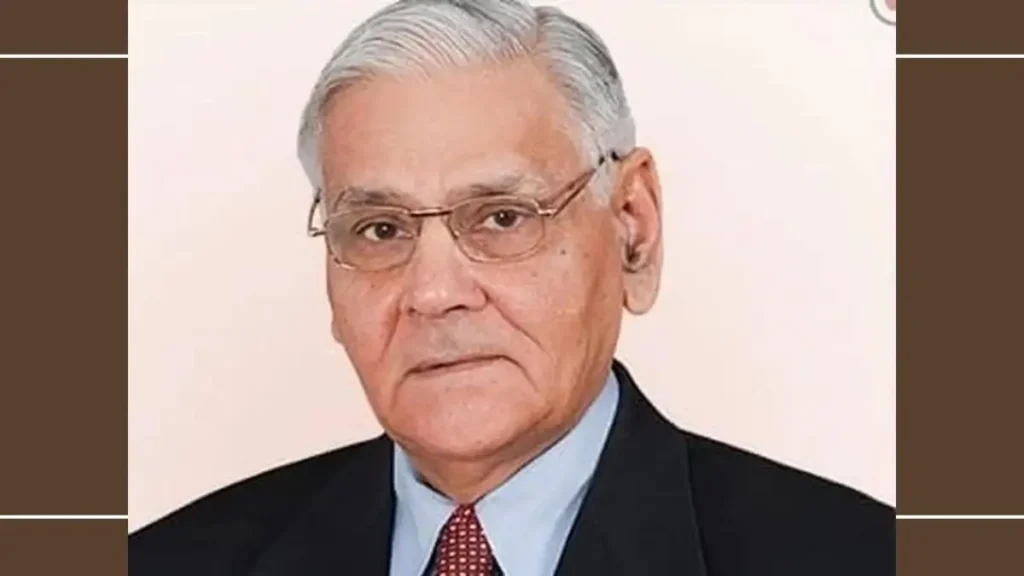
Jatinder Mehra steel industry veteran death 2026 news explained with key facts, historical context, FAQs and MCQs for UPSC, SSC, Banking, Railways and State PSC exams.
Steel Industry Veteran Jatinder Mehra Passes Away at 86 – Current Affairs Explained for Government Exams
On February 25, 2026, India mourned the loss of a towering figure in its industrial landscape — Jatinder Mehra, a renowned veteran of the steel and metals sector, who passed away at the age of 86. Mehra’s death has been described as the end of an era in India’s steel industry, given his long and influential career spanning over six decades.
Throughout his career, Mehra was widely respected for his strategic vision, technical expertise, and leadership qualities that helped shape major steel organisations in the country. He played key roles in both public and private sectors, serving as a leader in top steel enterprises such as Rashtriya Ispat Nigam Limited (RINL) — which operates the Vizag Steel Plant — and as Vice Chairman of the Metals & Mining Division at Essar Group.
Leadership in the Public Sector
Before joining the private sector, Mehra made significant contributions to public sector steel companies. He served as the Chairman-cum-Managing Director (CMD) of RINL, where he was instrumental in stabilising operations and expanding production capacities. Additionally, he also held leadership roles in Steel Authority of India Limited (SAIL), contributing to the growth of India’s largest steel producer.
Strategic Vision at Essar Group
At Essar, Mehra provided strategic direction to the metals and mining business. He was recognised for his role in planning and executing major projects such as the expansion of the Hazira steel complex in Gujarat and supporting proposed integrated facilities like the Paradip steel project in Odisha. His work helped position Essar as a competitive global player in the steel market.
Mentorship and Industrial Legacy
Mehra’s reputation extended beyond project execution — he was equally respected for mentoring young engineers and industry professionals. His guidance fostered a culture of innovation and operational excellence in many organisations. Many leaders in the steel sector today credit him for shaping their careers and strengthening India’s industrial capabilities.
Industry Reaction
Following his passing, leading steel firms and industrial bodies expressed deep sorrow, highlighting Mehra’s clarity of thought, dedication to nation-building, and leadership that helped define key milestones in India’s steel story. His influence resonated across both public enterprises and private firms, making him a unifying figure in the sector.

Why This News is Important for Government Exams
Significance of Industrial Leadership
The passing of Jatinder Mehra holds importance for competitive exams because it reflects on India’s industrial growth narrative, particularly the evolution of the steel sector — a critical segment of the nation’s economy. As India positions itself as a global manufacturing hub, understanding contributions of industry veterans helps students appreciate leadership roles in public enterprises and private corporations alike, a frequent topic in current affairs sections of exams like UPSC, SSC, banking, and state PSCs.
Relevance in Economy & Industry Syllabus
Questions related to prominent personalities often appear in government exams under economic and industrial developments. Mehra’s career — spanning both public sector units like RINL and SAIL, and his strategic leadership in the Essar Group — provides a case study on cross-sector influence and the transformation of the metals industry in India. Knowing such figures helps students link policy, industry outcomes, and leadership decisions to broader economic frameworks.
Leadership & Strategic Management Insights
For exams with sections on business environment, management, and organizational leadership, Mehra’s approach offers insights into visionary planning, project execution, and mentorship — qualities that competitive exam papers frequently expect students to understand and analyse qualitatively in essay or descriptive sections.
Connection to Industrial Policy
The steel sector is often part of discussions about Make in India, infrastructure development, and public-private partnerships. Mehra’s work is emblematic of how experienced professionals bridge the gap between industrial policy and execution — an important concept for sociology, economics, and governance papers in exams like UPSC, CAPF, and state services tests.
Historical Context: India’s Steel Industry and Key Leaders
India’s steel journey began in the early 20th century with the establishment of Tata Steel in 1907 in Jamshedpur — marking the nation’s first large-scale steel plant. Over time, India expanded its steel footprint through both public sector efforts like SAIL and RINL, and private players such as Essar and JSW Steel.
Steel has been categorised as a core sector in India’s economy, often referred to as a benchmark for industrial growth in government planning documents and economics textbooks. Veteran leaders in this sector have historically played roles not just in production but also in technology adoption, export expansion, and infrastructural integration for national development objectives.
Jatinder Mehra’s career reflects this legacy. As a leader who navigated complex corporate environments across public and private sectors, his life’s work mirrors the evolution of India’s industrial capabilities from reliance on state-run enterprises to embracing global competitive frameworks. Students preparing for exams often study such industry milestones to understand economic development policies, industrial strategy, and leadership examples that shape India’s macroeconomic environment.
Key Takeaways from “End of an Era: Steel Veteran Jatinder Mehra Passes Away at 86”
| S.No. | Key Takeaway |
|---|---|
| 1 | Jatinder Mehra, a veteran of India’s steel and metals industry, passed away at age 86 on February 25, 2026. |
| 2 | He held leadership roles in both public and private sectors, including at RINL and Essar Group. |
| 3 | Mehra’s career spanned more than six decades with significant contributions to major projects like Hazira and Paradip facilities. |
| 4 | Known for his technical expertise and strategic vision, he helped modernise India’s steel capabilities. |
| 5 | His passing represents a notable loss for India’s industrial community and is significant current affairs content for competitive exams. |
FAQs for Government Exam Preparation
1. Who was Jatinder Mehra?
Jatinder Mehra was a veteran leader in India’s steel and metals sector who passed away in February 2026 at the age of 86. He played key roles in both public and private steel enterprises and significantly contributed to India’s industrial growth.
2. Which major public sector companies did he lead?
He served as Chairman-cum-Managing Director (CMD) of Rashtriya Ispat Nigam Limited (RINL), which operates the Vizag Steel Plant. He was also associated with leadership responsibilities at Steel Authority of India Limited (SAIL).
3. What role did he play in the private sector?
In the private sector, he served as Vice Chairman of the Metals & Mining Division at Essar Group, contributing to expansion projects and strategic planning in steel manufacturing.
4. Why is the steel sector important for competitive exams?
The steel sector is classified as a core industry and is a key indicator of infrastructure development and industrial growth. Questions about major personalities, public sector undertakings (PSUs), and industrial policy frequently appear in exams such as UPSC, SSC, Banking, Railways, Defence, and State PSC exams.
5. Which steel plant is operated by RINL?
RINL operates the Visakhapatnam Steel Plant, also known as Vizag Steel, one of India’s leading public sector steel plants.
6. What are some important steel companies in India for exam preparation?
Key companies include Steel Authority of India Limited (SAIL), Tata Steel, JSW Steel, and Rashtriya Ispat Nigam Limited (RINL).
7. How can such personality-based news be asked in exams?
Exams may ask direct factual questions (age, designation, organisation), match-the-following (company and role), or conceptual questions linking industrial growth and economic development.
Some Important Current Affairs Links

