
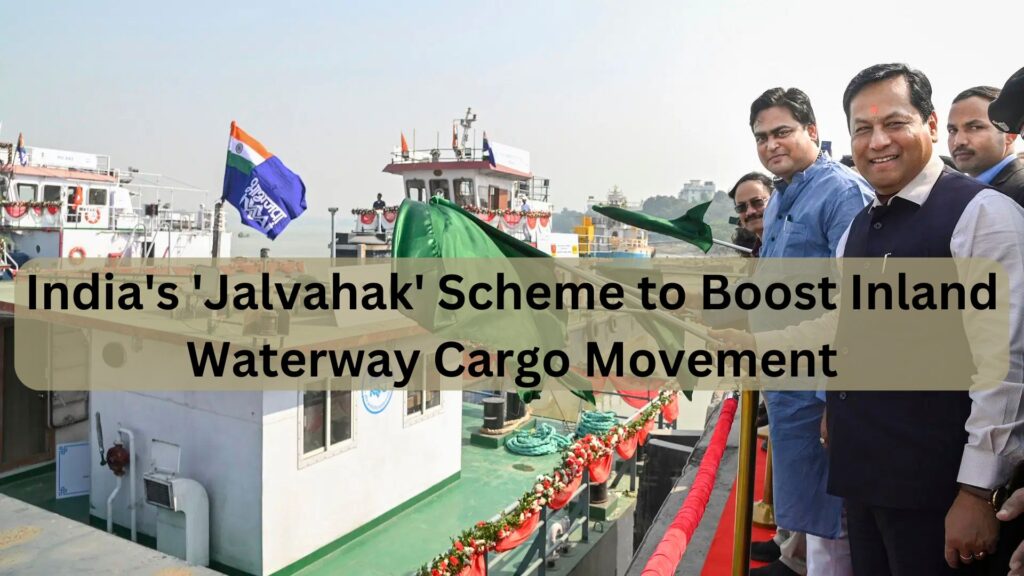
Govt Unveils JalVahak Scheme to Boost Inland Waterways Cargo Movement
The Indian government has recently launched the JalVahak Scheme, a significant initiative aimed at boosting the movement of cargo through inland waterways. This scheme is part of the government’s broader vision to enhance the transportation infrastructure and make India a global logistics hub. Inland waterways, including rivers and canals, provide an environmentally sustainable and cost-effective mode of transport. The scheme will focus on promoting this underutilized mode of transport, reducing road congestion, and cutting down transportation costs.
Key Features of the JalVahak Scheme
The JalVahak Scheme will focus on the development of key inland waterways and ports to facilitate the easy movement of goods. The scheme aims to modernize the existing infrastructure and develop new terminals, multimodal logistics hubs, and necessary equipment. The initiative will also provide financial support to the stakeholders involved in cargo transportation via inland waterways. By increasing the cargo movement capacity, the scheme is expected to enhance efficiency and productivity in India’s logistics sector.
Economic and Environmental Benefits
The implementation of the JalVahak Scheme is expected to have significant economic and environmental benefits. By promoting inland waterways for cargo transport, the scheme aims to reduce dependency on road and rail transport, thus reducing road congestion, fuel consumption, and carbon emissions. The scheme is also expected to create thousands of job opportunities, both directly and indirectly, through the development of infrastructure and logistics hubs.
Why This News is Important
Impact on India’s Logistics Sector
The JalVahak Scheme plays a pivotal role in revolutionizing India’s logistics sector. With the country’s infrastructure under stress due to high road and rail traffic, the scheme offers a viable alternative for cargo transport. It aims to reduce the burden on existing transport systems and create a more sustainable and efficient logistics network.
Cost Efficiency and Sustainability
The scheme’s emphasis on inland waterways presents a more cost-effective and environmentally friendly mode of transport. As logistics costs account for a substantial portion of the country’s GDP, reducing these costs will significantly benefit the economy. Moreover, by reducing the carbon footprint, the scheme aligns with India’s commitment to sustainable development and environmental protection.
Alignment with Government’s Vision of ‘Atmanirbhar Bharat’
The launch of this scheme is in line with the government’s broader vision of Atmanirbhar Bharat (Self-Reliant India). By developing a robust inland waterways infrastructure, India will reduce its dependence on foreign logistics systems, thus strengthening domestic trade and industries. This initiative also supports the Make in India program, aiming to create a more efficient and competitive economy.
Historical Context
Inland water transport has been a part of India’s trade and transportation history for centuries. Historically, rivers such as the Ganga, Brahmaputra, and Godavari served as essential trade routes. However, over the years, the sector has been underutilized due to poor infrastructure and competition from road and rail networks. The government has been keen on revitalizing the inland waterways sector to reduce congestion on highways and railways while promoting sustainable transportation. The JalVahak Scheme is a major step in this direction, following other initiatives such as the National Waterways Act, 2016, and the development of the National Waterways 1 (NW-1), which connects Haldia to Allahabad along the Ganga River.
Key Takeaways from the JalVahak Scheme
| S.No. | Key Takeaway |
|---|---|
| 1 | The JalVahak Scheme aims to boost cargo movement through inland waterways in India. |
| 2 | The scheme will modernize infrastructure and develop multimodal logistics hubs. |
| 3 | It is expected to reduce road congestion, fuel consumption, and carbon emissions. |
| 4 | The scheme will align with India’s vision of Atmanirbhar Bharat and Make in India. |
| 5 | Inland waterways will provide a cost-effective and sustainable alternative to road and rail transport. |
Important FAQs for Students from this News
What is the JalVahak Scheme?
The JalVahak Scheme is an initiative by the Indian government to boost cargo movement through inland waterways. It focuses on modernizing infrastructure, developing logistics hubs, and promoting cost-effective and sustainable transportation of goods via rivers and canals.
Why has the government launched the JalVahak Scheme?
The government has launched the scheme to alleviate congestion on roads and railways, reduce transportation costs, and promote environmentally sustainable transport. It aims to improve India’s logistics sector and contribute to economic growth.
What are the expected benefits of the JalVahak Scheme?
The expected benefits include reduced road congestion, lower carbon emissions, cost savings on transportation, job creation, and the development of modern multimodal logistics hubs along inland waterways.
Which waterways will be developed under the JalVahak Scheme?
The scheme will focus on key inland waterways, including the Ganga, Brahmaputra, and other national waterways that are critical for cargo transport. Development will also include new terminals and infrastructure to support freight movement.
How does the JalVahak Scheme align with the government’s broader initiatives?
The scheme supports the Atmanirbhar Bharat vision by promoting domestic transportation infrastructure. It is also aligned with the Make in India program, which aims to reduce dependence on foreign logistics systems and make India a more competitive economy.
Some Important Current Affairs Links

