

ITER: The Future of Fusion Energy
Introduction to ITER and Fusion Energy
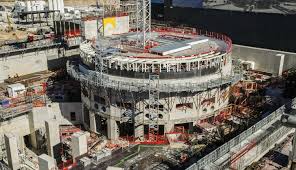
ITER (International Thermonuclear Experimental Reactor) is a groundbreaking international scientific collaboration aimed at demonstrating the feasibility of nuclear fusion as a sustainable energy source. The project, based in France, brings together 35 nations, including India, the USA, China, Russia, and the European Union, in a united effort to develop fusion technology.
How ITER Works: Harnessing the Power of the Sun
Fusion energy mimics the process that powers the sun, where atomic nuclei combine to release immense energy. Unlike traditional nuclear fission, fusion does not produce long-lived radioactive waste and has the potential to generate enormous amounts of clean energy. The ITER reactor will use hydrogen isotopes—deuterium and tritium—to create plasma, a superheated state of matter where fusion reactions occur.
Significance of ITER in the Global Energy Landscape
With global energy demands skyrocketing and climate change concerns increasing, ITER offers a promising alternative to fossil fuels and conventional nuclear power. It aims to produce ten times more energy than it consumes, marking a significant milestone in energy science. Success in ITER could pave the way for commercial fusion reactors, revolutionizing the world’s energy systems.
India’s Contribution to the ITER Project
India, as a key partner in the ITER project, has made significant contributions in the form of critical components like cryostat—a crucial chamber maintaining ultra-low temperatures for the reactor. The country’s involvement underscores its commitment to advancing clean energy technologies and positioning itself as a leader in future energy solutions.
Challenges and Future Prospects of Fusion Energy
Despite its immense potential, fusion energy faces several challenges, including high costs, complex engineering requirements, and long development timelines. However, continued international collaboration and advancements in material science, superconductors, and plasma physics offer hope for overcoming these hurdles and achieving commercial viability.
Why This News is Important
Revolutionizing the Energy Sector
ITER represents a paradigm shift in how the world approaches energy production. Unlike fossil fuels, which are finite and polluting, fusion energy offers an abundant and eco-friendly alternative that could power civilizations for centuries.
A Solution to Climate Change
As countries strive to meet carbon neutrality goals, fusion energy provides a viable solution to reducing greenhouse gas emissions. ITER’s success would mark a crucial step towards a carbon-free energy future.
Technological Advancements and Global Collaboration
The project is a testament to human ingenuity and international cooperation in scientific advancements. The collaborative nature of ITER fosters innovation and strengthens diplomatic ties among participating nations.
Economic and Strategic Implications for India
India’s participation in ITER enhances its scientific prowess and economic standing in the global nuclear research community. It also opens doors for future opportunities in fusion-based power generation and industrial applications.
Historical Context
The Evolution of Nuclear Fusion Research
The concept of harnessing nuclear fusion for energy dates back to the mid-20th century. Early experiments in the 1950s laid the groundwork for controlled fusion research, leading to the establishment of tokamak reactors—devices designed to confine and sustain plasma.
Formation of ITER and International Collaboration
ITER was officially conceptualized in 1985 during the Geneva Summit between US President Ronald Reagan and Soviet leader Mikhail Gorbachev. The project gained momentum in the 2000s with the selection of France as its host site and the inclusion of major international stakeholders.
India’s Journey in Fusion Research
India joined ITER in 2005 as a full partner, bringing its expertise in cryogenics, plasma physics, and material science. The country also operates its own tokamak experiments, such as Aditya-L1, to contribute to fusion energy advancements.
Key Takeaways from ITER: The Future of Fusion Energy
| S.No | Key Takeaway |
|---|---|
| 1 | ITER is an international collaborative project aimed at demonstrating the feasibility of nuclear fusion energy. |
| 2 | Fusion energy mimics the sun’s power, offering a cleaner and more sustainable energy alternative than fossil fuels. |
| 3 | India plays a crucial role in the ITER project, contributing critical components and expertise. |
| 4 | The success of ITER could revolutionize global energy production and help combat climate change. |
| 5 | Despite challenges, continued research and collaboration in fusion energy hold the promise of limitless clean energy in the future. |
Important FAQs for Students from this News
What is ITER, and why is it significant?
- ITER (International Thermonuclear Experimental Reactor) is a multinational project aimed at demonstrating the feasibility of nuclear fusion as a sustainable energy source. It is significant because it could provide an unlimited supply of clean energy.
Where is the ITER project located?
- ITER is located in Cadarache, France, and involves collaboration from 35 countries, including India.
How does fusion energy differ from nuclear fission?
- Fusion energy involves combining hydrogen isotopes (deuterium and tritium) to release energy, whereas nuclear fission splits heavy atoms like uranium. Fusion produces more energy and minimal radioactive waste compared to fission.
What role does India play in the ITER project?
- India contributes to ITER by providing critical components such as the cryostat, cooling systems, and superconducting magnets. The country’s participation enhances its expertise in fusion energy research.
What is the expected outcome of the ITER project?
- The main goal of ITER is to produce ten times more energy than it consumes, proving that fusion can be a viable and sustainable energy source.
Some Important Current Affairs Links

