
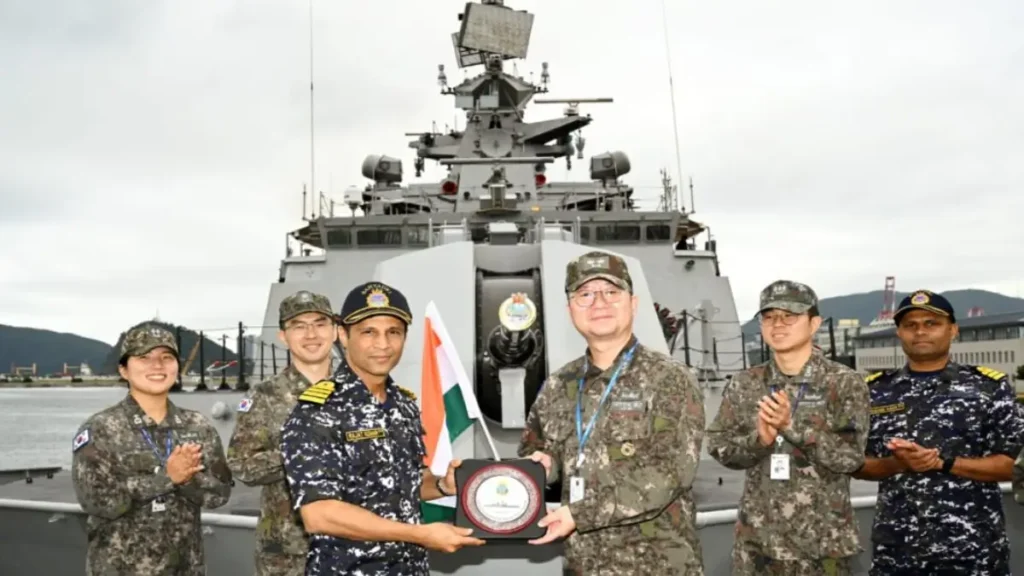
India South Korea conducted their first bilateral naval exercise IN–RoKN in 2025 at Busan Naval Base, strengthening maritime cooperation and showcasing indigenous defence capabilities.
India–South Korea Conduct First Bilateral Naval Exercise IN–RoKN
Introduction to IN–RoKN
On October 13, 2025, the Indian Navy and the Republic of Korea Navy initiated their inaugural bilateral naval exercise, named IN–RoKN, at the Busan Naval Base in South Korea. This exercise marks a significant milestone in enhancing maritime cooperation between the two nations.
Objectives of the Exercise
The primary objectives of IN–RoKN are to bolster interoperability, foster mutual understanding, and build trust between the naval forces of India and South Korea. The exercise is structured into two distinct phases: the Harbour Phase and the Sea Phase.
Harbour Phase
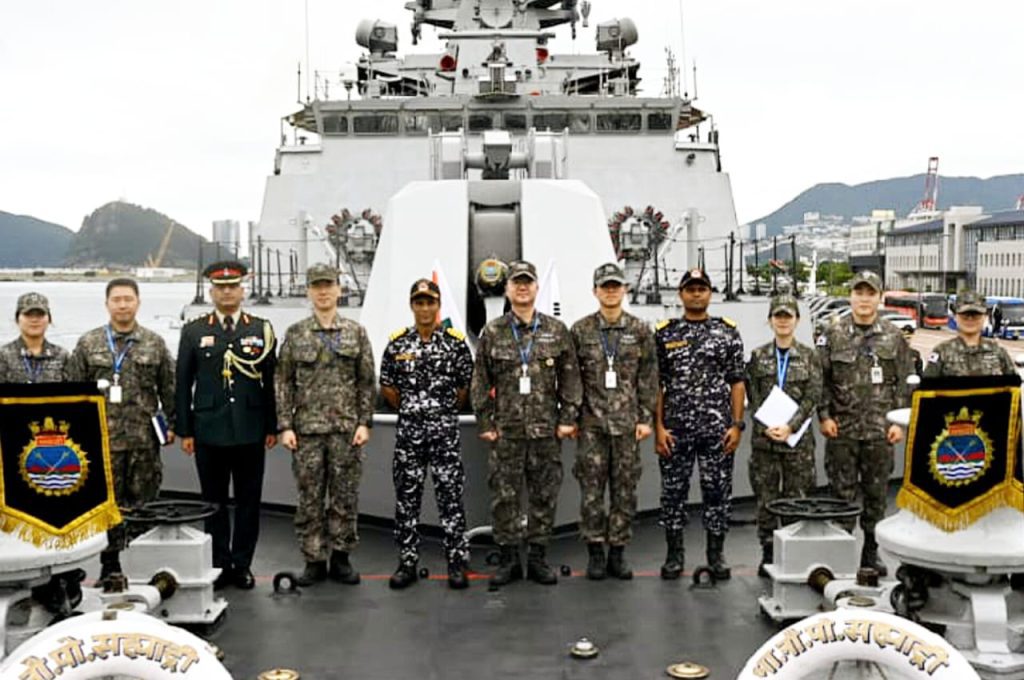
During the Harbour Phase, naval personnel from both countries engage in cross-deck visits, professional exchanges, sharing of best practices, sports events, and cross-training sessions. The Commanding Officer of INS Sahyadri also pays courtesy calls on senior RoKN officials and local dignitaries.
Sea Phase
The Sea Phase involves complex joint manoeuvres and operational exercises between INS Sahyadri and ROKS Gyeongnam. These exercises aim to strengthen tactical coordination and operational synergy between the two naval forces.
Significance of INS Sahyadri
INS Sahyadri, an indigenously designed and constructed Shivalik-class stealth frigate, was commissioned in 2012. Serving under the Eastern Fleet of the Eastern Naval Command, headquartered at Visakhapatnam, INS Sahyadri represents India’s commitment to self-reliance in defence capabilities and has participated in numerous bilateral and multilateral exercises.
Strategic Importance of the Exercise
The Indo-Pacific region’s growing geopolitical significance underscores the need for enhanced maritime cooperation. This exercise reflects both nations’ commitment to maintaining regional security and freedom of navigation, reinforcing their strategic partnership in the Indo-Pacific.
Why This News is Important
Enhancing Bilateral Relations
The IN–RoKN exercise signifies a deepening of bilateral ties between India and South Korea. By conducting joint naval operations, both nations aim to strengthen their strategic partnership and foster greater understanding and cooperation in maritime affairs.
Promoting Regional Security
The exercise underscores the shared commitment of India and South Korea to uphold regional security in the Indo-Pacific. Through collaborative efforts, both countries aim to address common security challenges and contribute to a stable and secure maritime environment.
Showcasing Indigenous Capabilities
The participation of INS Sahyadri highlights India’s growing indigenous defence capabilities. As a product of India’s ‘Aatmanirbhar Bharat’ initiative, the ship’s involvement in international exercises demonstrates the country’s advancements in self-reliant defence technologies.
Strengthening Multilateral Engagements
This bilateral exercise sets the stage for future multilateral engagements involving India, South Korea, and other regional partners. Such collaborations are essential for addressing complex maritime security issues and enhancing collective security in the Indo-Pacific region.
Aligning with Global Maritime Norms
By participating in the IN–RoKN exercise, both India and South Korea reaffirm their commitment to a rules-based international order. The exercise promotes adherence to international maritime norms and fosters mutual respect among nations in the region.
Historical Context
Evolution of India–South Korea Naval Relations
The naval relationship between India and South Korea has evolved over the years, marked by increased interactions and collaborations. Both nations have recognized the importance of maritime security in the Indo-Pacific and have engaged in various naval exercises and dialogues to enhance cooperation.
Previous Multilateral Engagements
Prior to the IN–RoKN exercise, both India and South Korea participated in multilateral naval exercises, such as Exercise Sea Dragon 2025, which involved multiple countries including the United States, Japan, and Australia. These engagements laid the groundwork for deeper bilateral naval cooperation between the two nations.
Strategic Shifts in the Indo-Pacific
The Indo-Pacific region has witnessed significant geopolitical shifts, with increased maritime activities and strategic interests from various global powers. In this context, India and South Korea have recognized the need for enhanced bilateral and multilateral engagements to ensure regional stability and security.
Key Takeaways from “India–South Korea Hold First Bilateral Naval Exercise IN–RoKN”
| # | Key Takeaway |
|---|---|
| 1 | The IN–RoKN exercise commenced on October 13, 2025, at Busan Naval Base. |
| 2 | INS Sahyadri, an indigenously built Shivalik-class frigate, represents India’s ‘Aatmanirbhar Bharat’ initiative. |
| 3 | The exercise comprises two phases: Harbour Phase and Sea Phase. |
| 4 | ROKS Gyeongnam, a Daegu-class frigate, participated alongside INS Sahyadri. |
| 5 | The exercise aims to enhance interoperability and strengthen bilateral maritime cooperation. |
FAQs: Frequently Asked Questions
1. What is IN–RoKN?
IN–RoKN is the first bilateral naval exercise conducted between the Indian Navy and the Republic of Korea Navy, aimed at enhancing interoperability and maritime cooperation.
2. When and where was the IN–RoKN exercise held?
The exercise began on October 13, 2025, at the Busan Naval Base in South Korea.
3. Which Indian naval ship participated in IN–RoKN?
INS Sahyadri, an indigenously designed and constructed Shivalik-class stealth frigate, participated in the exercise.
4. Which South Korean naval ship took part in the exercise?
ROKS Gyeongnam, a Daegu-class frigate, participated alongside INS Sahyadri.
5. What are the two phases of the IN–RoKN exercise?
The exercise is divided into the Harbour Phase, involving professional exchanges and cross-training, and the Sea Phase, involving joint operational maneuvers.
6. Why is the IN–RoKN exercise significant?
It strengthens bilateral relations, promotes regional security in the Indo-Pacific, showcases indigenous defence capabilities, and aligns with global maritime norms.
7. Where is INS Sahyadri based?
INS Sahyadri is based under the Eastern Fleet of the Eastern Naval Command in Visakhapatnam, India.
8. What is the strategic importance of IN–RoKN for India?
It reinforces India’s presence in the Indo-Pacific, enhances operational readiness, and demonstrates commitment to regional security and multilateral maritime engagements.
9. Has India previously conducted naval exercises with South Korea?
While there were no prior bilateral exercises, both nations participated in multilateral exercises like Exercise Sea Dragon 2025.
10. How does IN–RoKN contribute to India’s ‘Aatmanirbhar Bharat’ initiative?
INS Sahyadri’s participation highlights India’s indigenous defence manufacturing and self-reliance in naval capabilities.
Some Important Current Affairs Links

