
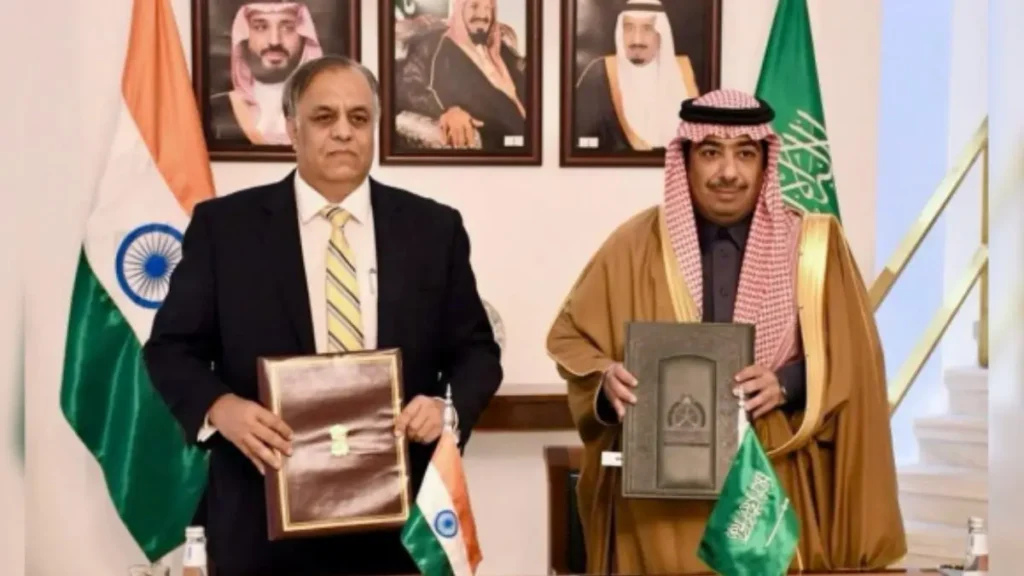
India–Saudi Arabia Visa Waiver Agreement for diplomatic and official passports, easing official travel, boosting bilateral ties, and strengthening strategic partnership.
India and Saudi Arabia Sign Visa Waiver Agreement to Facilitate Official Travel
Introduction: Landmark Bilateral Agreement
India and Saudi Arabia have recently signed a significant visa waiver agreement aimed at easing official travel between the two nations. This agreement enables holders of diplomatic, official, and special passports to travel between India and Saudi Arabia without needing a visa for short stays. The pact was signed in Riyadh at the Ministry of Foreign Affairs by India’s Ambassador Dr. Suhel Ajaz Khan and Saudi Arabia’s Deputy Minister for Protocol Affairs Abdulmajeed bin Rashed Al‑Smari.
Details of the Visa Waiver Agreement
Under the new agreement, eligible travellers from both countries will be able to enter and exit without prior visa formalities for short official visits. The primary objective is to streamline bureaucratic procedures and promote frequent visits by officials, which can strengthen inter‑governmental cooperation. This move is expected to enhance both administrative and institutional communication between the two nations.
Strategic and Diplomatic Significance
The pact is part of broader efforts within the India‑Saudi Arabia Strategic Partnership Council, reflecting evolving cooperation between the two countries on political and economic fronts. With regular official interaction becoming smoother, it’s likely that joint initiatives in areas such as defence, trade, energy, and cultural diplomacy will gain momentum.
Impact on International Relations
Analysts believe that visa facilitation for officials will significantly boost bilateral exchanges, allowing more frequent high‑level delegations and faster coordination on crucial strategic issues. It also signals mutual trust and expanding diplomatic engagement.
Future Implications
This agreement aligns with both nations’ interests in deepening diplomatic engagement, expanding bilateral trade, and enhancing regional influence. India is a key strategic partner for Saudi Arabia in South Asia, while Saudi Arabia is an important partner for India in West Asia. The visa waiver is an example of practical cooperation that can lead to a more robust partnership in years to come.

Why This News Is Important for Government Exam Aspirants
Boost for International Relations and Diplomacy
This development is significant as it reflects a strengthened diplomatic relationship between India and Saudi Arabia — two influential nations in the global geopolitical landscape. For exams like UPSC/PSC or Foreign Service exams, knowing about evolving bilateral ties, especially regarding strategic Middle Eastern partnerships, is crucial. Saudi Arabia’s role as a key partner in energy, trade, and defence makes developments like this highly relevant.
Relevance to Economy, Strategic Policy & Administrative Reforms
The visa waiver deal is not just about convenience — it also represents administrative reforms aimed at facilitating smoother government‑to‑government interaction. This is a practical example of policy change that can influence trade negotiations, defence cooperation, and high‑level diplomatic engagements. Such topics often feature in government exams under current affairs, international relations, and administrative reforms.
Understanding Global Cooperation Frameworks
Exam questions frequently ask about strategic partnership councils and bilateral agreements. This visa waiver agreement is part of the larger framework of India‑Saudi Arabia strategic cooperation. Aspirants should note how such agreements reflect broader foreign policy objectives like fostering trust, reducing barriers, and enhancing cooperation.
Historical Context: India–Saudi Arabia Diplomatic Relations
Longstanding Bilateral Ties
India and Saudi Arabia share a long history of diplomatic engagement, rooted in trade, labour mobility, and cultural exchanges. Saudi Arabia hosts one of the largest Indian expatriate communities, and India is a major market for Saudi energy exports.
Strategic Partnership Evolution
Over the past decade, both countries have gradually expanded ties under the framework of strategic partnerships. These include cooperation in areas such as energy security, defence, trade, and cultural diplomacy. The establishment of the India–Saudi Arabia Strategic Partnership Council was a cornerstone for these evolving relations
Recent Initiatives and Collaborations
Recent years have seen enhanced cooperation through joint efforts in trade facilitation, investment promotion, and parliamentary diplomacy. The visa waiver agreement for officials is another step in reducing barriers and solidifying bilateral engagement.
Key Takeaways from India–Saudi Arabia Visa Waiver Agreement
| S.No. | Key Takeaway |
|---|---|
| 1. | India and Saudi Arabia signed a bilateral visa waiver agreement to ease travel for officials. |
| 2. | The agreement applies to holders of diplomatic, official, and special passports. |
| 3. | It aims to boost official visits and improve institutional coordination. |
| 4. | The signing took place in Riyadh under the India‑Saudi Strategic Partnership Council. |
| 5. | This move strengthens bilateral cooperation in political, economic, and strategic domains. |
FAQs: India–Saudi Arabia Visa Waiver Agreement
Q1. What is the India–Saudi Arabia visa waiver agreement about?
A1. The agreement allows holders of diplomatic, official, and special passports to travel between India and Saudi Arabia without a visa for official short-term visits.
Q2. Who signed the visa waiver agreement on behalf of India and Saudi Arabia?
A2. The agreement was signed by India’s Ambassador Dr. Suhel Ajaz Khan and Saudi Arabia’s Deputy Minister for Protocol Affairs Abdulmajeed bin Rashed Al‑Smari.
Q3. What is the main purpose of this agreement?
A3. The primary purpose is to facilitate official travel, streamline bureaucratic processes, and promote inter-governmental cooperation.
Q4. Under which framework does this agreement fall?
A4. It falls under the India–Saudi Arabia Strategic Partnership Council, which enhances diplomatic, political, and economic cooperation.
Q5. Which types of passports are eligible for visa-free travel under this agreement?
A5. Diplomatic, official, and special passports are eligible; ordinary passport holders still require visas.
Q6. How will this agreement benefit bilateral relations?
A6. It will boost high-level official interactions, strengthen trust, and enhance cooperation in defence, trade, and cultural diplomacy.
Q7. When and where was the agreement signed?
A7. The agreement was signed in Riyadh, Saudi Arabia in December 2025.
Q8. Does this visa waiver apply to ordinary tourist or business visas?
A8. No, the waiver applies only to official, diplomatic, and special passport holders, not ordinary tourists or business travelers.
Q9. Why is this news important for government exam aspirants?
A9. It highlights India’s strategic foreign relations, policy initiatives, and diplomatic reforms, which are relevant for UPSC, PSC, and other competitive exams.
Q10. What future implications might this agreement have?
A10. It may enhance bilateral trade, strengthen diplomatic ties, and support faster coordination on strategic issues between the two nations.
Some Important Current Affairs Links

