
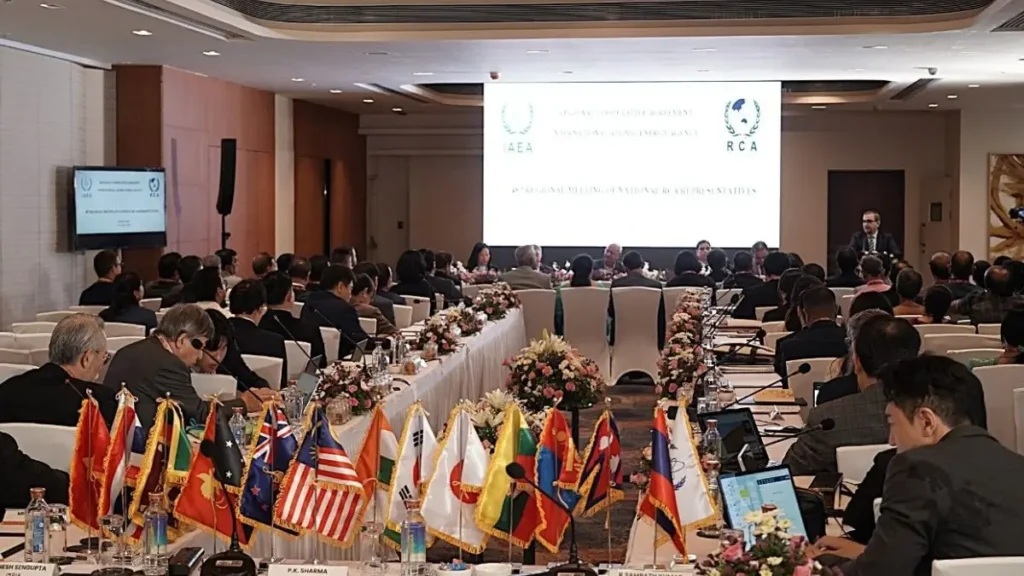
India RCA Chairmanship 2026 under IAEA highlights India’s growing role in peaceful nuclear technology, regional cooperation, science diplomacy, and Asia-Pacific development for competitive exam preparation.
India Assumes Leadership Role in Regional Nuclear Cooperation
India has officially taken over the Chairmanship of the Regional Cooperative Agreement (RCA) for 2026 under the aegis of the International Atomic Energy Agency. This important development highlights India’s growing role in promoting the peaceful use of nuclear science and technology across the Asia-Pacific region. The announcement was made during the 48th Meeting of National Representatives (NRM) held in Navi Mumbai and hosted by India’s Department of Atomic Energy (DAE).
What is the Regional Cooperative Agreement (RCA)?
The Regional Cooperative Agreement is an intergovernmental framework established in 1972 under the guidance of the IAEA. Its main objective is to promote research, development, and training related to nuclear science and technology among member countries in Asia and the Pacific. Currently, the RCA includes 22 member nations working together to use nuclear technology for peaceful and developmental purposes.
The agreement focuses on sectors such as healthcare, agriculture, water resource management, environmental protection, food preservation, and industrial applications. Through this platform, member countries exchange scientific knowledge, technical expertise, and training opportunities.
Importance of India Becoming RCA Chair
India becoming the Chair of RCA for 2026 is considered a major diplomatic and scientific achievement. It reflects international recognition of India’s advancements in nuclear science and peaceful nuclear applications. India has long contributed to regional cooperation through training programmes, technological support, and scientific research initiatives.
During the meeting, senior officials from the Department of Atomic Energy highlighted India’s contributions in fields such as cancer treatment, isotope hydrology, radiation technology, and sustainable agriculture. India’s leadership role is expected to strengthen regional partnerships and encourage collaborative scientific projects among Asian and Pacific nations.
India’s Contribution to Peaceful Nuclear Applications
India has consistently emphasized the peaceful use of nuclear energy. Institutions like the Bhabha Atomic Research Centre have played a major role in developing technologies that benefit society. Nuclear science in India has been used in healthcare for cancer diagnosis and radiotherapy, in agriculture for crop improvement, and in water management through desalination and isotope techniques.
India’s atomic energy programme also supports food preservation and environmental sustainability. These contributions have helped India gain credibility as a responsible nuclear power committed to developmental goals rather than military expansion.
Participation of Member Countries in the Meeting
The 48th National Representatives Meeting witnessed participation from 17 Asia-Pacific nations along with officials from the IAEA and the RCA Regional Office. Delegates from African countries under the African Regional Cooperative Agreement (AFRA) also attended the event as special invitees.
The discussions focused on strengthening scientific cooperation, reviewing ongoing projects, and exploring new opportunities for regional collaboration in nuclear science and technology.
Focus Areas Under India’s Chairmanship
India is expected to prioritize several important sectors during its tenure as RCA Chair. These include healthcare innovation, nuclear medicine, radiation technology, climate resilience, water purification, food security, and sustainable agriculture. India will also encourage capacity building and training programmes for scientists and researchers across member countries.
The leadership role aligns with India’s broader vision of “Vishwa-Bandhu Bharat,” which emphasizes global cooperation and shared development through science and technology.

Why this News is Important
Importance for International Relations
India taking over the Chairmanship of RCA is important from the perspective of international relations and diplomacy. It demonstrates India’s increasing influence in global scientific and technological cooperation. Through this leadership position, India can strengthen ties with countries in Asia and the Pacific while promoting peaceful nuclear collaboration.
For students preparing for UPSC, State PCS, SSC, Banking, Railways, Defence, and teaching examinations, this development is significant because questions related to international organizations, nuclear diplomacy, and regional cooperation are frequently asked in competitive exams.
Importance for Science and Technology
The news is also important because it highlights the role of nuclear science in solving developmental challenges. Nuclear technology is no longer limited to power generation. It now plays a crucial role in healthcare, agriculture, water purification, food preservation, and environmental monitoring.
India’s leadership in RCA shows the country’s technological advancement and scientific capabilities. This is relevant for current affairs sections in exams, especially topics related to science and technology, international organizations, and sustainable development.
Importance for India’s Global Image
India’s appointment as RCA Chair strengthens its image as a responsible nuclear nation committed to peaceful development. It also supports India’s ambition to become a global leader in scientific innovation and international cooperation. The move reflects trust from other nations in India’s expertise and diplomatic capabilities.
Historical Context
Origin of the RCA
The Regional Cooperative Agreement was established in 1972 under the framework of the IAEA. The idea of regional cooperation in nuclear science first emerged during discussions held at BARC, Mumbai, in 1964. India played a foundational role in promoting this initiative.
The agreement was designed to help countries in Asia and the Pacific use nuclear science and technology for peaceful and developmental purposes. Over the decades, RCA has expanded its activities in healthcare, agriculture, environmental protection, and industrial research.
India and Nuclear Diplomacy
India has historically advocated the peaceful use of nuclear energy. Despite facing technological restrictions after its nuclear tests, India continued to invest in indigenous nuclear research and development. Institutions under the Department of Atomic Energy developed technologies that benefited healthcare, food security, and industrial growth.
India’s role in RCA reflects its long-standing commitment to scientific cooperation and regional development. The country has hosted several international conferences and training programmes related to nuclear science and technical cooperation.
Key Takeaways from This News
| S.No. | Key Takeaway |
|---|---|
| 1 | India has assumed the Chairmanship of the Regional Cooperative Agreement (RCA) for 2026 under the IAEA. |
| 2 | RCA was established in 1972 to promote peaceful nuclear science cooperation in Asia-Pacific countries. |
| 3 | The 48th National Representatives Meeting was hosted in Navi Mumbai by the Department of Atomic Energy. |
| 4 | India’s leadership highlights its contribution to healthcare, agriculture, radiation technology, and sustainable development. |
| 5 | The development strengthens India’s international scientific diplomacy and regional cooperation role. |
FAQs Related to India Taking Over RCA Chairmanship 2026
1. What is the full form of RCA?
RCA stands for Regional Cooperative Agreement for Research, Development and Training Related to Nuclear Science and Technology for Asia and the Pacific.
2. Under which organization does the RCA function?
The RCA functions under the International Atomic Energy Agency (IAEA).
3. In which year was the RCA established?
The RCA was established in 1972.
4. Which country has taken over the RCA Chairmanship for 2026?
India has taken over the Chairmanship of RCA for 2026.
5. Which Indian organization hosted the 48th National Representatives Meeting?
The Department of Atomic Energy (DAE), Government of India, hosted the meeting.
6. Where was the 48th RCA National Representatives Meeting held?
The meeting was held in Navi Mumbai, Maharashtra.
7. How many member countries are part of the RCA?
The RCA currently has 22 member countries from the Asia-Pacific region.
8. What is the main objective of the RCA?
The main objective is to promote peaceful applications of nuclear science and technology for socio-economic development.
9. Which sectors benefit from RCA programmes?
Healthcare, agriculture, food preservation, water resource management, industry, and environmental protection benefit from RCA programmes.
10. Why is India’s RCA Chairmanship important for competitive exams?
It is important because it covers international organizations, science and technology, nuclear diplomacy, and India’s global role, which are common topics in UPSC, SSC, Banking, Railways, Defence, and State PCS exams.
Some Important Current Affairs Links

