
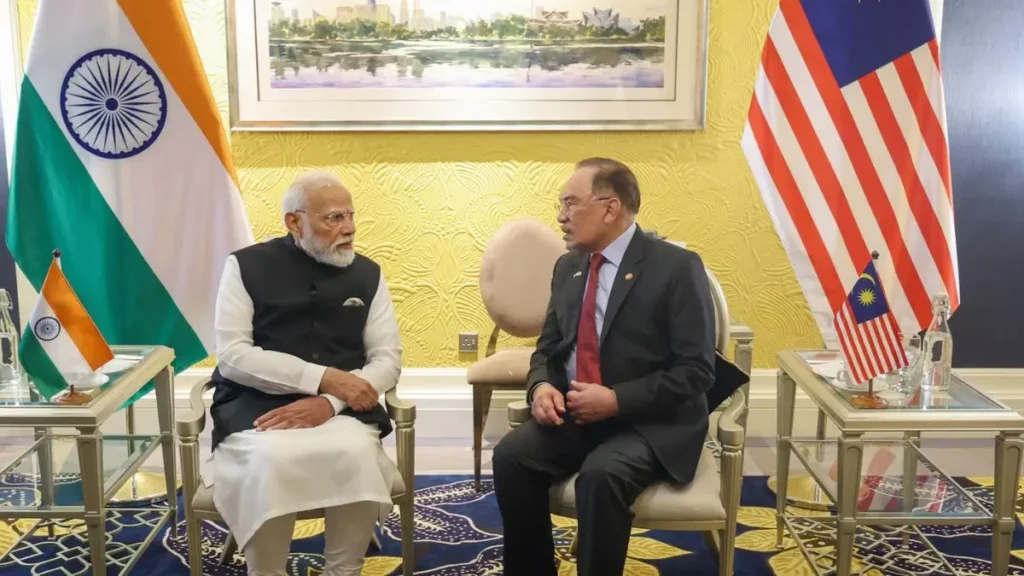
India Malaysia trade agreements 2026 highlight key outcomes of PM Modi’s Malaysia visit, including energy cooperation, digital payments, and strategic partnerships important for government exam preparation.
PM Modi’s Visit to Malaysia Strengthens India-Malaysia Relations: Key Trade & Energy Pacts Inked
Prime Minister Narendra Modi’s official visit to Malaysia on 7-8 February 2026 marked a significant moment in India’s foreign policy and regional cooperation with Southeast Asia’s strategic partner Malaysia. During the two-day visit to Kuala Lumpur, the leaders of both nations engaged in high-level talks and witnessed the signing of 11 major bilateral agreements spanning trade, technology, energy, defence, and financial cooperation.
The agreements demonstrate a mutual commitment to enhancing economic integration and strategic collaboration, reflecting shared priorities and growth objectives. A key focus of the visit was to strengthen cooperation in high-growth sectors such as semiconductors, digital payments, renewable energy, and disaster management, laying the foundation for deeper economic linkages while promoting stability in the Indo-Pacific region.
Focus on Trade, Local Currencies & Bilateral Investment
One major outcome of the visit was the renewed emphasis on local currency trade settlement where India and Malaysia agreed to promote invoicing and payments in Indian Rupee (INR) and Malaysian Ringgit (MYR). This step aims to reduce dependence on global reserve currencies, cut transaction costs, and strengthen financial resilience within bilateral trade and investment flows.
The visit also witnessed a spotlight on expanding bilateral trade beyond last year’s $18.6 billion, encouraging mutual investments across diverse sectors including healthcare, advanced manufacturing, infrastructure, and digital industries. India and Malaysia pledged to work together to unlock new economic opportunities for businesses and investors in both countries.
Technology and Digital Partnership
In the digital domain, a noteworthy agreement was reached between NPCI International Limited (NIPL) and PayNet Malaysia to establish bilateral payment linkages. This partnership is expected to boost cross-border digital transactions, facilitate smoother remittances, and support tourism, student mobility, and small businesses operating between the two nations.
Cooperation in semiconductors — a critical technology area with global strategic importance — further underscores the future-oriented agenda of the visit. Both countries expressed their intention to explore collaboration in supply chains, innovation, and joint development projects to strengthen their positions in the global tech ecosystem.
Energy, Agriculture & Strategic Dialogue
Energy collaboration, particularly in renewable energy initiatives and future green hydrogen projects, was another key highlight. The nations also discussed deeper engagements in agriculture commodities, including palm oil trade and value-additive processing.
Beyond economic ties, both countries reaffirmed their commitment to a peaceful and stable Indo-Pacific region, and agreed to enhance cooperation in defence, maritime security, and counter-terrorism. India announced plans to open a consulate office in Sabah (Malaysia), reflecting expanding diplomatic engagement.

Why This News Is Important for Government Exam Aspirants
Significance for Indian Foreign Policy
PM Modi’s visit to Malaysia signifies India’s growing diplomatic reach and strategic engagement with key ASEAN partners. Malaysia is one of India’s top trading partners in Southeast Asia, and this visit — following the elevation of relations to a Comprehensive Strategic Partnership — underscores India’s intent to strengthen cooperation in trade, technology, and security.
For students preparing for UPSC, State PSCs, SSC, banking, and defence exams, this development is critical because it highlights India’s economic diplomacy strategy, particularly in diversifying trade ties and negotiating agreements that benefit national interests such as local currency trade settlement and technology collaboration.
Impact on Economy and Strategic Sectors
The agreements on digital payments and cooperation in semiconductors align with India’s broader goals of technological self-reliance and supporting the Make in India initiative. A push for UPI-PayNet integration, expanded investments, and renewable energy collaboration reflects India’s focus on resilient economic growth and green partnerships.
Aspiring civil servants and other government exam takers should note that such diplomatic visits have direct implications on foreign trade policy, regional stability, digital economic initiatives, and defence cooperation — topics frequently covered in international relations and current affairs sections of competitive exams.
Historical Context
India-Malaysia Diplomatic Relations
India and Malaysia established diplomatic relations in 1957, and over the decades, ties have grown stronger across political, economic, cultural, and strategic dimensions. The relationship was elevated to a Comprehensive Strategic Partnership (CSP) in August 2024, reflecting mutual interest in deeper cooperation and regional engagement.
These ties are built on a foundation of shared democratic values, historical cultural links, and a vibrant Indian diaspora presence in Malaysia. The two countries have continuously worked toward strengthening trade, security cooperation, and people-to-people connections.
ASEAN and India’s Strategic Outreach
Malaysia is a key stakeholder in the ASEAN bloc, and India’s engagement with ASEAN nations is a cornerstone of its Look East/Act East Policy. This visit reinforces India’s commitment to ASEAN centrality in the Indo-Pacific and strengthens bilateral economic partnerships within the region.
By emphasizing cooperation in emerging sectors like semiconductors, digital infrastructure, renewable energy, and defence, India continues to assert itself as a proactive partner in regional stability and economic development.
Key Takeaways from PM Modi’s Malaysia Visit
| S. No. | Key Takeaway |
|---|---|
| 1 | India and Malaysia signed 11 major bilateral agreements covering trade, energy, technology, and strategic cooperation. |
| 2 | Both countries agreed to promote local currency trade settlement using Indian Rupee and Malaysian Ringgit. |
| 3 | A key digital payments collaboration was announced between NPCI International Limited and PayNet Malaysia. |
| 4 | Agreements included cooperation in semiconductors, renewable energy, and disaster management. |
| 5 | The visit strengthened strategic ties, including defence collaboration and support for a peaceful Indo-Pacific. |
FAQs: Frequently Asked Questions
Q1. When did PM Narendra Modi visit Malaysia and what was the main purpose of the visit?
PM Narendra Modi visited Malaysia in February 2026 to strengthen bilateral ties and sign agreements in trade, energy, technology, and strategic cooperation.
Q2. How many agreements were signed between India and Malaysia during the visit?
India and Malaysia signed 11 key bilateral agreements covering sectors such as trade, renewable energy, semiconductors, and digital payments.
Q3. What is the significance of local currency trade between India and Malaysia?
Local currency trade allows transactions in Indian Rupee (INR) and Malaysian Ringgit (MYR), reducing dependence on global reserve currencies and lowering transaction costs.
Q4. Which organizations collaborated for digital payment integration?
NPCI International Limited (India) and PayNet Malaysia partnered to strengthen cross-border digital payment systems.
Q5. Why is semiconductor cooperation important in India-Malaysia relations?
Semiconductor cooperation supports technological advancement, supply chain resilience, and aligns with India’s Make in India initiative.
Q6. How is this visit important for India’s Act East Policy?
The visit reinforces India’s engagement with ASEAN countries and strengthens its strategic presence in the Indo-Pacific region.
Q7. What sectors were highlighted in the India-Malaysia agreements?
Trade, renewable energy, semiconductors, digital payments, agriculture, defence, and disaster management were emphasized.
Q8. When were diplomatic relations between India and Malaysia established?
India and Malaysia established diplomatic relations in 1957.
Q9. What is the Comprehensive Strategic Partnership (CSP)?
CSP is an upgraded diplomatic framework signed in 2024 to deepen cooperation in economic, political, and strategic sectors.
Q10. Why is this topic important for government exam aspirants?
It relates to international relations, foreign policy, ASEAN cooperation, and economic diplomacy—key areas in competitive exams.
Some Important Current Affairs Links

