
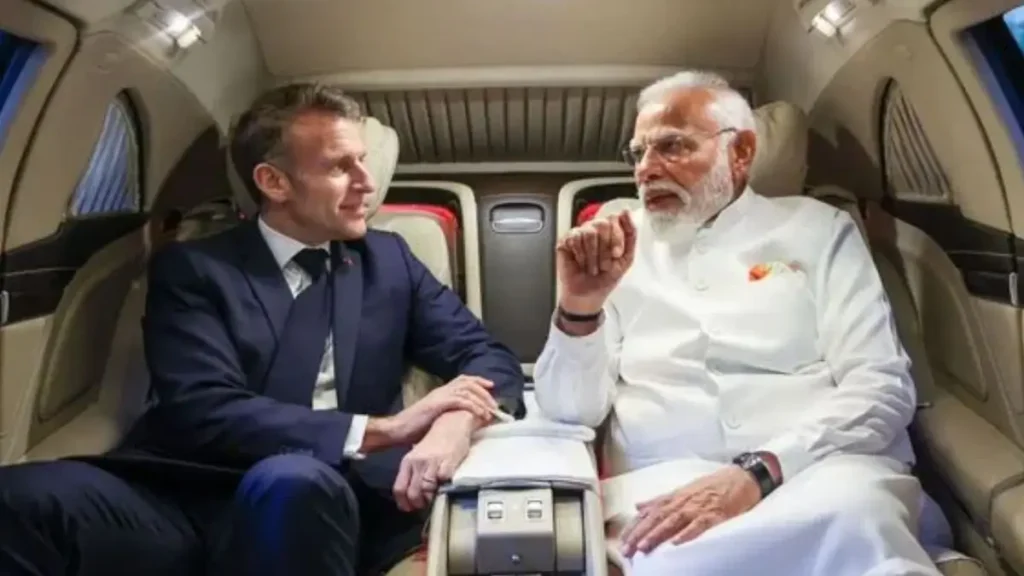
India France innovation 2026: Prime Minister Narendra Modi and French President Emmanuel Macron launch the Year of Innovation 2026 to boost technology, defence, startups, and educational collaboration between India and France.
India‑France Launch ‘Year of Innovation 2026’ to Deepen Tech & Strategic Partnership
Prime Minister Narendra Modi and French President Emmanuel Macron jointly launched the India‑France Year of Innovation 2026 at a high‑profile bilateral event in Mumbai on February 17, 2026. The launch, part of Macron’s three‑day official visit to India, marks a strategic expansion of bilateral cooperation across innovation, technology, defence, clean energy, space, healthcare, and startup ecosystems.
The Year of Innovation 2026 was officially inaugurated at the Gateway of India, highlighting the narrative of a strengthened Special Global Strategic Partnership between India and France. This initiative is intended to move beyond traditional diplomacy to promote people‑to‑people linkages, industry collaboration, and scientific cooperation. Both nations announced nearly 21 agreements and declarations encompassing sectors such as digital technologies, artificial intelligence (AI), defence production, clean energy, aeronautics, critical materials, and healthcare research.
Boosting Innovation Ecosystems and Collaboration
Central to the initiative is the India‑France Innovation Network, which will connect entrepreneurs, startups, researchers, and academic institutions from both countries. This network is expected to facilitate joint workshops, exchange programs, research collaborations, and startup partnerships that foster innovation in sectors like AI, quantum computing, clean technology, biotech, and advanced materials. India’s growing startup ecosystem—now one of the world’s largest—will find new avenues for global expansion and knowledge sharing.
Defence & Strategic Partnerships Expanded
In a significant defence development, Modi and Macron also inaugurated a helicopter assembly line in Karnataka, established in partnership with Tata Advanced Systems and Airbus. The two sides reaffirmed cooperation on advanced defence platforms and expect joint ventures like HAMMER missile production and increased Rafale fighter jet cooperation. These moves align with India’s Make in India initiative aimed at boosting domestic defence manufacturing and technology transfer.
Tech, Education & People‑to‑People Ties
The Year of Innovation initiative also paves the way for educational linkages and talent exchange. French authorities highlighted plans to host up to 30,000 Indian students annually by 2030 in diversified academic programs, especially in technology and digital sciences. Both countries also agreed on streamlined visa procedures for students and researchers, bridging innovation ecosystems across continents.
Future Outlook
During the launch, Modi emphasised that innovation is vital for national growth, economic development, and solving global challenges like climate change, health crises, and sustainable energy. Macron, on his part, described the enhanced partnership as one rooted in shared values, trust, and strategic conviction. This collaboration is expected to continue beyond 2026 under frameworks like the Horizon 2047 Roadmap—a long‑term vision for bilateral cooperation leading up to India’s centenary of independence.

Why This News is Important for Government Exam Aspirants
Understanding the India‑France Year of Innovation 2026 is crucial for aspirants preparing for competitive exams such as UPSC (IAS, IPS), SSC, Banking, Railways, Defence, State PSCs, and Teaching Jobs for several reasons.
Strategic and Diplomatic Importance
This launch marks the elevation of India‑France relations to a Special Global Strategic Partnership—an upgrade in diplomatic ties that influences global geopolitics. India’s focus on expanding cooperation with France reflects its shifting role as a key strategic partner in the Indo‑Pacific region, capable of driving innovation and shaping global technology standards. Questions on international relations, foreign policy, and strategic partnerships now increasingly include such bilateral frameworks.
Technology & Innovation Focus
With 2026 declared the Year of Innovation, the initiative places technology, AI, and research collaboration at the forefront. For exams with a current affairs or general studies section, knowing how India pursues innovation diplomacy—through networks, AI collaboration, start‑up connect programs, and joint R&D—is key. These developments illustrate how global partnerships can help bolster India’s technology ecosystem and economic growth.
Defence & Economic Implications
India’s efforts to expand defence manufacturing (e.g., helicopter assembly lines and joint missile production) highlight policy initiatives in Make in India and defence self‑reliance. Aspirants must recognize how international cooperation supports India’s broader goals of self‑sufficiency in defence and strategic autonomy.
Overall, this news ties into international relations, defence policy, foreign trade, technology diplomacy, and bilateral cooperation, making it highly relevant across exam syllabi.
Historical Context: Growth of India‑France Bilateral Relations
India and France have shared a long‑standing relationship dating back to the establishment of diplomatic ties in 1947. Over the decades, cooperation deepened across sectors like space, nuclear energy, defence, culture, and education. In 1998, both nations signed their first Strategic Partnership, laying the foundation for structured cooperation.
Defence ties have been a cornerstone of this relationship. India’s acquisition of Dassault Rafale fighter jets and cooperation in submarine technology and engines reflects decades of trust and technological exchange. Civil nuclear cooperation also strengthened after India’s nuclear waiver in 2008, leading France to engage India in nuclear energy projects.
In recent years, the focus shifted towards technology, innovation, and people‑to‑people links. The AI Action Summit 2025—co‑chaired by Modi and Macron in Paris—was a precursor to the AI Impact Summit held in New Delhi in 2026, emphasising collaboration in artificial intelligence and ethical digital governance.
The Horizon 2047 Roadmap, adopted in 2023, outlines the long‑term cooperative vision leading up to India’s centenary of independence. The Year of Innovation acts as a pivotal milestone in this evolving partnership, signaling a shared future built on strategic cooperation across science, technology, and global governance.
Key Takeaways from “India‑France Year of Innovation Launch”
Important Points Students Must Remember
| SN | Key Takeaway |
|---|---|
| 1 | India and France jointly launched the Year of Innovation 2026 to deepen technological and strategic cooperation. |
| 2 | The bilateral relationship was elevated to a Special Global Strategic Partnership. |
| 3 | Focus areas include AI, digital tech, startups, clean energy, healthcare, and defence collaboration. |
| 4 | The initiative includes the India‑France Innovation Network connecting innovators, startups, and researchers. |
| 5 | Deals and agreements cover defence production, helicopter assembly, missile manufacturing, and expanded student exchanges. |
FAQs: Frequently Asked Questions
1. What is the India‑France Year of Innovation 2026?
The India‑France Year of Innovation 2026 is a bilateral initiative launched by Prime Minister Narendra Modi and French President Emmanuel Macron to enhance cooperation in technology, innovation, defence, clean energy, and research, fostering a deeper strategic partnership between India and France.
2. When and where was it launched?
The initiative was launched on February 17, 2026, at the Gateway of India, Mumbai, during President Macron’s official visit to India.
3. What sectors does the Year of Innovation 2026 focus on?
Key sectors include Artificial Intelligence, digital technologies, defence, healthcare, space, startups, clean energy, and advanced materials.
4. What is the India‑France Innovation Network?
It is a platform connecting researchers, startups, entrepreneurs, and academic institutions from India and France, enabling joint workshops, research collaboration, talent exchange, and innovation programs.
5. How does this initiative benefit India’s defence sector?
The initiative supports India’s Make in India programme by expanding defence production, including helicopter assembly lines, missile production, and Rafale fighter jet collaboration.
6. How does this initiative impact students and education?
India and France plan to host up to 30,000 Indian students annually by 2030, streamline visas, and facilitate student and researcher exchanges to strengthen educational and innovation linkages.
7. Why is this news important for government exam aspirants?
It is relevant for current affairs, general studies, international relations, defence policy, and technology diplomacy sections in exams like UPSC, SSC, Banking, Railways, and State PSCs.
Some Important Current Affairs Links

