
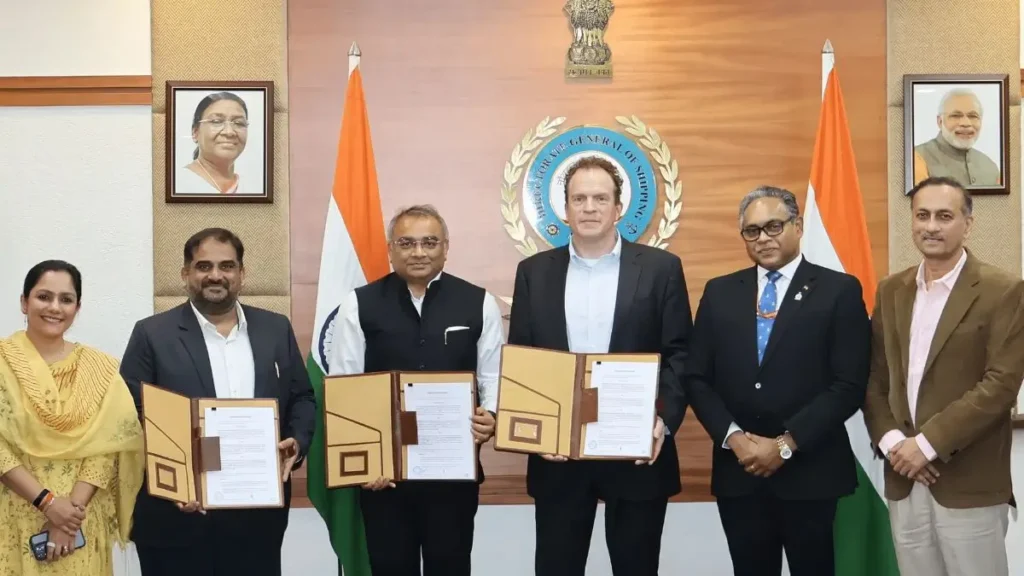
India first Port of Refuge maritime safety initiative strengthens emergency response, protects marine environment, and boosts shipping safety—important current affairs topic for UPSC and other exams.
India Establishes First Port of Refuge to Strengthen Maritime Safety
Introduction to India’s First Port of Refuge Initiative
India has taken a major step toward enhancing maritime safety by establishing its first-ever Port of Refuge (PoR). This initiative has been operationalized by Adani Ports and Special Economic Zone Ltd (APSEZ) to provide a structured mechanism for assisting ships in distress. The move addresses a long-standing gap in India’s maritime infrastructure and aligns the country with global maritime safety standards.
India, with a coastline exceeding 11,000 kilometers and positioned along some of the busiest global shipping routes, had previously lacked a formal system to manage maritime emergencies effectively.
What is a Port of Refuge?
A Port of Refuge is a designated safe location where ships facing emergencies—such as fire, mechanical failure, or collision—can seek shelter. The primary objective is to stabilize vessels, protect human lives, and minimize environmental damage.
Globally, Ports of Refuge are standard practice among major maritime nations. Their absence in India had been a concern given the increasing volume of maritime trade and traffic.
Strategic Locations: Dighi and Gopalpur Ports
India’s first Ports of Refuge have been established at two strategic locations:
- Dighi Port (West Coast): Covers maritime routes in the Arabian Sea and traffic towards the Persian Gulf.
- Gopalpur Port (East Coast): Serves ships operating in the Bay of Bengal and routes toward the Malacca Strait.
These two locations ensure comprehensive coverage of major shipping corridors, thereby strengthening India’s maritime emergency response across both coasts.
Advanced Emergency Services and Global Collaboration
The Ports of Refuge will provide a wide range of emergency services, including:
- Salvage and wreck removal
- Firefighting assistance
- Pollution control measures
- Coordinated emergency response systems
To enhance operational efficiency, APSEZ has collaborated with global maritime experts such as SMIT Salvage (Boskalis) and the Maritime Emergency Response Centre (MERC), ensuring world-class response capabilities.
Significance for Maritime Safety and Environment
The establishment of Ports of Refuge significantly strengthens India’s maritime preparedness. It ensures better protection of:
- Crew and passengers
- Cargo and shipping assets
- Marine ecosystems
Additionally, the initiative aligns with international maritime conventions and enhances India’s credibility as a responsible maritime nation.
Recent Incidents Highlighting the Need
Recent maritime incidents, including emergency docking requests by foreign vessels, have highlighted the urgent need for such a structured system. The absence of a formal framework earlier often led to delays and inefficiencies in handling crises.
With the introduction of Ports of Refuge, India can now ensure faster, safer, and more coordinated responses to maritime emergencies.

Why This News is Important
Boost to Maritime Safety Infrastructure
The establishment of India’s first Port of Refuge is a landmark development in maritime safety. It fills a critical gap in India’s emergency response infrastructure by providing a dedicated system to handle distressed vessels. This is particularly important given India’s strategic location along major global shipping routes.
Economic and Trade Significance
India handles a significant volume of international trade through maritime routes. Any disruption due to accidents or emergencies can lead to economic losses. The Port of Refuge system ensures continuity of trade by minimizing disruptions and enabling quick recovery during crises.
Environmental Protection
Maritime accidents often lead to oil spills and environmental hazards. With dedicated pollution control measures and emergency response systems, Ports of Refuge will help prevent ecological damage and protect marine biodiversity.
Alignment with Global Standards
Most developed maritime nations already have Port of Refuge systems. By adopting this framework, India aligns itself with international best practices, enhancing its global standing in maritime governance.
Historical Context
Evolution of Maritime Safety in India
India’s maritime sector has evolved significantly over the years, especially with increasing global trade. However, the focus was primarily on port development and cargo handling rather than emergency preparedness.
Absence of Formal Emergency Mechanism
Despite having a long coastline and busy shipping lanes, India lacked a structured system for assisting ships in distress. Emergency responses were often handled on a case-by-case basis, leading to inefficiencies.
Recent Reforms in Maritime Sector
Recent legislative reforms such as the Indian Ports Act, 2025 aimed to modernize port governance and improve safety standards.
The introduction of Ports of Refuge is a continuation of these reforms, focusing specifically on emergency preparedness and environmental protection.
Key Takeaways from This News
| S.No. | Key Takeaway |
|---|---|
| 1 | India has established its first Port of Refuge to handle maritime emergencies. |
| 2 | Dighi (west coast) and Gopalpur (east coast) are the designated PoR locations. |
| 3 | PoR provides services like firefighting, salvage, and pollution control. |
| 4 | The initiative aligns India with global maritime safety standards. |
| 5 | It strengthens protection of lives, cargo, and marine ecosystems. |
FAQs: India’s First Port of Refuge and Maritime Safety
1. What is a Port of Refuge (PoR)?
A Port of Refuge is a designated safe location where ships facing emergencies such as fire, collision, or mechanical failure can take shelter to stabilize the situation and avoid further damage.
2. Which company established India’s first Port of Refuge?
India’s first Port of Refuge has been established by Adani Ports and Special Economic Zone Ltd.
3. Where are the first Ports of Refuge located in India?
The Ports of Refuge are located at Dighi Port on the west coast and Gopalpur Port on the east coast of India.
4. Why is the Port of Refuge important for maritime safety?
It ensures quick response to maritime emergencies, protects human lives, reduces cargo loss, and minimizes environmental damage such as oil spills.
5. Which seas are covered by these Ports of Refuge?
Dighi Port covers the Arabian Sea region, while Gopalpur Port covers the Bay of Bengal region.
6. What types of emergencies can be handled at a Port of Refuge?
Emergencies such as fire outbreaks, engine failures, collisions, structural damage, and pollution incidents can be handled.
7. How does this initiative help India’s economy?
It ensures uninterrupted maritime trade by minimizing delays and losses due to shipping accidents.
8. Which global practices does this initiative align with?
The Port of Refuge system aligns India with international maritime safety practices followed by major shipping nations.
9. What environmental benefits does the Port of Refuge provide?
It helps in preventing oil spills, marine pollution, and ecological damage through timely intervention and pollution control systems.
10. Why is this topic important for competitive exams?
This topic is important under Geography, Environment, Infrastructure, and Current Affairs sections for exams like UPSC, SSC, Banking, Railways, and Defence.
Some Important Current Affairs Links

