
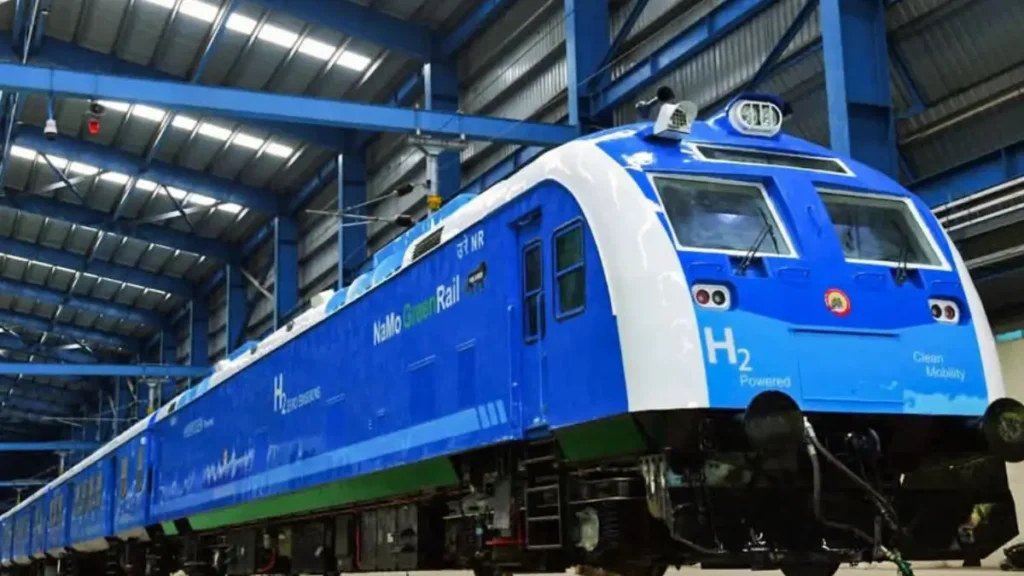
India First Hydrogen Fuel Cell Train marks a major milestone in green transportation. Know its route, features, safety systems, technology and importance for India’s clean energy goals and competitive exams.
India Enters the Era of Hydrogen-Powered Rail Transport
India has achieved a significant milestone in sustainable transportation with the launch of its first indigenous hydrogen fuel cell train. The train, inaugurated on the Jind–Sonipat route in Haryana, marks the country’s entry into the select group of nations operating hydrogen-powered passenger trains. This initiative reflects the government’s commitment to promoting clean energy, reducing carbon emissions, and strengthening the vision of a greener Indian Railways.
What is a Hydrogen Fuel Cell Train?
A hydrogen fuel cell train generates electricity through an electrochemical reaction between hydrogen and oxygen inside fuel cells. Unlike diesel locomotives, the only by-products of this process are water vapour and heat, making the technology nearly zero-emission. The electricity generated powers electric traction motors, while batteries store surplus energy recovered during braking for improved efficiency.
Key Features of India’s First Hydrogen Train
India’s hydrogen train has been developed under the “Make in India” initiative and includes advanced indigenous technologies. It consists of two hydrogen-powered driving coaches and eight passenger coaches, accommodating approximately 2,600 passengers. The train operates on the 89-km Jind–Sonipat section under Northern Railway and is designed for speeds up to around 110 km/h, with operational speeds around 75 km/h. It is supported by one of India’s largest hydrogen storage and refuelling facilities located at Jind.
Advanced Safety Measures
Hydrogen is highly flammable; therefore, Indian Railways has equipped the train with multiple safety systems. These include hydrogen leak detectors, flame detectors, pressure monitoring systems, automatic emergency shutdown mechanisms, temperature monitoring, and continuous real-time surveillance of hydrogen storage tanks. These measures ensure safe operation while meeting international safety standards.
Importance for Indian Railways
Although over 99% of India’s broad-gauge railway network has already been electrified, hydrogen trains provide an environmentally friendly solution for routes where complete electrification is difficult or economically unviable. They also help diversify India’s clean-energy portfolio and reduce dependence on imported fossil fuels. Hydrogen technology can play a broader role in energy storage, steel manufacturing, fertilizers, and heavy transportation.
Global Significance
With this achievement, India joins countries such as Germany, France and China that have introduced hydrogen-powered trains. The project demonstrates India’s growing capabilities in green technology, indigenous manufacturing, and sustainable mobility. It also supports India’s commitment to achieve net-zero carbon emissions by 2070 while strengthening the National Green Hydrogen Mission.
Relevance for Government Exams
The launch of India’s first hydrogen fuel cell train is important for UPSC, State PSCs, SSC, Banking, Railways, Defence and other competitive examinations. Questions may be asked on hydrogen fuel cell technology, National Green Hydrogen Mission, clean transportation, renewable energy, carbon neutrality, and India’s environmental commitments.
B) Why this News is Important
Important for Environment and Climate Goals
India’s first hydrogen fuel cell train represents a major step towards achieving sustainable and environmentally friendly transportation. Since hydrogen fuel cells emit only water vapour, they significantly reduce greenhouse gas emissions compared to diesel-powered trains. This development supports India’s target of achieving net-zero emissions by 2070 and promotes cleaner public transport.
Boost to Green Hydrogen Mission
The launch aligns with India’s National Green Hydrogen Mission, which aims to make India a global hub for the production and export of green hydrogen. Successful implementation in railways could encourage wider adoption of hydrogen technology across industries including shipping, aviation, steel and fertilizer production.
High Exam Relevance
Competitive examinations frequently include questions on new government initiatives, renewable energy technologies, Indian Railways, climate change, sustainable development goals (SDGs), and major infrastructure projects. Candidates should remember the route (Jind–Sonipat), hydrogen fuel cell technology, safety features, and India’s position among hydrogen train-operating nations.
C) Historical Context
Evolution of Hydrogen-Powered Trains
Hydrogen-powered rail technology emerged as an alternative to diesel trains for non-electrified railway lines. Germany introduced the world’s first commercial hydrogen passenger trains in 2018, followed by countries including France and China. The technology has gained popularity because it produces zero direct emissions while offering operational flexibility where electrification is expensive.
India’s Journey Towards Green Railways
Indian Railways has undertaken one of the world’s largest railway electrification programmes, electrifying over 99% of its broad-gauge network. The introduction of hydrogen-powered trains represents the next phase of India’s green mobility strategy and complements ongoing initiatives such as renewable energy adoption, biofuel use, and energy-efficient railway operations.
D) Key Takeaways from India’s First Hydrogen Fuel Cell Train
| S. No. | Key Takeaway |
|---|---|
| 1 | India’s first hydrogen fuel cell train operates on the Jind–Sonipat route in Haryana. |
| 2 | Hydrogen fuel cells generate electricity by combining hydrogen and oxygen, producing only water vapour as emissions. |
| 3 | The train can carry around 2,600 passengers and is supported by dedicated hydrogen storage and refuelling infrastructure. |
| 4 | Advanced safety systems include hydrogen leak detectors, flame detectors, pressure monitoring and emergency shutdown mechanisms. |
| 5 | The project supports India’s National Green Hydrogen Mission, clean transportation goals and the target of achieving net-zero emissions by 2070. |
Frequently Asked Questions (FAQs) on India’s First Hydrogen Fuel Cell Train
1. What is India’s first hydrogen fuel cell train?
India’s first hydrogen fuel cell train is a green transportation initiative developed by Indian Railways. It uses hydrogen fuel cell technology to generate electricity instead of relying on diesel fuel. The train produces water vapour as the primary emission, making it an environment-friendly mode of transport.
2. On which route does India’s first hydrogen train operate?
India’s first hydrogen fuel cell train operates on the Jind–Sonipat route in Haryana under Northern Railway. The route has been selected to demonstrate the effectiveness of hydrogen-powered rail technology in India.
3. What technology is used in hydrogen fuel cell trains?
Hydrogen fuel cell trains use an electrochemical process in which hydrogen reacts with oxygen inside fuel cells to produce electricity. This electricity powers the train’s motors, while the only direct by-products are water vapour and heat.
4. Why is hydrogen fuel considered environmentally friendly?
Hydrogen fuel is considered environmentally friendly because fuel cells do not release carbon dioxide or harmful pollutants during operation. They help reduce dependence on fossil fuels and support global efforts to control climate change.
5. Which ministry is responsible for Indian Railways’ hydrogen train project?
The hydrogen train project is being implemented by the Ministry of Railways, Government of India, as part of efforts to modernize railway transportation and promote sustainable mobility.
6. What is the National Green Hydrogen Mission?
The National Green Hydrogen Mission is an initiative launched by the Government of India to promote the production, use, and export of green hydrogen. Its objective is to make India a global hub for clean hydrogen technology.
7. Which countries already operate hydrogen-powered trains?
Countries including Germany, France, China and Japan have developed or operated hydrogen-powered trains. India has joined the group of nations exploring hydrogen-based railway transportation.
8. What are the major safety features of India’s hydrogen train?
The train includes advanced safety measures such as hydrogen leak detection systems, flame detectors, pressure monitoring technology, temperature control systems and automatic emergency shutdown mechanisms.
9. What is the significance of hydrogen trains for Indian Railways?
Hydrogen trains can provide a cleaner alternative for railway routes where complete electrification is difficult or economically challenging. They support Indian Railways’ goal of reducing carbon emissions and achieving sustainable growth.
10. What is India’s target year for achieving net-zero carbon emissions?
India has announced the target of achieving net-zero carbon emissions by 2070. Clean energy initiatives such as hydrogen trains contribute towards this long-term climate goal.
Some Important Current Affairs Links

