
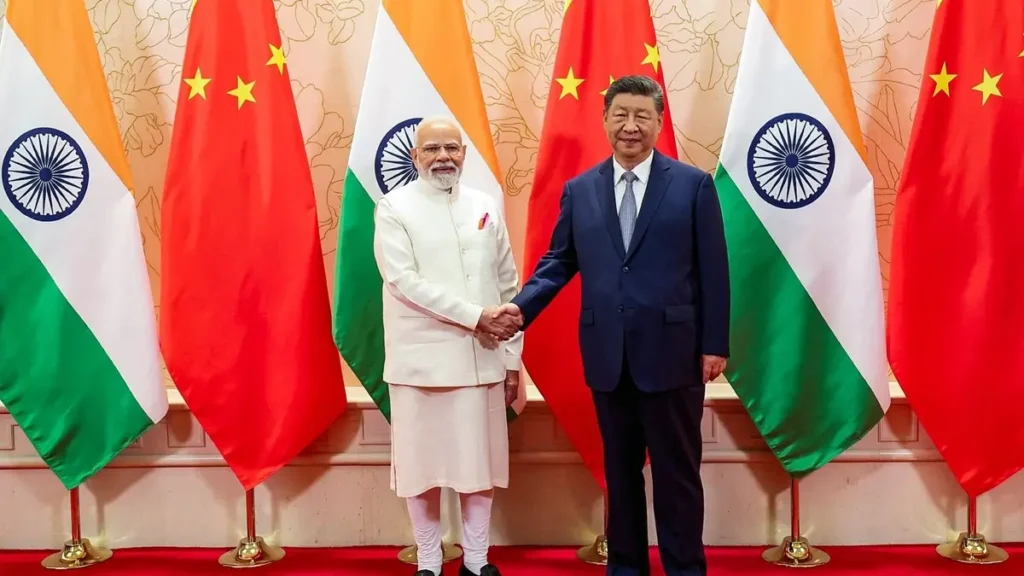
India China trade record 155 billion explained for government exam aspirants, covering diplomatic recalibration, trade imbalance, and key current affairs insights.
India–China Trade Surges to Historic USD 155 Billion Amid Diplomatic Recalibration
In a major development in international economic relations, India and China achieved an unprecedented bilateral trade volume of USD 155.6 billion in 2025, marking the highest level of trade recorded between the two Asian giants. This milestone reflects a remarkable 12 per cent year-on-year growth in trade, highlighting stronger commercial ties even as geopolitical complexities persist between the nations.
Record Trade Growth Signals Economic Resilience
The USD 155.6 billion trade figure represents a record high in India–China trade history. Both nations, ranking among the largest economies in Asia and the world, have steadily expanded their commercial linkages, propelled by increasing demand for goods on both sides. Indian exports to China rose by nearly 9.7 per cent in 2025, underscoring growing Indian market presence in key sectors such as textiles, chemicals, pharmaceuticals, and raw materials.
Despite lingering strategic rivalries and past diplomatic strains—especially over the border standoff along the Line of Actual Control (LAC)—both countries appear determined to compartmentalize economic cooperation from political disputes. High-level diplomatic engagements, including bilateral meetings and institutional dialogues, have contributed to this stabilized trade momentum.
Impact on Global Economic Landscape
This surge positions the India–China trade relationship among the most significant global commerce linkages. It reflects economic complementarities that continue to bind the two nations despite broader geopolitical recalibration. While China remains the dominant exporter in the relationship, India’s expanding export base reflects its rising competitiveness in global markets. Economists view this as a positive indicator for global supply chain diversification, especially in sectors like information technology, pharmaceuticals, and industrial inputs.
The renewed trade ties also come at a time when both nations are deepening participation in multilateral forums, including the BRICS economic bloc, strengthening economic cooperation beyond bilateral engagements. China has expressed support for India’s BRICS presidency, signaling a broader multilateral dimension to their economic relationship.
Challenges and Future Directions
Despite the historic trade growth, significant trade imbalance persists with China exporting substantially more to India than vice versa. This has been a key concern for Indian policymakers, who have emphasized the need to improve market access and address structural imbalances. Trade analysts believe that policy reforms and diversification of export portfolios, particularly in technology and manufacturing sectors, will be crucial in balancing future trade dynamics.
With global economic uncertainties, both countries are also seeking to strengthen people-to-people exchanges, ease visa restrictions, and explore joint ventures to enhance cooperation in emerging sectors. Continued diplomatic engagement and practical economic collaboration are expected to shape the trajectory of this landmark trade relationship in the coming years.

🧠 Why This News Is Important
Significant for Government Exam Aspirants
Strategic Economic Relations
This news highlights a major shift in India’s international trade profile. India–China trade hitting USD 155.6 billion in 2025 reflects the resilience of economic ties despite political tensions. For government exams like UPSC, SSC, RRB, and banking services, understanding how major economies interact—especially in the context of global supply chains—is critical under International Relations and Economics sections.
Policy and Trade Imbalance Insights
The trade surge underscores ongoing trade imbalances, which remain a policy priority for India. Questions on trade deficits, import dependency, and negotiation strategies feature often in economics and general studies papers. Knowing how India deals with such strategic challenges adds depth to economic policymaking answers.
Diplomatic Relevance in Current Affairs
This development also reflects broader diplomatic recalibration between India and China, especially after years of tensions along the LAC. For civil services and defence aspirants, analyzing how diplomatic and economic pursuits intersect provides insights for essays, GS papers, and interview discussions.
📜 Historical Context
Background of India–China Trade and Diplomatic Dynamics
India and China have long shared an intricate economic relationship. Historically, bilateral trade grew rapidly in the early 21st century, with China becoming one of India’s largest trading partners. However, tensions peaked after the 2020 Galwan Valley clash, straining political and military relations.
Despite this, trade continued owing to economic interdependence—India imports machinery, electronics, and industrial inputs from China while exporting commodities like iron ore and pharmaceuticals. Past trade deficits and market access concerns have often featured in bilateral discussions. The 2025 record reflects renewed engagement following diplomatic efforts, including summits like the August 2025 Tianjin meeting between Prime Minister Narendra Modi and President Xi Jinping, which aimed to stabilize ties and expand cooperation.
📌 Key Takeaways from India–China Trade Surge to Historic USD 155 Billion
| S.No. | Key Takeaway |
|---|---|
| 1 | India–China bilateral trade reached a record USD 155.6 billion in 2025. |
| 2 | The trade growth represented a 12 % year-on-year rise, despite geopolitical tensions. |
| 3 | Indian exports to China increased by 9.7 %, showing export demand growth. |
| 4 | Persistent trade imbalance remains a concern for Indian policymakers. |
| 5 | The surge reflects broader diplomatic recalibration and improved engagement between India and China. |
FAQs: Frequently Asked Questions
1. What is the significance of the India–China trade reaching USD 155 billion?
The record trade volume of USD 155 billion highlights strong economic interdependence between India and China despite geopolitical tensions. It shows that economic cooperation continues to grow and plays a key role in regional stability and global supply chains.
2. Which sectors contribute most to India–China bilateral trade?
Major sectors include electronics, machinery, pharmaceuticals, chemicals, textiles, and raw materials. India imports industrial equipment and electronics from China, while exporting pharmaceuticals and raw commodities.
3. What is meant by diplomatic recalibration between India and China?
Diplomatic recalibration refers to renewed efforts by both countries to stabilize relations through dialogue and cooperation after past tensions, particularly following border disputes. It aims to separate economic cooperation from political disagreements.
4. Why is the India–China trade imbalance important for exams?
The trade imbalance, where India imports more from China than it exports, is a major policy concern. It is relevant for exam topics like trade deficit, economic diplomacy, and international trade policies.
5. How does India–China trade impact global supply chains?
The trade relationship supports global manufacturing and supply networks. It influences sectors like electronics and pharmaceuticals, affecting global economic stability.
6. What role do multilateral organizations like BRICS play in India–China relations?
BRICS provides a platform for economic cooperation and dialogue between emerging economies. It strengthens collaboration beyond bilateral trade and enhances geopolitical influence.
7. How does this development relate to India’s foreign policy?
It reflects India’s balanced foreign policy approach—maintaining economic engagement while safeguarding strategic interests.
8. Why is this news important for civil services and defence exams?
It connects international relations, economics, and diplomacy—core subjects in UPSC, SSC, banking, and defence exams. It may appear in current affairs, essays, or interview discussions.
Some Important Current Affairs Links

