
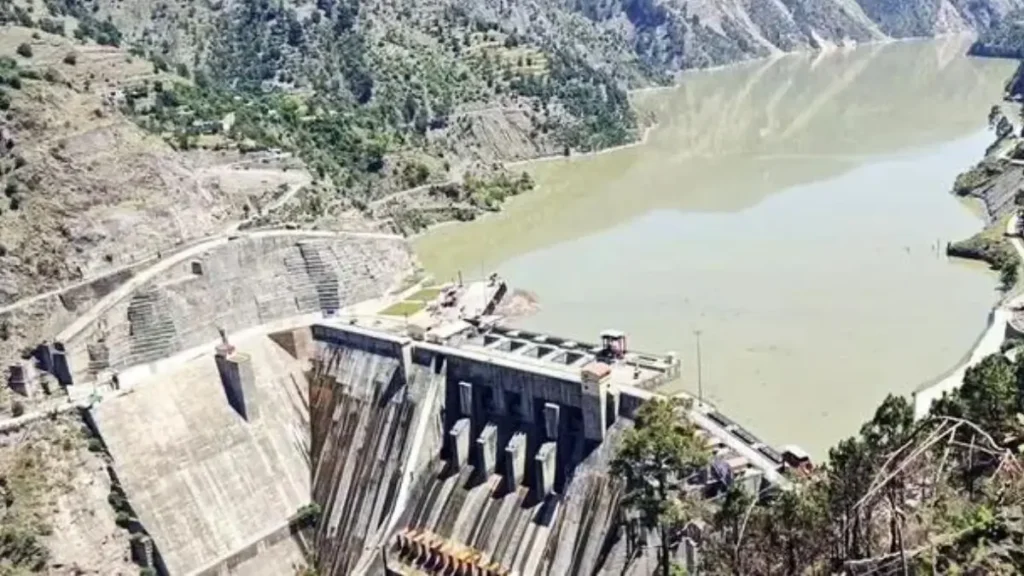
India Chenab hydropower projects gain momentum after the Indus Waters Treaty freeze. Learn about ₹2600 crore projects, Salal Dam, Chenab-Beas Link Tunnel, hydropower expansion, and key UPSC current affairs points.
India Fast-Tracks ₹2600 Crore Chenab Projects After Indus Waters Treaty Freeze
India has accelerated several strategic hydropower and river-linking projects on the Chenab river system after placing the Indus Waters Treaty framework with Pakistan in abeyance. The projects, estimated at nearly ₹2,600 crore, are aimed at improving water utilization, hydropower generation, and infrastructure development in Jammu & Kashmir and Himachal Pradesh.
Strategic Push for Hydropower Expansion
The Indian government has intensified efforts to strengthen hydropower infrastructure in the Himalayan region. One of the major projects is the ₹2,352 crore Chenab-Beas Link Tunnel Project in Himachal Pradesh. The project involves the construction of an 8.7-kilometre tunnel that will divert surplus water from the Chandra river, a tributary of the Chenab, toward the Beas basin.
This river-linking initiative is expected to improve water management and support electricity generation. The project is strategically important because it lies in the Lahaul-Spiti region near critical Himalayan infrastructure corridors.
Salal Dam Sediment Management Project
Another major initiative is the ₹268 crore sediment-bypass tunnel at the Salal Dam in Jammu & Kashmir. The objective is to improve sediment management and increase the operational efficiency of the dam reservoir.
Sediment accumulation has been a longstanding issue in Himalayan dams. By removing excess silt effectively, India aims to enhance hydropower generation capacity and reservoir storage.
Fast-Tracking Major Chenab Hydroelectric Projects
India is also accelerating work on multiple hydropower projects on the Chenab river. These include:
- Pakal Dul Project – 1,000 MW
- Kiru Hydroelectric Project – 624 MW
- Kwar Hydroelectric Project – 540 MW
- Ratle Hydroelectric Project – 850 MW
- Sawalkote Hydroelectric Project – 1,856 MW
These projects are expected to significantly boost renewable energy generation in the region.
The government has directed agencies to reduce construction timelines and complete projects quickly after the suspension of treaty-related restrictions.
Importance of Chenab River in India-Pakistan Relations
The Chenab is one of the western rivers under the Indus river system. Under the 1960 Indus Waters Treaty, Pakistan received primary rights over the waters of the Indus, Jhelum, and Chenab rivers, while India retained limited rights for irrigation and run-of-the-river hydropower projects.
India’s recent move reflects a policy shift toward maximizing the use of its permitted water resources. The projects also carry strategic significance because they strengthen infrastructure in border regions.
Impact on Renewable Energy Goals
Hydropower remains an important component of India’s clean energy transition. The Chenab projects are expected to contribute significantly to renewable electricity production while reducing dependence on fossil fuels.
The expansion of hydropower infrastructure aligns with India’s long-term climate and energy security objectives.

Why This News is Important
Relevance for International Relations
The development is important because it directly relates to the Indus Waters Treaty between India and Pakistan. The treaty has historically been one of the most significant water-sharing agreements in South Asia. India’s decision to accelerate projects after placing treaty engagement in abeyance could influence future diplomatic relations between the two countries.
For competitive exams, this topic is important under International Relations, India-Pakistan relations, and water diplomacy.
Importance for Environment and Geography
The Chenab river is part of the Indus basin and plays a major role in hydropower generation in northern India. Questions related to Himalayan rivers, river basin projects, and renewable energy often appear in UPSC, State PCS, SSC, Railways, and banking examinations.
Students should understand the geographical significance of western rivers under the Indus Waters Treaty framework.
Significance for Energy Security
India is focusing heavily on renewable energy and hydropower expansion. The fast-tracking of Chenab projects demonstrates the government’s effort to strengthen energy security and infrastructure in strategically important border states.
The topic is relevant for questions related to infrastructure development, clean energy, and economic growth.
Historical Context
Origin of the Indus Waters Treaty
The Indus Waters Treaty was signed in 1960 between India and Pakistan with the mediation of the World Bank. The treaty divided the six rivers of the Indus basin into eastern and western rivers.
- Eastern Rivers: Ravi, Beas, Sutlej – allocated mainly to India
- Western Rivers: Indus, Jhelum, Chenab – allocated mainly to Pakistan
India retained limited rights over the western rivers for irrigation, navigation, and hydropower generation.
Previous Disputes Over Hydropower Projects
Over the years, Pakistan raised objections to several Indian hydropower projects such as Baglihar, Kishanganga, Ratle, and Pakal Dul, alleging treaty violations. India maintained that these projects complied with treaty provisions related to run-of-the-river hydroelectric generation.
Recent Developments
Following the Pahalgam terror attack in 2025, India suspended engagement under the treaty framework citing national security concerns. Since then, India has accelerated hydroelectric and river-management projects across Jammu & Kashmir and adjoining Himalayan regions.
The move marks a major shift in India’s water resource strategy and has increased the strategic importance of the Chenab river system.
Key Takeaways from This News
| S.No. | Key Takeaway |
|---|---|
| 1 | India is fast-tracking Chenab river projects worth around ₹2,600 crore after placing the Indus Waters Treaty framework in abeyance. |
| 2 | The ₹2,352 crore Chenab-Beas Link Tunnel Project is the largest initiative under the new plan. |
| 3 | The Salal Dam sediment-bypass tunnel project aims to improve reservoir efficiency and hydropower generation. |
| 4 | Major hydropower projects such as Pakal Dul, Kiru, Kwar, Ratle, and Sawalkote are being accelerated. |
| 5 | The Indus Waters Treaty of 1960 allocates the western rivers — Indus, Jhelum, and Chenab — mainly to Pakistan, while India has limited hydropower and irrigation rights. |
FAQs Related to India Fast-Tracks ₹2600 Crore Chenab Projects
1. What is the Indus Waters Treaty?
The Indus Waters Treaty is a water-sharing agreement signed between India and Pakistan in 1960 with the mediation of the World Bank. It divides the six rivers of the Indus basin between the two countries.
2. Which rivers are allocated to India under the Indus Waters Treaty?
India has primary rights over the eastern rivers — Ravi, Beas, and Sutlej.
3. Which rivers are considered western rivers under the treaty?
The western rivers are Indus, Jhelum, and Chenab, over which Pakistan has primary rights while India has limited usage rights.
4. What is the Chenab-Beas Link Tunnel Project?
It is a ₹2,352 crore river-linking project that aims to divert surplus water from the Chandra river, a tributary of the Chenab, toward the Beas basin through an 8.7 km tunnel.
5. Why is the Chenab river strategically important?
The Chenab river is important for hydropower generation, irrigation, and India-Pakistan water diplomacy under the Indus Waters Treaty.
6. Which major hydropower projects are being accelerated on the Chenab river?
Major projects include Pakal Dul, Kiru, Kwar, Ratle, and Sawalkote hydropower projects.
7. What is the purpose of the Salal Dam sediment-bypass tunnel?
The sediment-bypass tunnel is designed to remove excess silt from the reservoir and improve dam efficiency and electricity generation.
8. Which organization mediated the Indus Waters Treaty?
The World Bank acted as the mediator during the signing of the treaty.
9. Why is this topic important for competitive exams?
The topic is important for UPSC, State PCS, SSC, Banking, Railways, and Defence exams because it covers international relations, geography, environment, water resources, and renewable energy.
10. Which Indian states are mainly connected with the Chenab projects?
The projects are mainly located in Jammu & Kashmir and Himachal Pradesh.
Some Important Current Affairs Links

