
India OSAT facility in Gujarat inaugurated to strengthen semiconductor manufacturing, reduce imports, and boost Make in India initiative. Learn key details and exam-relevant insights.
India Launches Major OSAT Facility for Semiconductor in Gujarat
Introduction
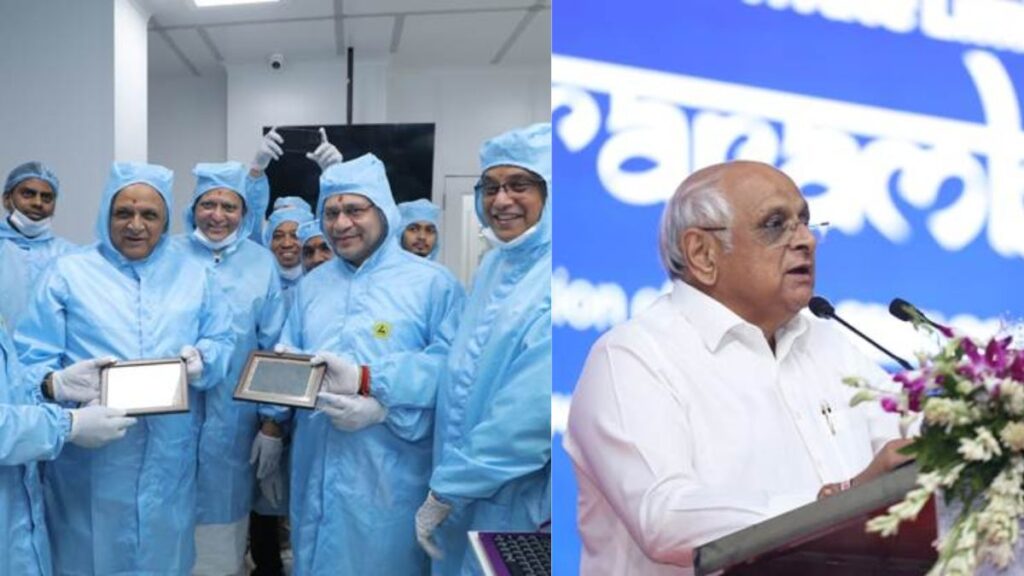
India has taken a significant step towards achieving semiconductor self-reliance with the inauguration of an advanced Outsourced Semiconductor Assembly and Test (OSAT) facility in Sanand, Gujarat. This development marks a pivotal moment in the nation’s technological advancement and economic growth.
Facility Overview
The new OSAT facility, developed by CG Semi Private Limited—a subsidiary of CG Power and Industrial Solutions and part of the Murugappa Group—was inaugurated by Union Minister Ashwini Vaishnaw and Gujarat Chief Minister Bhupendra Patel. This facility is one of India’s first end-to-end OSAT plants, offering comprehensive services including chip assembly, packaging, testing, and post-test services. The G1 facility, now operational, has a peak capacity of approximately 0.5 million units per day and is equipped with high-yield equipment, a Manufacturing Execution System (MES) for automation and traceability, and in-house laboratories for reliability and failure analysis. It is currently undergoing ISO 9001 and IATF 16949 certifications.
Investment and Collaboration
The establishment of this facility involves a substantial investment of over ₹7,600 crore (approximately USD 870 million) over five years. This project is a collaborative effort between CG Semi, Renesas, and Stars Microelectronics, with support from both central and state governments. The investment will fund the development of two state-of-the-art facilities, G1 and G2, in Sanand, Gujarat.
Strategic Importance
The launch of this OSAT facility is a significant milestone in India’s semiconductor journey. It aligns with the government’s vision to establish a robust semiconductor manufacturing ecosystem within the country. The facility’s capabilities will not only serve domestic needs but also position India as a competitive player in the global semiconductor market.
🧠 Why This News is Important
Boosting Domestic Semiconductor Manufacturing
The inauguration of the OSAT facility in Gujarat is a crucial step towards reducing India’s dependency on foreign semiconductor imports. By establishing domestic manufacturing capabilities, India aims to strengthen its position in the global semiconductor supply chain.
Economic Growth and Job Creation
This initiative is expected to generate significant employment opportunities, contributing to economic growth in the region. The development of the semiconductor sector will also stimulate ancillary industries, leading to a multiplier effect on the economy.
Technological Advancement
The facility’s advanced technologies and processes will foster innovation in semiconductor manufacturing. This will enhance India’s technological capabilities and support the development of cutting-edge electronic products.
Strategic Alignment with National Policies
The establishment of the OSAT facility aligns with the government’s policies aimed at promoting domestic manufacturing under initiatives like the ‘Make in India’ and ‘Atmanirbhar Bharat’ campaigns.
Strengthening Global Competitiveness
By developing advanced semiconductor manufacturing capabilities, India aims to become a significant player in the global semiconductor market, enhancing its competitiveness on the world stage.
📜 Historical Context
India’s Semiconductor Landscape
India’s journey in semiconductor manufacturing has been gradual, with initial steps taken in the late 20th century. However, the country has largely depended on imports for its semiconductor needs. Recognizing the strategic importance of semiconductors, the Indian government launched the India Semiconductor Mission (ISM) to promote domestic manufacturing and innovation in the semiconductor sector.
Previous Developments
Prior to this, other initiatives have been undertaken to bolster India’s semiconductor capabilities. For instance, Suchi Semicon, a Gujarat-based company, invested $100 million to establish an OSAT facility in Surat, aiming to produce up to 3 million chips daily.
Recent Milestones
The inauguration of the OSAT facility in Sanand represents a significant milestone in India’s semiconductor journey. It demonstrates the country’s commitment to achieving self-reliance in semiconductor manufacturing and positions India as a competitive player in the global semiconductor market.
✅ Key Takeaways from “India Launches Major OSAT Facility for Semiconductor in Gujarat”
| S.No | Key Takeaway |
|---|---|
| 1 | Inauguration of India’s First End-to-End OSAT Facility: CG Semi’s G1 facility in Sanand, Gujarat, marks the launch of one of India’s first comprehensive OSAT plants. |
| 2 | Significant Investment in Semiconductor Manufacturing: Over ₹7,600 crore (approximately USD 870 million) is being invested over five years to develop two advanced facilities in Sanand. |
| 3 | Collaboration with Global Partners: The project is a joint effort between CG Semi, Renesas, and Stars Microelectronics, with support from central and state governments. |
| 4 | Enhanced Domestic Semiconductor Capabilities: The facility aims to reduce India’s dependency on semiconductor imports and strengthen its position in the global supply chain. |
| 5 | Alignment with National Policies: The establishment of the OSAT facility aligns with the government’s ‘Make in India’ and ‘Atmanirbhar Bharat’ initiatives, promoting domestic manufacturing. |
FAQs Related to India’s OSAT Facility Launch
Q1: What is an OSAT facility?
A: OSAT stands for Outsourced Semiconductor Assembly and Test. It is a facility where semiconductor chips are assembled, packaged, tested, and analyzed for quality assurance.
Q2: Where is the new OSAT facility located in India?
A: The new OSAT facility is located in Sanand, Gujarat.
Q3: Who inaugurated the OSAT facility in Gujarat?
A: The facility was inaugurated by Union Minister Ashwini Vaishnaw and Gujarat Chief Minister Bhupendra Patel.
Q4: What is the investment involved in this facility?
A: The total investment in the OSAT facility is over ₹7,600 crore (approximately USD 870 million) over five years.
Q5: Which companies are collaborating on this OSAT project?
A: CG Semi Private Limited, Renesas, and Stars Microelectronics are collaborating on the project.
Q6: What is the peak capacity of the G1 OSAT facility?
A: The facility has a peak capacity of around 0.5 million units per day.
Q7: Why is this OSAT facility strategically important for India?
A: It strengthens India’s semiconductor ecosystem, reduces dependency on imports, promotes Make in India, and enhances global competitiveness.
Q8: What certifications is the OSAT facility pursuing?
A: The facility is undergoing ISO 9001 and IATF 16949 certifications.
Some Important Current Affairs Links

