
GST Overhaul 2025 introduces two slabs—5% for essentials and 18% for most goods, plus 40% tax on sin goods. Learn implications, reforms, and key takeaways for government exam aspirants.
Central Government Proposes Two-Slab GST Overhaul with 40% Levy on Sin Goods”
Simplifying GST: A Two-Tier Tax Regime
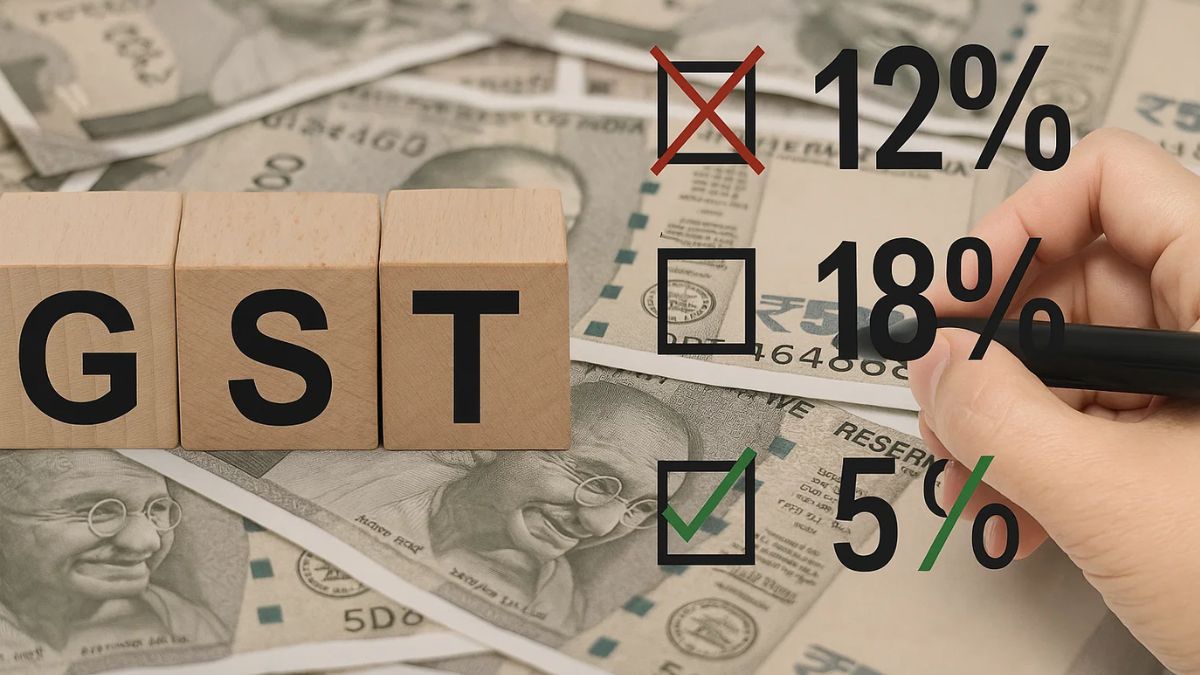
The Government of India has unveiled a transformative proposal to streamline the Goods and Services Tax (GST) structure. The current four-tier system—0%, 5%, 12%, 18%, and 28%—is poised to be replaced by a simplified two-slab framework: 5% for everyday, common-use items, and 18% for most other goods and services This reform is designed to reduce complexity, lower compliance burden, and make taxation more consumer-friendly ahead of its expected rollout by Diwali 2025
Exceptional Sin Goods: 40% Special Rate
In addition to the two primary slabs, a special 40% tax rate will apply exclusively to luxury and “sin goods”—notably tobacco, pan masala, and possibly other harmful items This provision replaces the current compensation cess, aiming to maintain overall tax incidence while discouraging consumption of such goods
Mass Redistribution of GST Rates
Nearly 99% of items currently taxed at 12% will shift to the lower 5% slab, while about 90% of goods under the 28% slab will move to the 18% slab Everyday essentials like soaps, snacks, hair oil, basic electronics, and educational materials are set to become cheaper, whereas aspirational goods such as TVs, refrigerators, and cement will fall under the 18% category
Structural Overhaul Beyond Rates
The GST 2.0 reform goes deeper than rate rationalisation. It addresses systemic issues—such as classification disputes, inverted duties, and procedural inefficiencies—aiming to enhance ease of compliance and bring stability to the tax regime
Economic and Social Implications
By reducing tax burdens on the common man and MSMEs, the reform is expected to stimulate consumption, ease the cost of living, and inject fresh momentum into sectors like agriculture, textiles, and renewable energy The government anticipates that increased consumption could offset any temporary loss in GST revenue The reform will be submitted to the GST Council through a Group of Ministers (GoM) and, once approved, is expected to take effect by the festive season—Diwali 2025
B) Why This News is Important
Relevance to Public Service Aspirants
Government-exam aspirants—across teaching, police, banking, railways, defence, PSCs, and IAS—need to stay updated on economic policy shifts. This GST overhaul has broad implications for policymaking, public finance, and economic governance, all critical for exams, interviews, and essay writing.
Simplification of Complex Indirect Tax System
GST has been plagued by complex slabs and frequent exceptions. The proposed two-slab system simplifies taxation, enhances transparency, and addresses persistent issues like classification disputes and inverted duties
Impact on the Common Man, MSMEs, and Consumption Patterns
Lowering taxes on essential goods reduces everyday expenses, directly impacting households and small businesses. Cutting tax complexity and rates could revive domestic demand—key for sectors like agriculture, textiles, handicrafts, giving economic stability and growth
Strategic Policy Around Festivals & Politics
Rolling out reforms before Diwali—a major consumer festival—and ahead of elections underscores the government’s strategic timing, blending economic policy with political communication. This illustrates how fiscal decisions can be tied with political narratives
Foundation for GST 2.0 and Long-Term Reform Vision
This move signals the start of GST 2.0—a holistic overhaul aimed at simplifying not only rates but also mechanisms of compliance, dispute resolution, business facilitation, and digital automation. Understanding this evolution is key for aspirants analyzing India’s indirect tax architecture
C) Historical Context
Background of GST in India
India introduced GST on July 1, 2017, subsuming a range of central and state taxes to create a single, destination-based tax to streamline India’s indirect tax system The current structure includes five slabs: 0%, 5%, 12%, 18%, and 28%, with exemptions for petroleum, alcohol, and electricity
Issues Since Launch
Though GST unified tax structure, issues persisted—especially classification disputes (e.g., variances in namkeen vs popcorn), inverted duties, cascading credits, and rate confusion
Need for GST 2.0
With eight years of operational experience and evolving economic needs, policymakers have turned to overhauling GST again. The PMO granted in-principle approval for reform earlier in mid-2025, paving the way for structural change
Convergence to Two Slips
Studies and industry demands highlighted how simplifying the slab structure could reduce compliance costs, boost affordability, increase consumption, and improve ease of doing business. This foundation informed the current “two slab plus special 40% rate” proposal
D) Key Takeaways from GST Overhaul Proposal
Key Takeaways from GST Overhaul
| Serial No. | Key Takeaway |
|---|---|
| 1 | GST to be simplified into two main slabs: 5% for essentials and 18% for other goods/services. |
| 2 | A special 40% GST rate will apply only to luxury and sin (demerit) goods like tobacco and pan masala. |
| 3 | Shift of nearly 99% of current 12% slab items to 5%, and around 90% of 28% slab items to 18%. |
| 4 | GST 2.0 aims to rectify structural issues such as classification confusion, duty inversions, and improve compliance efficiency. |
| 5 | The reforms are expected by Diwali 2025, pending GST Council approval, and are likely to stimulate consumption and ease the tax burden on consumers and MSMEs. |
FAQs: Frequently Asked Questions
1. What is the new GST structure proposed by the Indian government?
The government has proposed a two-slab GST system: 5% for essential items and 18% for most goods and services, along with a 40% special rate on sin and luxury goods.
2. Which goods will attract the 40% GST rate?
The 40% GST will apply to sin goods such as tobacco, pan masala, and other demerit items identified by the government.
3. When is the new GST structure expected to be implemented?
The reforms are likely to be implemented by Diwali 2025, pending approval from the GST Council through a Group of Ministers (GoM).
4. How does this GST reform affect common people and MSMEs?
Essential items moving to a lower 5% slab will reduce daily expenses for households, while simplified tax compliance benefits MSMEs by reducing administrative burden.
5. Why is GST 2.0 necessary?
GST 2.0 aims to address systemic issues like classification disputes, inverted duties, and procedural inefficiencies while simplifying taxation for citizens and businesses.
6. How does this reform impact luxury goods and aspirational sectors?
Luxury items such as TVs, refrigerators, cement, and vehicles will be taxed at 18%, which may marginally lower the overall tax burden on these goods compared to the current 28% slab.
7. Will this GST reform affect government revenue?
The government anticipates that increased consumption from lower taxes on essentials will offset any temporary revenue loss from the reduced slabs.
Some Important Current Affairs Links

