
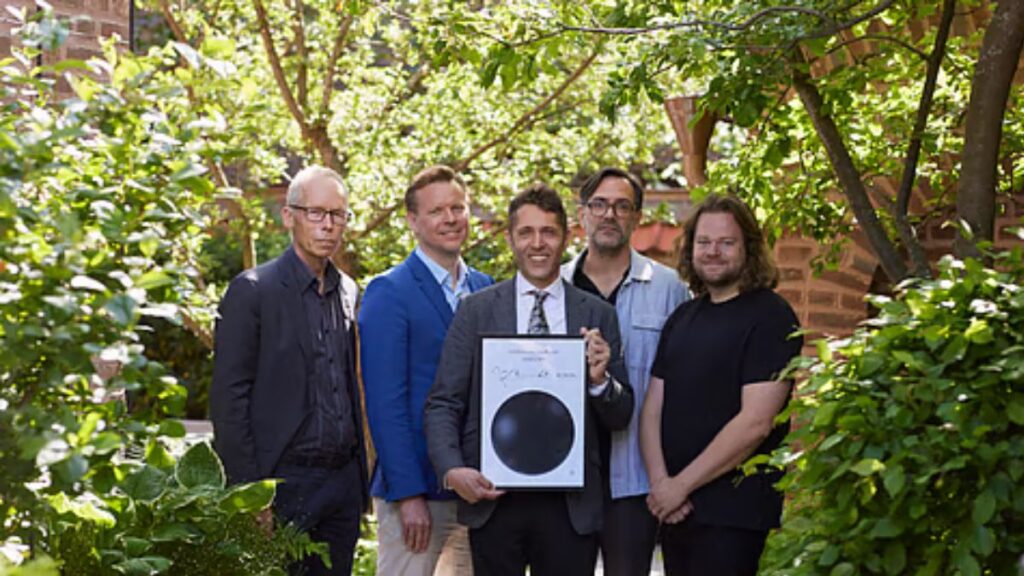
Green fertiliser technology by Swedish startup NitroCapt wins the $2 million Food Planet Prize 2025, revolutionising sustainable agriculture with plasma-based nitrogen production.
Introduction & Innovation Details
A Swedish startup, NitroCapt, has been awarded the prestigious 2025 Food Planet Prize—the world’s largest environmental award—for its revolutionary nitrogen‑fertiliser technology. Founded by physicist Gustaf Forsberg, NitroCapt has created a plasma‑based process that extracts nitrogen directly from the air using renewable electricity, effectively eliminating fossil‑fuel dependencies in production The breakthrough could reshape global agriculture, reduce greenhouse emissions, and bolster food security.
How the Technology Works
- Plasma Activation: Atmospheric nitrogen is oxidised using plasma.
- Green Power Usage: Powered entirely by renewable energy, removing the need for fossil fuels.
- Outcome: Produces reactive nitrogen compounds suitable for fertilisers previously derived from natural gas
Environmental and Economic Benefits
- Emission Reduction: Fertiliser production contributes about 2.7% of global CO₂ emissions, approaching aviation levels
- Energy Savings: Uses roughly 90% less energy compared to the traditional Haber-Bosch process
- Food Security & Supply Resilience: Enables localised production, reducing dependence on distant suppliers—especially crucial amid geopolitics and climate unpredictability
Current Status and Expansion Plans
- A pilot plant operates in Uppsala, Sweden, in partnership with the Swedish University of Agricultural Sciences and Forsberg’s own farm
- The company aims for commercial scaling by end-2026, deploying the $2 million prize funding
- Initial roll-out will focus on Europe via farmer cooperatives, later expanding to other regions through partnerships with governments or NGOs
About the Food Planet Prize
- Founded: 2019 by the Curt Bergfors Foundation in Stockholm.
- Purpose: Recognises transformative innovations that mitigate the environmental impact of global food systems.
- Award: $2 million—making it the world’s largest environmental prize
- Selection Process: Overseen by a jury of ten experts chaired by Johan Rockström and Magnus Nilsson
Other Finalists
- Adaptive Symbiotic Technologies (USA): Microbe-boosting crop resilience.
- Astungkara Way (Indonesia): Regenerative rice farming.
- Pride on Our Plates (China): Data-driven food-waste reduction.
- Semion (Argentina): Plant-based pest control.
- Virtual Irrigation Academy (Australia): Smart irrigation tech for smallholders
Why This News Matters
Significance for Climate and Environment
NitroCapt’s innovation tackles the high carbon footprint of conventional nitrogen fertiliser production. With agriculture responsible for a significant chunk of greenhouse emissions, this shift to a renewables-driven approach offers a powerful method to address climate change. Government-level environmental goals, such as net-zero targets, see this as a crucial technological leap.
Strategic Implications for India and Other Nations
India is among the largest consumers of nitrogen fertilisers. Widespread adoption of plasma-based, localised production can significantly reduce dependence on imports, strengthen food sovereignty, and protect against geopolitical disruptions affecting supply chains—especially critical for sectors like railways and defence logistics, where stability of input costs is vital.
Relevance for Competitive Exams
This development intersects key syllabus areas: Science & Technology, Economy, Environment & Ecology, and International Relations (global initiatives on sustainable agriculture). Its inclusion in examination papers—UPSC, SSC, Bank, etc.—is justified by its multi-sectoral relevance and global impact on sustainability.
Historical Context
Evolution of Synthetic Nitrogen Fertilisers
- Haber-Bosch Process (1909): Revolutionised agriculture by synthesizing ammonia from nitrogen and hydrogen—main contributor to the green revolution.
- Environmental Drawbacks: High energy intensity, methane use, and carbon emissions have long-term ecological costs.
Rising Concerns & Need for Innovation
- Environmental Pressure: With agriculture responsible for approximately 2.7% of global CO₂ emissions, reforms became essential
- Geopolitical Vulnerabilities: Global events—oil shocks, Russia-Ukraine conflict—have demonstrated risks of fossil fuel dependence in fertiliser supply.
Emergence of Sustainable Alternatives
- Technologies like plasma-based nitrogen fixation, biological nitrogen-fixing microbes, and batch-wise decentralised production methods have surged since the 2010s, aiming to decarbonise agriculture and reinforce food security.
Key Takeaways from Green Fertiliser Breakthrough
| # | Key Takeaway |
|---|---|
| 1 | Innovation: NitroCapt uses plasma and green energy to extract nitrogen from the air without fossil fuels. |
| 2 | Award: Won the $2 million Food Planet Prize 2025, the largest environmental prize globally. |
| 3 | Climate Impact: Potential to reduce nitrogen fertiliser emissions (~2.7% of global CO₂) and energy use by ~90%. |
| 4 | Scaling Plan: Pilot in Uppsala; commercial roll-out expected by end-2026, starting in Europe via farmer cooperatives. |
| 5 | Strategic Relevance: Supports local production, enhances national food security, and reduces geopolitical supply vulnerabilities. |
FAQs: Frequently Asked Questions
Q1. What is the green fertiliser breakthrough developed by NitroCapt?
Ans: It is a renewable-energy-powered plasma-based technology that extracts nitrogen from the air without using fossil fuels, producing eco-friendly fertilisers.
Q2. What is the significance of the Food Planet Prize?
Ans: The Food Planet Prize is the world’s largest environmental award, offering $2 million to innovations that positively transform global food systems.
Q3. How much global CO₂ emission is caused by traditional fertiliser production?
Ans: About 2.7% of total global CO₂ emissions come from nitrogen fertiliser production using fossil fuels.
Q4. How does NitroCapt’s technology differ from the Haber-Bosch process?
Ans: Unlike the Haber-Bosch process, which relies on natural gas and emits large amounts of CO₂, NitroCapt’s method uses plasma and green electricity to oxidise atmospheric nitrogen with minimal emissions.
Q5. Why is this innovation important for India?
Ans: India is a major consumer of nitrogen fertilisers. This innovation can reduce import dependency, cut costs, and improve food security through decentralised and sustainable production.
Some Important Current Affairs Links

