
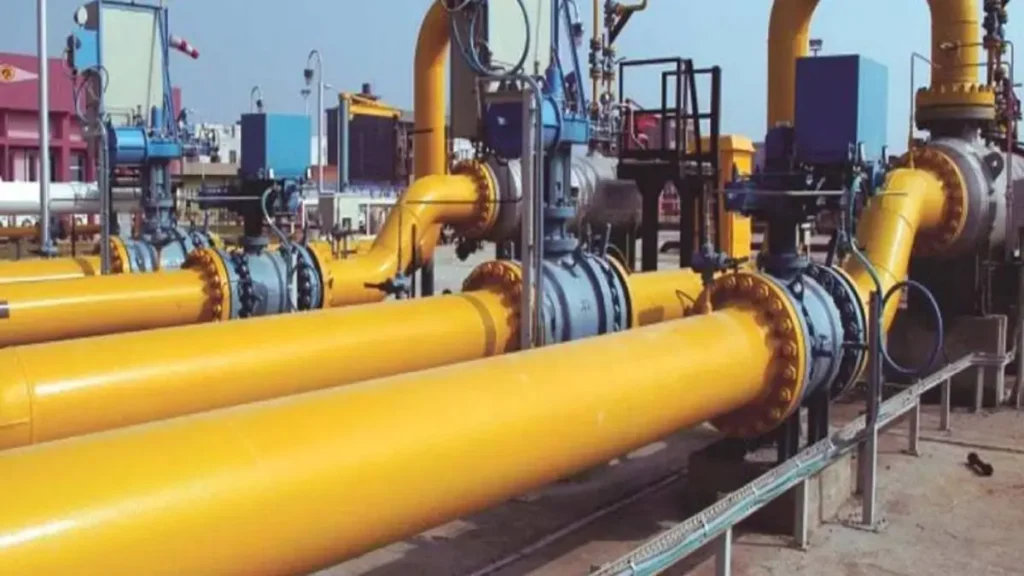
GAIL Mumbai-Nagpur Gas Pipeline project sets a new model for integrated corridor infrastructure, enhancing clean energy supply and supporting industrial growth in Maharashtra.
GAIL’s 694-km Expressway Gas Pipeline: A New Model for India’s Infrastructure
India has achieved a significant infrastructure breakthrough with the successful completion of the 694-kilometre Mumbai-Nagpur Natural Gas Pipeline (MNPL) by GAIL (India) Ltd, marking a new chapter in the country’s energy and transport infrastructure landscape.
Strategic Integration of Energy and Transport Corridors
The MNPL pipeline has been constructed almost entirely within a narrow 3-metre utility corridor along the Samruddhi Mahamarg expressway in Maharashtra — a first-ever integration of a high-capacity natural gas trunkline within a major transport route in India. This innovative approach demonstrates efficient use of infrastructure space and sets a model for future multi-utility corridor development.
Engineering Challenges and Innovative Solutions
Unlike conventional pipeline projects, which require wide working spaces (20–30 metres), GAIL engineers laid this high-capacity pipeline inside a 3-metre space — equivalent to a typical footpath beside the expressway.
To manage this constraint, the project team used advanced techniques such as horizontal directional drilling (HDD) and specialized machinery to navigate hilly, rocky and forested terrains, especially through challenging sections like the Western Ghats.
The project also faced multiple monsoon-related and terrain-specific challenges, which were carefully mitigated through slope stabilization, dewatering, and advanced safety measures during construction.
Role of PM-GatiShakti Integrated Development Framework
The pipeline’s execution is a practical success story of the PM-GatiShakti initiative, which aims to integrate different infrastructure sectors for seamless planning and execution using a multi-modal approach. Under this framework, transportation and utility corridors are designed cohesively to optimize land use and reduce project costs, delays, and land acquisition issues.
Economic, Environmental and Social Impact
The MNPL is designed to carry approximately 16.5 million standard cubic metres of natural gas per day with bi-directional flow capability. Once fully operational, it will expand access to clean energy in 16 districts, support CITY gas distribution for nearly 95 lakh households, fuel over 1,700 CNG fuelling stations, and enhance supplies to industrial units.
This expansion of infrastructure is expected to boost local economies, support industries such as manufacturing and power, and encourage cleaner fuels over traditional energy sources, aiding India’s energy transition goals.
Policy and Planning Implications
The project reflects improved coordination between GAIL and relevant state agencies, especially the Maharashtra State Road Development Corporation (MSRDC) — a blueprint for future corridor-based infrastructure developments that integrate transport, energy and utility planning.

Why This News Is Important for Government Exam Aspirants
Relevance to National Infrastructure Development
This news highlights a major milestone in India’s infrastructure growth story, showcasing how modern engineering, integrated planning and policy synergy (like PM-GatiShakti) can overcome traditional bottlenecks in project execution.
Government exam syllabi — especially for UPSC, state PSCs, SSC and banking — include topics on infrastructure policies, energy security, transport corridors and integrated planning approaches. Understanding such landmark projects helps answer questions on national development strategies and multi-sector coordination.
Policy Initiatives and Public Sector Leadership
This project demonstrates how a Maharatna PSU — GAIL (India) Ltd — leads in advancing India’s energy infrastructure with innovative solutions. Aspirants often encounter questions related to PSUs, governance, public sector initiatives, and national frameworks like PM-GatiShakti, making this topic highly relevant.
Interdisciplinary Understanding
This news combines elements of economics (energy supply, industrial growth), environment (clean fuel promotion), science & technology (engineering solutions), and government schemes — all key areas for competitive exams. A detailed understanding of such developments improves comprehension and analytical ability in current affairs sections.
Historical Context: Evolution of India’s Gas Pipeline Infrastructure
India’s journey of developing gas pipeline infrastructure goes back decades, with an overarching goal to broaden clean energy reach and reduce dependence on imported fuels. Early pipelines were limited in reach and capacity, primarily catering to urban centers and industrial hubs.
Over time, the government prioritized expanding the network to Tier-II and Tier-III cities as well as rural areas, integrating gas pipelines with broader transport corridors under schemes like PM-GatiShakti (launched in 2021). Implementation of integrated development frameworks helps minimize delays and cost overruns, while harnessing synergies across sectors.
Notable projects preceding MNPL include the Urja Ganga pipeline — spanning eastern and northeastern India — to extend natural gas access to under-served regions. These historical efforts laid the foundation for multi-utility corridor development, culminating in innovative projects such as the MNPL.
Key Takeaways from GAIL’s 694-km Expressway Gas Pipeline
| S.No. | Key Takeaway |
|---|---|
| 1 | GAIL completed the 694-km Mumbai-Nagpur Natural Gas Pipeline (MNPL). |
| 2 | The pipeline runs almost entirely inside a 3-metre utility corridor along Samruddhi Mahamarg. |
| 3 | It is India’s first major integration of high-capacity gas pipeline within a transport corridor under PM-GatiShakti. |
| 4 | Project uses advanced engineering techniques to overcome challenging terrain. |
| 5 | It will enhance access to clean energy for households, CNG stations, industries, and support economic growth. |
FAQs – GAIL’s 694-km Expressway Gas Pipeline
1. What is the Mumbai-Nagpur Natural Gas Pipeline (MNPL)?
The MNPL is a 694-kilometre high-capacity natural gas pipeline developed by GAIL (India) Ltd to supply clean energy to households, industries, and CNG stations across Maharashtra.
2. How is MNPL integrated with the Samruddhi Mahamarg expressway?
MNPL is laid almost entirely inside a 3-metre utility corridor along the expressway, making it India’s first major gas pipeline integrated with a transport corridor.
3. What is the significance of PM-GatiShakti in this project?
PM-GatiShakti provides a multi-modal, integrated development framework, helping align transport, energy, and utility projects efficiently, reducing costs and time delays.
4. What is the daily gas capacity of the MNPL?
The pipeline can carry approximately 16.5 million standard cubic metres of natural gas per day, with bi-directional flow capability.
5. How many households and CNG stations will benefit from this project?
The MNPL is expected to supply nearly 95 lakh households and over 1,700 CNG fuelling stations.
6. What engineering challenges were faced during construction?
Challenges included laying a pipeline in a narrow 3-metre corridor, navigating hilly and rocky terrain, and managing monsoon-related disruptions, solved using advanced techniques like horizontal directional drilling (HDD).
7. Why is MNPL important for India’s clean energy transition?
It increases access to natural gas, reducing reliance on fossil fuels, promoting environmentally friendly energy, and supporting industrial growth in Maharashtra.
8. Which organization partnered with GAIL for this project?
The Maharashtra State Road Development Corporation (MSRDC) coordinated with GAIL to ensure safe alignment along the expressway.
9. What makes this pipeline a model for future infrastructure?
Its integration within an expressway demonstrates efficient land use, cost optimization, and coordinated multi-sector planning, serving as a blueprint for future projects.
10. How does MNPL support industrial and economic development?
By supplying clean, reliable energy, the pipeline boosts industrial operations, reduces energy costs, and contributes to regional economic growth.
Some Important Current Affairs Links

