

Gaganyaan SMPS hot test by ISRO successfully validates India’s human spaceflight propulsion system with LAM and RCS thrusters. Key step towards crewed launch.
ISRO Successfully Conducts Hot Tests of Gaganyaan Service Module Propulsion System
Rigorous Testing Validates Performance of SMPS
On July 3, 2025, at its Propulsion Complex near Mahendragiri, ISRO conducted two crucial hot fire tests of its Gaganyaan Service Module Propulsion System (SMPS). The first test ran for 30 seconds, followed by a more comprehensive 100‑second burnThese tests employed real propellants and were intended to simulate flight-like conditions.
All Thrusters Fired Simultaneously
During the 100‑second test, ISRO achieved full system verification by firing all five Liquid Apogee Motors (LAMs, each delivering 440 N thrust) and all sixteen Reaction Control System (RCS) thrusters (100 N each) in both steady‑state and pulsed modes The propulsion system performed within expected parameters, confirming its integrity under integrated operational conditions.
Technological Leadership by LPSC
The Liquid Propulsion Systems Centre (LPSC) spearheaded the SMPS development, refining the test model with enhancements gleaned from previous trials. This iterative testing approach ensures that potential design or performance issues are addressed before full-duration testing
Next Step: Full-Duration Qualification Test
Following the success of these shorter trials, ISRO plans a full-duration hot test soon—likely spanning the full burn time required for real mission scenarios—to further validate the SMPS’s performance
Key Goal: Crew Safety and Mission Readiness
SMPS is vital for in-orbit maneuvers, orbital circularization, and abort scenarios, all of which are critical for crewed flight. The tests bring India one step closer to a human-rated launch vehicle and ensure astronauts’ safe return.
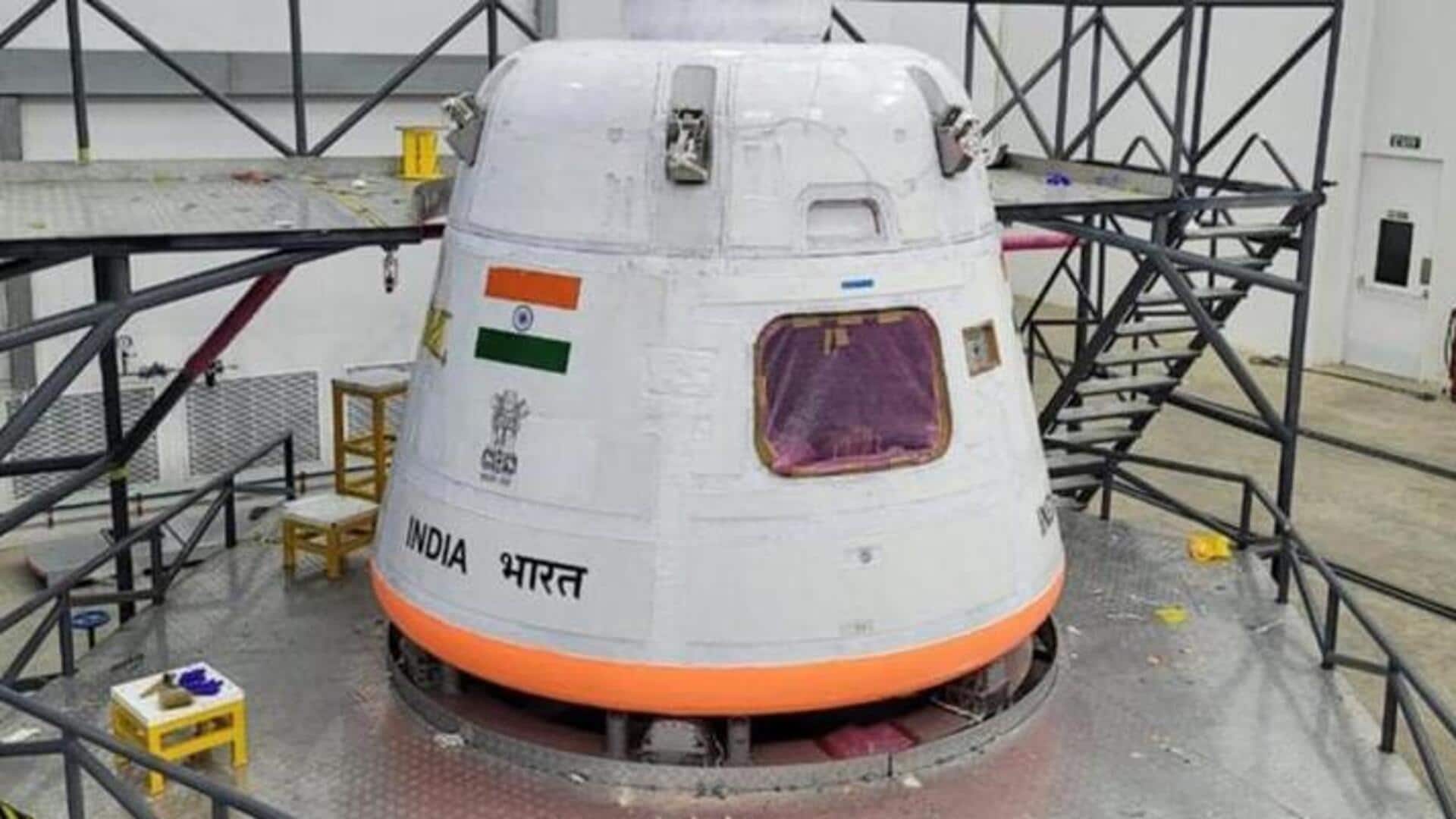
Why This News Matters
A Leap Forward for India’s Human Spaceflight Ambitions
These hot tests mark a pivotal achievement for Gaganyaan, India’s first crewed space mission. Validating the SMPS under real-world conditions signals that ISRO is on course to safely launch Indian astronauts later in 2027
Boosting ISRO’s Credentials in Advanced Propulsion
Successfully firing both LAM and RCS systems in unison demonstrates ISRO’s mastery of complex propulsion technologies. This enhances the agency’s reputation and technological autonomy in space missions.
Relevance to Government Exams
Students preparing for competitive exams in sectors like defence, civil services, and railways should note this development—it aligns with UPSC’s focus on India’s space achievements. It spotlights key scientific principles (bi-propellant engines, orbital mechanics) and institutional aims (human spaceflight capability).
Historical Context: Tracing SMPS Development
Roots in SDM Testing (2021–2023)
Initial system demonstration model (SDM) trials took place in August 2021, with a 450‑second hot test at Mahendragiri involving eight RCS thrusters alongside five LAMs A follow-up qualification test in July 2023 ran for 350 seconds, using sixteen RCS units to simulate operational scenarios
Series of Progressive Trials
Over the years, ISRO carried out cumulative hot firing (totaling thousands of seconds) to optimize hardware and fluidic systems, fulfilling human-rating norms. The design evolved iteratively, with each test fine‑tuning performance under varying conditions .
March to July 2025: The Latest Milestone
The most recent tests on July 3rd build on these earlier efforts. They incorporate flight‑ready configurations and validate integrated operation—crucial steps before advancing to full-duration qualification and the eventual crewed missions.
Key Takeaways from “ISRO Conducts Hot Tests of Gaganyaan SMPS”
| # | Key Takeaway |
|---|---|
| 1 | Date of Tests: Two hot tests occurred on July 3, 2025 (30 s and 100 s burns). |
| 2 | Thruster Simultation: All five LAMs and 16 RCS thrusters fired together in steady and pulsed modes. |
| 3 | Performance Results: Tests aligned with pre-burn predictions; system performed normally. |
| 4 | Next Phase: ISRO plans a full-duration hot fire to further validate mission readiness. |
| 5 | Strategic Importance: SMPS is essential for in-orbit maneuvers and abort procedures for crew safety. |
FAQs: Frequently Asked Questions
Is the Gaganyaan launch planned soon?
Yes, the crewed launch is expected by 2027, following a series of unmanned test missions and hardware validations.
What is the Gaganyaan mission by ISRO?
Gaganyaan is India’s first human spaceflight program, aiming to send a crew of Indian astronauts into low-Earth orbit.
What is the full form of SMPS in the Gaganyaan mission?
SMPS stands for Service Module Propulsion System.
What was tested by ISRO on July 3, 2025?
ISRO conducted two hot tests of the SMPS, including one 30-second and one 100-second test.
Why are hot fire tests important for Gaganyaan?
Hot fire tests simulate real space conditions, ensuring propulsion systems can function accurately and safely during missions.
Which engines are part of the SMPS?
The system includes five Liquid Apogee Motors (440 N each) and sixteen Reaction Control System thrusters (100 N each).
Which ISRO centre developed the SMPS?
The Liquid Propulsion Systems Centre (LPSC) is responsible for developing the SMPS.
What is the next step after these hot tests?
ISRO plans a full-duration qualification hot fire test to validate long-duration performance under actual conditions.
When did the earlier Gaganyaan SMPS hot tests begin?
Initial tests began in 2021, including a 450-second test involving a similar configuration.
What role does SMPS play in Gaganyaan?
It handles orbital insertion, circularization, attitude control, and abort capabilities in crewed missions.
Some Important Current Affairs Links

