
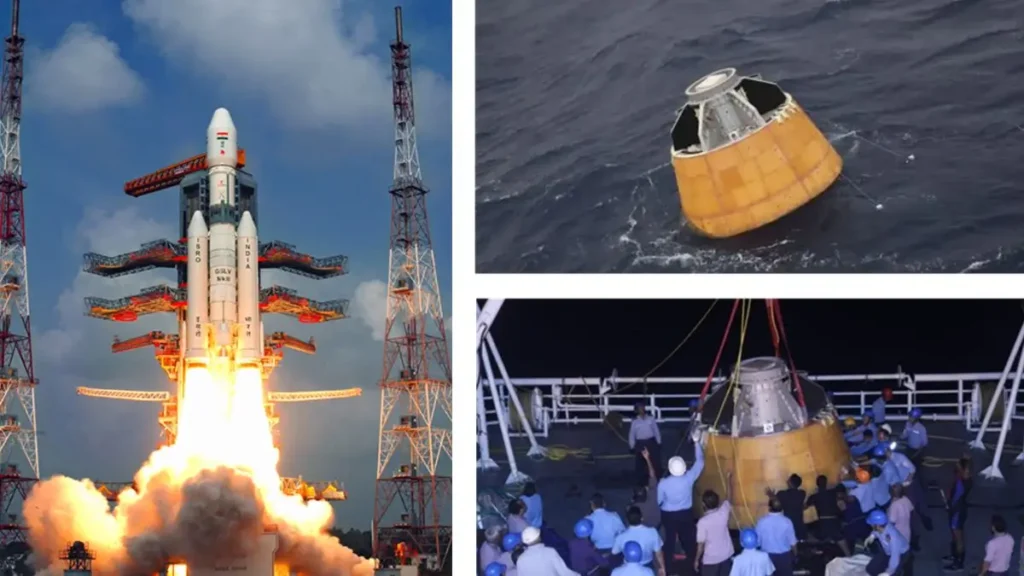
Gaganyaan civilian astronaut selection 2026 marks a major step by ISRO to include civilians in India’s human spaceflight programme, boosting space research and exam relevance.
Gaganyaan Programme Expands with Civilian Astronaut Selection Plan
India’s ambitious human spaceflight mission, the Indian Space Research Organisation (ISRO), has taken a major step forward by expanding the scope of the Gaganyaan Programme. The latest development includes opening astronaut selection to civilians, marking a transformative shift in India’s space exploration strategy.
Inclusion of Civilian Astronauts in Second Batch
ISRO is preparing to select a second batch of astronauts, which will include both military personnel and civilians. Out of the proposed 10 candidates, approximately four are expected to be civilian experts from STEM (Science, Technology, Engineering, Mathematics) fields.
This is a departure from the first batch, which consisted entirely of Indian Air Force test pilots, reflecting the initial focus on operational safety and flight expertise.
Shift Towards Inclusive Space Exploration
The decision to include civilians signals India’s move toward a more inclusive and sustainable human spaceflight programme. Civilian experts can contribute to scientific research, engineering advancements, and medical studies in space, complementing the operational strengths of military pilots.
This aligns India with global practices where astronauts are often selected from diverse professional backgrounds.
Timeline for Civilian Participation
Although civilians will be selected in the upcoming batch, they are expected to participate in space missions only from the fourth Gaganyaan flight onward. The initial missions will continue to rely on trained military astronauts to ensure mission safety and reliability.
Long-Term Vision of India’s Space Programme
The expansion of the astronaut selection process is part of India’s broader vision to establish a robust human spaceflight ecosystem. Plans include building a dedicated astronaut cadre, developing a space station, and eventually sending humans to the Moon by 2040.
The Gaganyaan mission itself aims to send a crew of three astronauts to low Earth orbit at an altitude of around 400 km for a short-duration mission.

B) Why This News Is Important
Boost to India’s Space Ambitions
The inclusion of civilians in astronaut selection significantly strengthens India’s long-term space ambitions. It indicates a transition from a one-time mission to a continuous human spaceflight programme. This shift is crucial for establishing India as a major space power globally.
Opportunities for Common Citizens
Opening astronaut selection to civilians creates new opportunities for talented individuals from scientific and technical backgrounds. This democratization of space exploration can inspire millions of students preparing for competitive exams and careers in STEM fields.
Strategic Technological Advancement
By involving experts from diverse fields, ISRO can enhance research capabilities in space science, medicine, and engineering. This will improve mission outcomes and help India compete with established space agencies like NASA and Roscosmos.
Relevance for Competitive Exams
This development is highly relevant for exams like UPSC, SSC, Banking, and Defence. Questions may be asked about Gaganyaan, ISRO’s role, astronaut selection criteria, and India’s space policy.
C) Historical Context / Background
Evolution of India’s Human Spaceflight Programme
India’s human spaceflight journey began under the broader Indian Human Spaceflight Programme, which aims to develop indigenous capabilities for sending humans into space.
The Gaganyaan mission was officially announced in 2018, with the objective of demonstrating India’s ability to send astronauts into low Earth orbit and safely return them.
Initial Astronaut Selection
The first batch of astronauts was selected exclusively from Indian Air Force test pilots due to their expertise in handling high-risk missions. These astronauts underwent rigorous training, including international collaboration.
Expansion of Programme Scope
Over time, the programme has expanded to include multiple missions, technological advancements, and plans for a space station. The inclusion of civilians is the latest milestone, reflecting India’s transition toward a long-term human spaceflight ecosystem.
D) Key Takeaways from This News
Key Takeaways from This News
| S.No. | Key Takeaway |
|---|---|
| 1 | ISRO will include civilians in astronaut selection for the first time |
| 2 | Second batch will have around 10 astronauts, including 4 civilian STEM experts |
| 3 | Civilian astronauts are expected to fly from the fourth Gaganyaan mission |
| 4 | Earlier astronaut selection was limited to Indian Air Force test pilots |
| 5 | The move supports India’s long-term goals like space station and Moon missions by 2040 |
FAQs for Exam Preparation
1. What is the Gaganyaan Programme?
The Gaganyaan Programme is India’s first human spaceflight mission led by Indian Space Research Organisation. It aims to send a crew of astronauts into low Earth orbit and safely bring them back.
2. What is the significance of including civilian astronauts?
The inclusion of civilians marks a shift toward inclusive and research-oriented space missions, allowing scientists and engineers to directly participate in space experiments.
3. Who were selected in the first batch of astronauts?
The first batch consisted entirely of Indian Air Force test pilots due to their expertise in handling high-risk missions.
4. When will civilian astronauts participate in space missions?
Civilian astronauts are expected to fly from the fourth mission onward, after initial missions ensure safety and reliability.
5. What is the objective of the Gaganyaan mission?
The mission aims to demonstrate India’s capability to send humans to space (Low Earth Orbit) and return them safely.
6. What altitude will Gaganyaan operate at?
The mission is planned at an altitude of around 400 km above Earth.
7. Why is this news important for competitive exams?
It is important for exams like UPSC, SSC, Banking, and Defence as it relates to India’s space advancements, science & technology, and government initiatives.
8. What are India’s future goals in human spaceflight?
India plans to develop a space station and send humans to the Moon by 2040.
Some Important Current Affairs Links

