
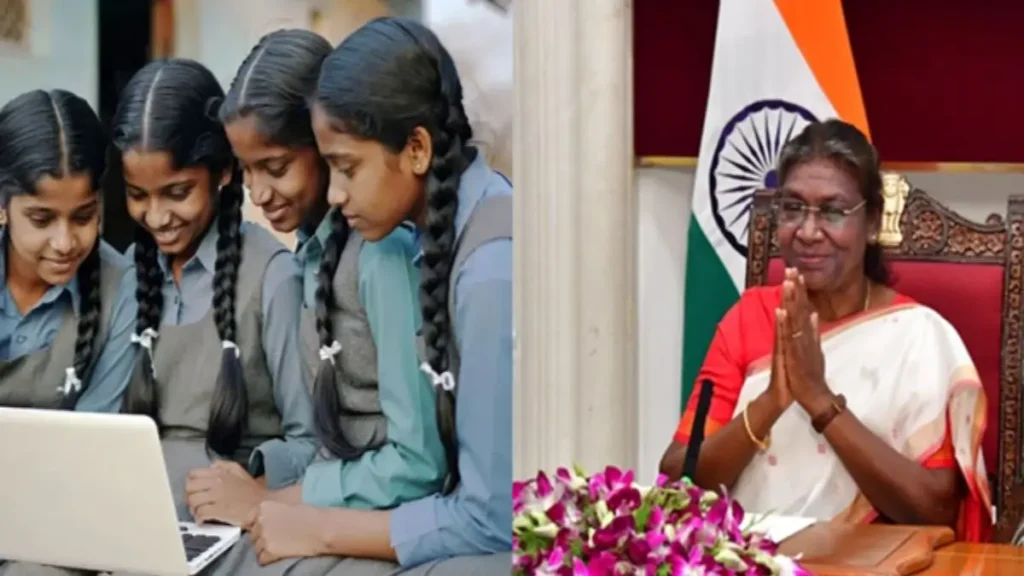
Women welfare schemes in Delhi 2026 launched by President Droupadi Murmu include Lakhpati Bitiya Yojana, Saheli Pink Smart Card, Meri Punji Mera Adhikar and free LPG cylinders. Know key details for UPSC and government exam preparation.
President Droupadi Murmu Launches Four Major Women Welfare Schemes in Delhi
Introduction: A Major Step Toward Women Empowerment
The President of India, Droupadi Murmu, launched four major welfare schemes aimed at empowering women in the national capital. The schemes were unveiled during the programme titled “Sashakt Naari, Samriddh Delhi” held in New Delhi. These initiatives focus on improving women’s financial security, mobility, education opportunities, and household support.
The event highlighted the government’s commitment to strengthening women’s role in society by ensuring access to resources and opportunities. Officials stated that the schemes would benefit lakhs of women and girls across Delhi by providing financial support and improving access to public services.
Lakhpati Bitiya Yojana: Financial Security for Girl Children
One of the most significant schemes launched is the Delhi Lakhpati Bitiya Yojana, which aims to ensure long-term financial security for girls. Under this scheme, the government deposits funds in stages in the name of a girl child from birth until higher education. By the time the beneficiary turns 21 years old, the deposited amount grows to more than ₹1 lakh through interest.
The scheme is designed to encourage families to invest in the education and future of girls. It also promotes gender equality by providing financial support that can be used for higher education or vocational training.
Saheli Pink Smart Card: Enhancing Women’s Mobility
Another major initiative is the Saheli Pink Smart Card, a special transport card for women. This card allows women to travel free on public buses operated by the Delhi Transport Corporation and cluster buses.
The smart card replaces the earlier paper-based ticket system and aims to create a digital and seamless travel experience. It also aligns with the One Nation–One Card vision and may eventually be integrated with other public transport systems such as metro and regional transit networks.
Meri Punji, Mera Adhikar: Direct Benefit Transfer for Girls
The Meri Punji, Mera Adhikar initiative focuses on providing financial assistance directly to beneficiaries through the Direct Benefit Transfer (DBT) system. Under this scheme, more than ₹100 crore has been transferred directly into Aadhaar-linked bank accounts of thousands of girls under the Ladli programme.
The initiative ensures transparency and efficient delivery of government benefits. By transferring funds directly to beneficiaries, the government aims to reduce corruption and delays in welfare schemes.
Free LPG Cylinder Scheme for Ration Card Holders
Another important announcement was the free LPG cylinder scheme, under which ration card-holding families will receive two free LPG cylinders every year during festivals such as Holi and Diwali.
This initiative aims to reduce the financial burden on households and promote the use of clean cooking fuel. It is expected to benefit thousands of low-income families in Delhi, improving their quality of life and reducing dependence on traditional fuels.
Vision of the “Sashakt Naari, Samriddh Delhi” Programme
The programme’s theme, “Sashakt Naari, Samriddh Delhi” (Empowered Women, Prosperous Delhi), highlights the importance of women’s empowerment in building a developed society. During the launch event, President Murmu emphasized that empowering women is essential for achieving the vision of a developed India by 2047.
She also highlighted that women today are excelling in fields such as science, administration, sports, and defence, but challenges like economic inequality and social discrimination still remain. The newly launched schemes aim to address these issues by providing support across different aspects of women’s lives.

Why This News Is Important
Important for Government Exam Preparation
The launch of these four welfare schemes is significant for students preparing for competitive examinations such as UPSC, State PSC, SSC, banking, and railway exams. Questions related to newly launched government schemes, social welfare initiatives, and women empowerment programs are frequently asked in these exams.
Knowing the objectives, beneficiaries, and features of such schemes helps aspirants answer questions in sections related to current affairs, government policies, and social development.
Strengthening Women-Led Development
The schemes represent a broader national push towards women-led development. By focusing on education, mobility, and financial support, the government aims to create a more inclusive society where women can participate equally in economic and social activities.
Programs such as the Saheli Smart Card and Lakhpati Bitiya Yojana highlight the government’s approach to addressing challenges faced by women, including mobility constraints, financial insecurity, and limited access to resources.
Policy Impact and Governance
From a governance perspective, these schemes demonstrate the growing use of digital platforms and Direct Benefit Transfer (DBT) to ensure transparency and efficiency in welfare delivery. Such initiatives reduce corruption, improve accountability, and ensure that benefits reach the intended recipients.
For exam aspirants, understanding the structure and implementation of these schemes helps in answering questions related to public policy, social welfare, and government administration.
Historical Context: Women Empowerment Policies in India
Evolution of Women Welfare Schemes
India has introduced several policies over the years to improve the social and economic status of women. Programs such as Beti Bachao Beti Padhao, Ujjwala Yojana, and Self-Help Group initiatives have focused on education, health, and financial empowerment.
These schemes aim to reduce gender inequality and promote equal opportunities for women in society.
Increasing Focus on Financial and Social Security
In recent years, both central and state governments have introduced targeted schemes to improve women’s access to financial resources, safe mobility, and employment opportunities. These include financial assistance programs for girl children, skill development initiatives, and transportation safety measures.
The newly launched schemes in Delhi continue this trend by addressing multiple aspects of women’s empowerment simultaneously—education, financial security, mobility, and household support.
Key Takeaways from This News
| S. No. | Key Takeaway |
|---|---|
| 1 | President Droupadi Murmu launched four women-focused welfare schemes in New Delhi under the “Sashakt Naari, Samriddh Delhi” programme. |
| 2 | The schemes include Delhi Lakhpati Bitiya Yojana, Saheli Pink Smart Card, Meri Punji Mera Adhikar initiative, and Free LPG Cylinder scheme. |
| 3 | The Saheli Pink Smart Card allows women to travel free on Delhi buses and promotes digital ticketing. |
| 4 | Under Lakhpati Bitiya Yojana, financial deposits are made in the name of a girl child that can grow to over ₹1 lakh by age 21. |
| 5 | The schemes aim to enhance women’s mobility, financial security, education opportunities, and household welfare in Delhi. |
FAQs: Frequently Asked Questions
1. Who launched the four women welfare schemes in Delhi?
The four welfare schemes aimed at empowering women were launched by Droupadi Murmu, the President of India, during a special programme held in New Delhi. The event focused on strengthening women’s social, financial, and economic empowerment.
2. What was the theme of the programme during which the schemes were launched?
The schemes were launched under the theme “Sashakt Naari, Samriddh Delhi”, which emphasizes the idea that empowering women leads to overall development and prosperity of society.
3. What is the objective of the Lakhpati Bitiya Yojana?
The Delhi Lakhpati Bitiya Yojana aims to provide long-term financial security to girl children. Under this scheme, financial deposits are made in the name of a girl child, which accumulate with interest and can reach more than ₹1 lakh when the beneficiary reaches adulthood.
4. What is the Saheli Pink Smart Card scheme?
The Saheli Pink Smart Card is a transport initiative that allows women to travel free on public buses operated by Delhi Transport Corporation and cluster buses. The card is designed to replace paper tickets with a digital travel system.
5. What is the Meri Punji Mera Adhikar initiative?
The Meri Punji Mera Adhikar initiative provides financial benefits directly to beneficiaries through the Direct Benefit Transfer (DBT) system. The scheme ensures transparency by transferring funds directly into Aadhaar-linked bank accounts.
6. What is the purpose of providing free LPG cylinders to ration card holders?
The scheme provides two free LPG cylinders per year to ration card-holding families during major festivals like Holi and Diwali. This initiative aims to reduce the financial burden on low-income households and promote clean cooking fuel.
7. Why are such schemes important for competitive exam preparation?
Government schemes related to social welfare, women empowerment, and economic development are frequently asked in exams such as UPSC Civil Services Examination, state PSC exams, banking exams, and SSC examinations.
8. Which government department is responsible for implementing transport services for women in Delhi?
The Delhi Transport Corporation and cluster bus services are responsible for implementing the free bus travel scheme for women in Delhi through the Saheli Pink Smart Card system.
Some Important Current Affairs Links

