
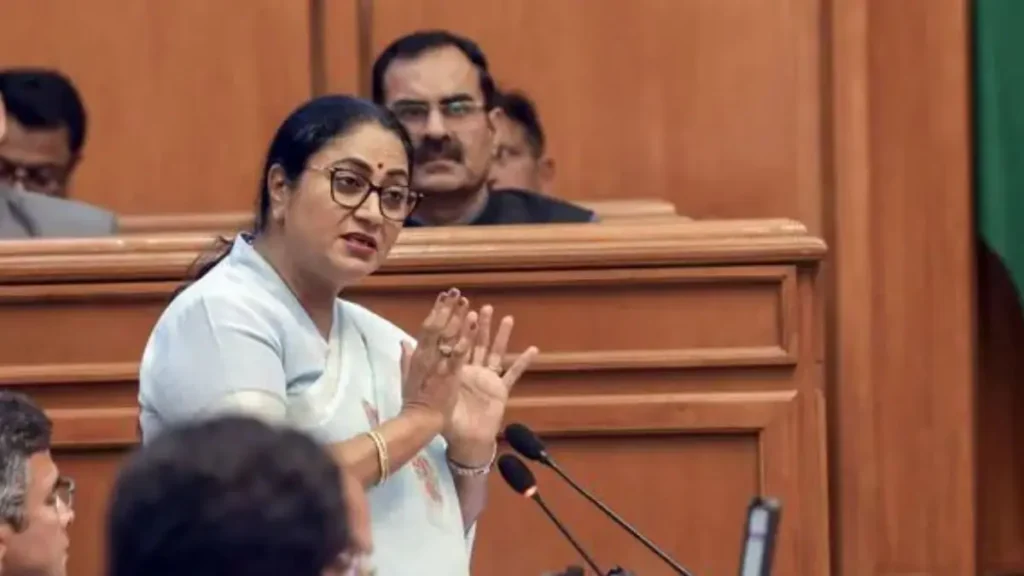
Delhi Green Budget 2026 unveiled by Rekha Gupta focuses on sustainability with 21% allocation for environmental initiatives, key infrastructure development, and social welfare.
Rekha Gupta Unveils Delhi’s Green Budget 2026 to Tackle Rising Pollution
In a major policy shift aimed at tackling Delhi’s persistent air pollution and environmental degradation, Chief Minister Rekha Gupta unveiled the Delhi Budget 2026‑27, popularly being termed a “Green Budget”. The total fiscal outlay for the year stands at ₹1,03,700 crore, marking a 3.7% increase over last year’s allocation, reflecting the government’s intent to balance development with sustainability.
Delhi’s environmental crisis, particularly severe air pollution during winter months and the ongoing contamination of the Yamuna River, has been a persistent concern for policymakers and residents alike. In response, the new budget infuses environmental sustainability directly into the decision‑making process, ensuring that ecological protection is not a side agenda but a central priority.
Green Budget Emphasis: Environment at the Core of Governance
A noteworthy aspect of the budget is the allocation of 21% of the total budget towards environmental initiatives. This marks one of the highest percentages devoted to sustainability in recent state budgets, indicating a strategic focus on combating pollution and promoting green development. Initiatives under this umbrella include:
- Pollution control measures
- Expansion of green cover
- Sustainable urban planning
- Climate‑responsive projects
By integrating a “green lens” in policy frameworks, the government aims to ensure that every major decision—from infrastructure development to civic services—considers its environmental impact.
Infrastructure and Civic Development: A Dual Push
While environmental goals occupy a central place, the budget also makes significant provisions for urban development and infrastructure growth. Over ₹11,666 crore has been allotted to the Municipal Corporation of Delhi (MCD) to improve civic services and support initiatives like dust‑free roads. Additionally, ₹7,887 crore is dedicated to broader urban development, and the Public Works Department (PWD) is set to receive ₹5,921 crore for road construction and maintenance.
These allocations align with the government’s dual objectives: improving quality of life for Delhi’s growing population and reducing pollution by modernising city infrastructure.
Social Welfare: Education, Health, and Essential Services
The budget underscores that environmental health is intrinsically linked to human development. Hence, education receives its highest allocation at ₹19,148 crore, aimed at elevating school standards and educational quality. The health sector has been allocated ₹12,645 crore to strengthen hospital capacity and public health services.
Critical public utilities also see substantial investments, with the Delhi Jal Board receiving ₹9,000 crore for water supply and sewage systems—vital for both sanitation and preventing river pollution. The power sector is allocated ₹3,942 crore, including funds to improve electricity reliability and underground wiring safety.

Why This News is Important
Environmental sustainability and pollution control are high‑priority topics in competitive exams, especially for aspirants preparing for government services like UPSC/CSE, state administrative roles, police and defence services, banking, railways, and teaching positions. Current affairs based on such policy decisions test not only factual knowledge—such as budget figures and allocations—but also your understanding of policy implications and governance priorities.
This Green Budget is significant because it reflects a broader shift in public administration where environmental concerns are no longer peripheral but central to policymaking. Exam questions often focus on innovative governance models, sustainability initiatives, and state responses to critical issues like air pollution—making this budget a key topic for environment and governance sections.
Moreover, the integration of environmental goals with infrastructure, health, education, and civic services demonstrates the multi‑sectoral nature of sustainable development policies, a concept regularly tested in exams. Understanding such integrations helps students excel in essay writing, analytical answers, and policy evaluation questions.
Historical Context: Background to Delhi’s Pollution Challenge
Delhi has long grappled with severe air pollution, often recording hazardous air quality levels, particularly in winter due to crop burning in neighbouring states, vehicular emissions, and construction dust. Earlier governments and the current administration have introduced many mitigation strategies, including electric vehicle policies, increased public transport fleets, stricter pollution monitoring, and dust‑control measures.
Chief Minister Rekha Gupta’s government has articulated pollution control as an “emergency mission,” establishing panels and committees to monitor and enforce air quality measures. Furthermore, long‑term solutions emphasizing public transport expansion, waste management improvements, and river cleanup indicate that Delhi’s environmental policy is evolving from short‑term fixes to structural reforms.
The Green Budget follows months of deliberation and planning, rooted in the government’s aim to embed ecological consciousness into mainstream policy—an approach also influenced by global climate commitments and Sustainable Development Goals (SDGs).
Key Takeaways from “Rekha Gupta Unveils Delhi’s Green Budget 2026 to Tackle Rising Pollution”
| S. No. | Key Takeaway |
|---|---|
| 1 | The Delhi Budget 2026‑27 totals ₹1,03,700 crore, a 3.7% increase from the previous year. |
| 2 | The budget is branded as a Green Budget with 21% allocation for environmental initiatives. |
| 3 | Significant funds are allocated for infrastructure and civic development to support pollution mitigation. |
| 4 | Social sectors like education and health get major allocations, linking human development to sustainability. |
| 5 | Investments in essential services like water supply and power aim to improve urban living standards while supporting green goals. |
FAQs: Frequently Asked Questions on Delhi’s Green Budget 2026
Q1: Who unveiled the Delhi Green Budget 2026?
A1: Delhi Chief Minister Rekha Gupta unveiled the Green Budget 2026‑27.
Q2: What is the total allocation of Delhi Budget 2026‑27?
A2: The total budget stands at ₹1,03,700 crore, marking a 3.7% increase from the previous year.
Q3: What percentage of the budget is allocated for environmental initiatives?
A3: 21% of the total budget is allocated for pollution control, green development, and climate‑responsive projects.
Q4: How does the budget link social sectors with environmental goals?
A4: Education, health, and civic services are significantly funded, highlighting the link between human development and environmental sustainability.
Q5: What are some key infrastructure allocations in the budget?
A5: The Municipal Corporation of Delhi (₹11,666 crore), urban development projects (₹7,887 crore), and Public Works Department (₹5,921 crore) are major allocations to improve civic services and reduce pollution.
Q6: Why is the Green Budget important for exam aspirants?
A6: It is a key current affairs topic related to governance, environmental policy, urban development, and sustainable planning—frequently asked in UPSC, State PSCs, banking, railways, and teaching exams.
Q7: Which sectors benefit directly from the budget’s environmental focus?
A7: Pollution control, green cover expansion, sustainable urban planning, and water and power services benefit directly.
Some Important Current Affairs Links

