
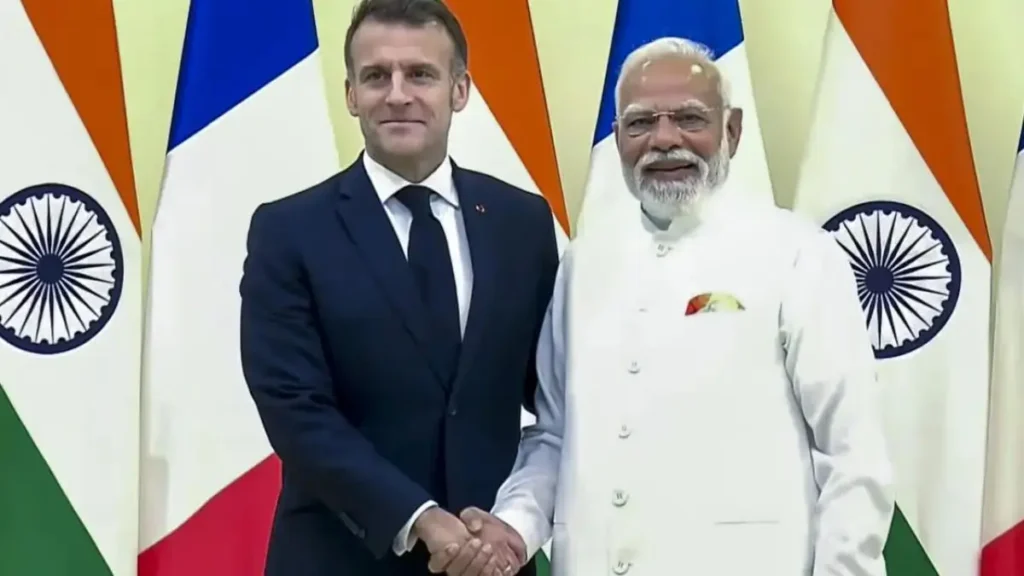
Critical minerals cooperation India France 2026 strengthened during Macron’s visit. Learn about rare earth deals, strategic partnership, and technological collaboration between India and France.
Macron’s 2026 India Visit: India‑France Seal Key Minerals Cooperation Deal
In February 2026, French President Emmanuel Macron visited India in a landmark diplomatic engagement that strengthened the strategic ties between India and France. During high‑level talks with Prime Minister Narendra Modi in Mumbai, both nations signed a Joint Declaration of Intent on critical minerals cooperation, highlighting collaboration on exploration, extraction, processing, and recycling of crucial minerals. This cooperation is aimed at strengthening resilient global supply chains in the green and digital economy, especially for critical and rare earth minerals that are essential for modern technology.
Under this agreement, India and France committed to working together in securing diversified and sustainable supply chains for rare earth elements and other strategic minerals. Rare earth minerals play a key role in renewable energy systems, electric vehicles (EVs), solar technology, semiconductors, and advanced manufacturing. Both nations recognized that reducing reliance on limited global suppliers will enhance economic and strategic security.
The declaration also includes plans for cooperation with France’s National Centre for Scientific Research (CNRS) and the establishment of a Centre on Advanced Materials, reinforcing research and industrial innovation. Beyond minerals, discussions extended to broadened strategic cooperation covering Indo‑Pacific engagement, climate action, and diplomatic support for peace efforts in regions like Ukraine and the Middle East.
This visit also marked the elevation of India‑France bilateral relations to a “Special Global Strategic Partnership”, with 21 agreements spanning defence, technology, innovation, taxation, and education — demonstrating a deepening strategic alignment between the two democracies.

Why This News Matters for Exam Aspirants
This diplomatic event is significant in the modern geopolitical and economic landscape:
Strategic Importance of Critical Minerals
Critical minerals such as rare earths are central to green economy transition and high‑tech industries. They are key components in EV batteries, wind turbines, solar panels, and advanced electronics — topics increasingly asked in static GK and current affairs sections. The India‑France cooperation signals India’s role in the global value chain, empowering sustainable growth and economic security.
Geopolitical and Economic Strategy
The signing of the Joint Declaration of Intent with France reflects India’s evolving international strategy — from regional influence to global supply chain resilience. Cooperating with advanced economies like France improves India’s trade leverage, technological exchange, and diplomatic standing in global forums such as the G20 and Quad. This is vital for exams covering International Relations and world politics.
Innovation & Scientific Collaboration
The establishment of research ecosystems, such as the Centre on Advanced Materials and partnerships with CNRS, reflects India’s push toward research‑driven innovation with global partners. Questions on science diplomacy and technological cooperation are increasingly common in UPSC and banking exams.
Expanded Bilateral Ties
The elevation of the India‑France relationship to a Special Global Strategic Partnership marks a milestone in foreign policy. Exams like UPPCS, CDS, and IAS often include questions on major bilateral summits, strategic alliances, and international agreements.
Historical Context: India‑France Relations
Long‑Standing Diplomatic Ties
India and France have shared diplomatic relations since 1947, rooted in historical connections like India’s former French territories (e.g., Pondicherry) and strong democratic values. Over the decades, both nations strengthened cooperation in defence, nuclear energy, space, and culture.
Strategic Partnership Evolution
In 1998, India and France formalized their relationship as a Strategic Partnership, which was later upgraded to a “Strategic Global Partnership” in 2010. Subsequent collaborations included major defence deals (like the Rafale fighter jets), joint naval exercises, and cooperation in civil nuclear energy.
Focus on Innovation and Future Technologies
In recent years, both countries have expanded cooperation to include artificial intelligence, space technologies, clean energy, and start‑up ecosystems. The India‑France Year of Innovation 2026, launched during Macron’s visit, builds on this shared future‑oriented agenda — reflecting a blend of diplomatic, scientific, and economic goals.
Key Takeaways from “India‑France Critical Minerals Cooperation Deal”
| Sr. No. | Key Takeaway |
|---|---|
| 1 | India and France signed a Joint Declaration of Intent on cooperation in critical minerals during President Macron’s 2026 visit. |
| 2 | The agreement focuses on exploration, processing, and recycling of rare earth elements and critical minerals. |
| 3 | Critical minerals are essential for green technologies like EVs, renewable energy systems, and semiconductors. |
| 4 | Cooperation includes establishing a Centre on Advanced Materials with France’s CNRS to boost R&D. |
| 5 | The visit marked the elevation of India‑France ties to a Special Global Strategic Partnership with 21 agreements across sectors. |
FAQs: Frequently Asked Questions
1. What was the purpose of President Macron’s 2026 visit to India?
President Macron visited India to strengthen bilateral relations and sign agreements, including a Joint Declaration of Intent on critical minerals cooperation. The visit also aimed at enhancing strategic, technological, and climate cooperation between the two nations.
2. What are critical minerals, and why are they important?
Critical minerals include rare earth elements and other strategic minerals essential for renewable energy systems, electric vehicles, semiconductors, advanced manufacturing, and digital technologies. They are vital for economic and technological security.
3. Which organizations are involved in India‑France mineral cooperation?
The cooperation involves the Government of India, Government of France, and research institutions like France’s CNRS (National Centre for Scientific Research), with plans to establish a Centre on Advanced Materials for joint R&D.
4. What is the significance of elevating India‑France relations to a Special Global Strategic Partnership?
This elevation reflects deepening diplomatic, economic, and technological ties, covering defence, technology, innovation, taxation, education, and climate collaboration, positioning both nations as strategic partners globally.
5. How does this news impact India’s global strategic position?
It strengthens India’s position in global supply chains for rare earth and critical minerals, ensures economic and technological security, and enhances collaboration with advanced economies, which is crucial for international relations, trade, and exam-relevant GK topics.
Some Important Current Affairs Links

