
Chola copper plates return to India explained with history, significance, cultural importance, Chola dynasty facts, MCQs, FAQs and key takeaways for UPSC, PSC, SSC and other government exams.
Introduction to the Historic Return
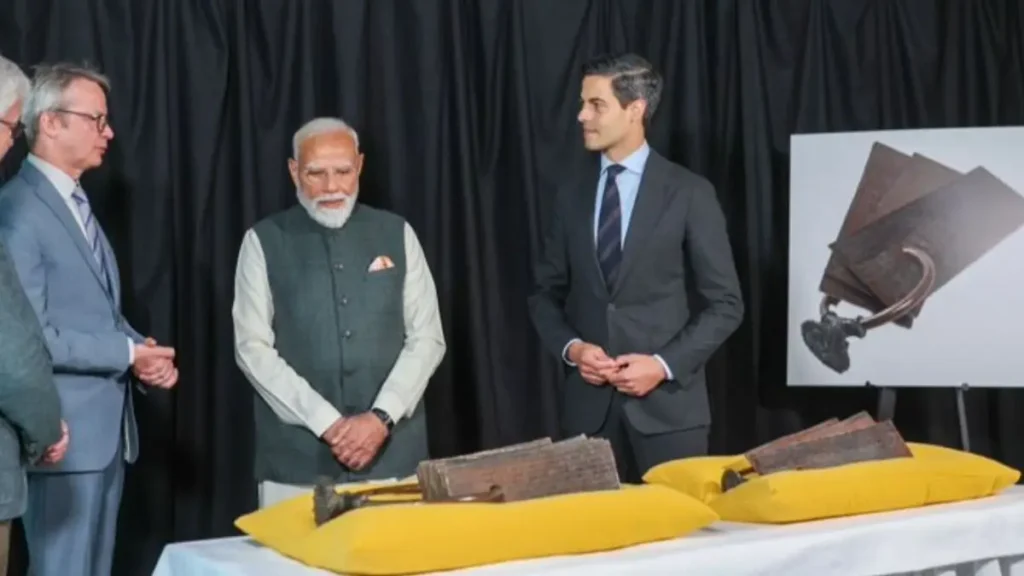
India recently achieved a major cultural and diplomatic success with the return of the 11th-century Chola Copper Plates from the Netherlands. These priceless artefacts, also known as the Leiden Plates or Anaimangalam Copper Plates, were formally handed over during Prime Minister Narendra Modi’s visit to the Netherlands. The copper plates are considered among the most valuable surviving records of the powerful Chola Empire.
The return of these artefacts is important not only for India’s cultural heritage but also for international discussions on colonial-era restitution of historical objects. The event highlights India’s growing efforts to reclaim artefacts taken abroad during colonial rule.
What are the Chola Copper Plates?
The Chola Copper Plates are royal charters engraved on copper sheets during the reign of the Chola dynasty in South India. The collection includes 21 large copper plates and 3 smaller plates weighing around 30 kilograms. The inscriptions are written in both Tamil and Sanskrit languages.
These inscriptions mainly record grants made to a Buddhist monastery known as Chulamanivarma Vihara in Nagapattinam, Tamil Nadu. The grants were associated with Emperor Rajaraja Chola I and later formalised by his son Rajendra Chola I. The copper plates provide valuable insights into administration, religion, diplomacy and maritime trade during the Chola period.
Importance of the Chola Dynasty
The Chola dynasty was one of the greatest empires in Indian history. It ruled large parts of South India and extended influence across Southeast Asia between the 9th and 13th centuries. The Cholas were known for strong naval power, temple architecture, efficient administration and maritime trade.
Kings such as Rajaraja Chola I and Rajendra Chola I expanded the empire significantly. The Cholas maintained diplomatic and trade relations with kingdoms in present-day Indonesia, Sri Lanka and Southeast Asia. The copper plates are direct historical evidence of these connections.
How Did the Plates Reach the Netherlands?
Historical investigations revealed that the plates were likely removed during Dutch colonial activities in Nagapattinam between the late 17th and early 18th centuries. The Dutch East India Company controlled the region during that period. Later, the artefacts became part of the collection of Leiden University in the Netherlands, where they remained for more than 160 years.
India had been requesting the return of the plates since 2012. A detailed provenance investigation and recommendations by the Colonial Collections Committee in the Netherlands supported India’s claim. Eventually, Leiden University agreed to return the artefacts unconditionally.
Cultural and Diplomatic Significance
The return of the Chola Copper Plates is seen as a symbol of cultural justice and restoration of historical identity. Such returns strengthen India’s cultural diplomacy and encourage international cooperation in protecting heritage.
The development also reflects a global trend where former colonial powers are increasingly returning historical artefacts to their countries of origin. Many countries, including India, Greece and Egypt, have intensified efforts to reclaim culturally important objects taken during colonial times.
Relevance for Government Exam Aspirants
This topic is highly important for UPSC, State PSCs, SSC, Banking, Railways and Defence examinations because it covers Indian history, art and culture, international relations and current affairs. Questions can be asked about:
- Chola dynasty and its achievements
- Cultural diplomacy
- UNESCO heritage and restitution debates
- Maritime trade in ancient India
- Colonial-era artefact recovery
Students should also remember that the inscriptions demonstrate India’s ancient connections with Southeast Asia and the role of Tamil culture in global trade networks.

Why this News is Important
Importance for Indian Cultural Heritage
The return of the Chola Copper Plates is important because it restores a major piece of India’s historical heritage. These artefacts are not ordinary objects; they are official records from one of India’s greatest dynasties. They contain information about governance, religion, diplomacy and social life during the Chola period. Their return strengthens India’s connection with its ancient civilization.
Importance for International Relations
The development highlights positive diplomatic relations between India and the Netherlands. The decision by Leiden University and Dutch authorities demonstrates growing international sensitivity toward colonial-era injustices. Such cooperation improves trust between countries and promotes ethical handling of historical artefacts.
Importance for Art and Culture Studies
For students preparing for government examinations, the issue is significant because it combines history, art and culture with current affairs. The Chola dynasty is frequently asked about in UPSC and PSC examinations. Topics like temple architecture, maritime trade, administration and cultural exchanges are directly connected to the Cholas.
Importance in the Global Debate on Repatriation
The return also contributes to the international debate regarding the repatriation of cultural property. Countries across the world are demanding the return of artefacts taken during colonial rule. India’s successful efforts may encourage similar claims regarding other important artefacts located abroad.
Historical Context
Rise of the Chola Empire
The Chola Empire emerged as a dominant power in South India around the 9th century CE. Under rulers like Rajaraja Chola I and Rajendra Chola I, the empire expanded across South India and established naval dominance in the Indian Ocean. The Cholas conducted military expeditions into Sri Lanka and Southeast Asia and became major promoters of trade and culture.
Cholas and Maritime Trade
The Cholas developed extensive maritime trade networks linking India with Southeast Asia and China. Ports such as Nagapattinam became important centres of trade and cultural exchange. The copper plates reveal links between the Cholas and the Srivijaya Empire of Southeast Asia, showing India’s strong international connections during the medieval period.
Colonial Removal of Artefacts
During European colonial expansion, many cultural artefacts from Asia and Africa were removed and taken to museums and universities in Europe. The Chola Copper Plates were among such objects. Over time, demands for the return of these items increased as countries sought to recover lost heritage.
India’s Repatriation Efforts
India has actively worked to recover stolen or removed artefacts from foreign countries. Several idols, sculptures and manuscripts have been returned in recent years from countries such as the United States, Australia and the United Kingdom. The return of the Chola Copper Plates marks another important success in this effort.
Key Takeaways from This News
| S.No. | Key Takeaway |
|---|---|
| 1 | The Netherlands returned the 11th-century Chola Copper Plates to India during PM Modi’s visit. |
| 2 | The plates contain inscriptions in Tamil and Sanskrit related to grants made during the Chola dynasty. |
| 3 | The artefacts are linked to Rajaraja Chola I and Rajendra Chola I of the Chola Empire. |
| 4 | The return highlights India’s growing success in recovering colonial-era artefacts from abroad. |
| 5 | The issue is important for exams because it connects Indian history, culture, diplomacy and current affairs. |
FAQs Related to Chola Copper Plates Return to India
1. What are the Chola Copper Plates?
The Chola Copper Plates are ancient copper inscriptions issued during the reign of the Chola dynasty in South India. They contain royal orders, land grants and details about administration, religion and trade.
2. Why are the Chola Copper Plates important?
The plates are important because they provide historical evidence about the governance, culture, diplomacy and maritime trade of the Chola Empire.
3. Which rulers are associated with the Chola Copper Plates?
The plates are mainly associated with Emperor Rajaraja Chola I and his son Rajendra Chola I.
4. From which country were the Chola Copper Plates returned?
The Chola Copper Plates were returned to India from the Netherlands.
5. What is another name for the Chola Copper Plates?
The Chola Copper Plates are also known as the Leiden Plates or Anaimangalam Copper Plates.
6. In which languages are the inscriptions written?
The inscriptions are written in Tamil and Sanskrit.
7. Which South Indian port is connected with the copper plates?
Nagapattinam in Tamil Nadu is closely connected with the copper plates and Chola maritime activities.
8. Why is this topic important for UPSC and PSC exams?
This topic is important because it combines art and culture, ancient Indian history, international relations and current affairs.
9. Which dynasty was famous for naval power in medieval India?
The Chola dynasty was famous for its powerful navy and maritime trade networks.
10. What does repatriation of artefacts mean?
Repatriation means returning cultural or historical objects to their country of origin.
Some Important Current Affairs Links

