
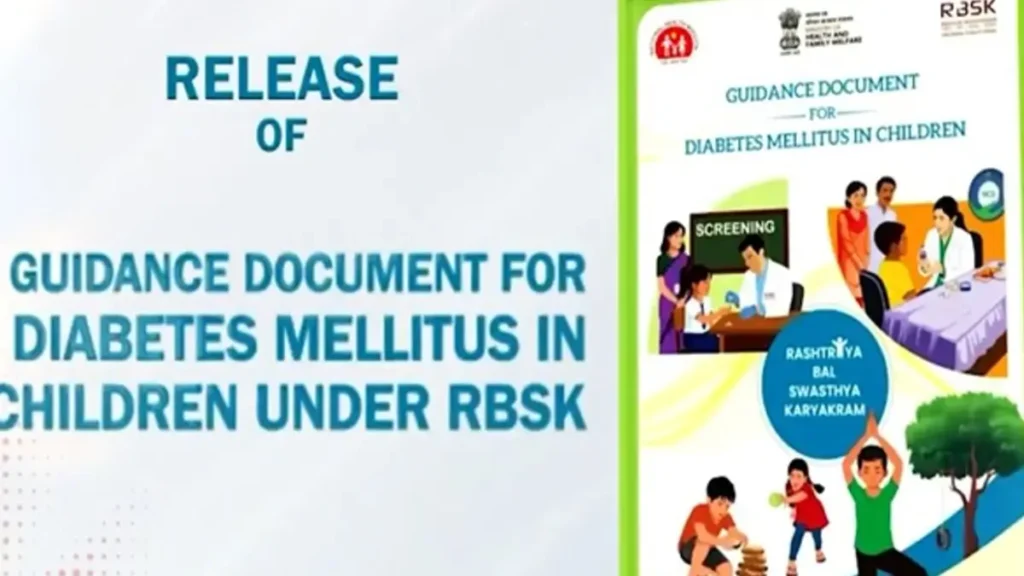
Childhood diabetes care framework India launched by Union Health Ministry aims at early detection, free treatment, and structured management of Type 1 diabetes in children through universal screening and public health systems.
National Framework for Childhood Diabetes Care in India
🏥 India Launches Structured Childhood Diabetes Care Framework
The Union Health Ministry has introduced a comprehensive national framework for childhood diabetes care, marking a significant step in strengthening India’s public health system. The initiative is officially titled the “Guidance Document on Diabetes Mellitus in Children” and focuses on screening, early diagnosis, treatment, and long-term management of diabetes among children aged 0–18 years.
The framework aims to ensure universal screening of children through schools and community health platforms, enabling early detection of Type 1 diabetes. Suspected cases will be immediately tested for blood glucose levels and referred to higher medical facilities for confirmation and treatment.
This initiative positions India among a select group of countries that have integrated structured childhood diabetes care into the public healthcare system, strengthening preventive and curative healthcare delivery.
🧪 Early Detection Through Universal Screening System
A key highlight of the framework is universal diabetes screening for all children from birth to 18 years. The government has integrated community-level health workers and school health programmes to identify early symptoms.
The system also promotes awareness of the “4Ts framework”:
- Toilet
- Thirsty
- Tired
- Thinner
These signs help parents and teachers recognize early warning symptoms of Type 1 diabetes, ensuring timely medical intervention.
💉 Free and Integrated Treatment Support
One of the most important features of this policy is the comprehensive free-of-cost care package provided at public health facilities. It includes:
- Screening and diagnostic services
- Lifelong insulin therapy
- Glucometers and test strips
- Regular follow-up care
This reduces the financial burden on families and ensures continuous treatment without interruption, especially for economically weaker sections.
🏥 Strengthening India’s Public Health Infrastructure
The framework also creates a continuum of care system, linking:
- Community health centres
- District hospitals
- Medical colleges
This ensures seamless referral and treatment, preventing children from being lost in the healthcare system.
Additionally, it emphasizes family training programs, including insulin administration, emergency response, and daily disease management, strengthening home-based care.
📊 Focus on Long-Term Disease Control
The initiative is designed not only for treatment but also for prevention of complications and reduction in mortality rates. It is expected to significantly improve the quality of life of children with diabetes and reduce long-term healthcare costs for the country.

🎯 Why this News is Important
📌 Strengthening Child Healthcare in India
This initiative is important because it directly addresses the rising burden of non-communicable diseases (NCDs) among children, especially Type 1 diabetes. For government exam aspirants, it highlights India’s shift toward preventive healthcare models.
📌 UPSC and Competitive Exam Relevance
The framework is significant for:
- UPSC GS Paper II (Health & Governance)
- SSC, Banking, Railways, State PSC exams
- Topics related to National Health Mission and public health policies
It reflects India’s efforts toward achieving Universal Health Coverage (UHC).
📌 Policy and Social Impact
The policy reduces out-of-pocket expenditure, improves early diagnosis, and strengthens the public health delivery system.
📜 Historical Context
🏛️ Evolution of Diabetes Care in India
India has been gradually strengthening its response to non-communicable diseases through programs like:
- National Programme for Prevention and Control of Cancer, Diabetes, Cardiovascular Diseases and Stroke (NPCDCS)
- National Health Mission (NHM)
However, earlier systems lacked child-specific structured diabetes care, especially for Type 1 diabetes, which requires lifelong insulin support.
🏥 Shift Toward Preventive Healthcare
Over the past decade, India has shifted focus from curative care to preventive and early detection models, especially under initiatives like:
- Ayushman Bharat Health & Wellness Centres
- School health programmes
This new framework builds on these efforts and introduces a dedicated child-centric diabetes care system.
📊 Key Takeaways from Childhood Diabetes Care Framework
🧠 This News Overview
| S. No. | Key Takeaway |
|---|---|
| 1 | Union Health Ministry launched a national framework for childhood diabetes care (0–18 years). |
| 2 | Universal screening through schools and community health systems has been introduced. |
| 3 | “4Ts awareness model” helps identify early signs of Type 1 diabetes. |
| 4 | Free treatment package includes insulin, glucometers, and diagnostic support. |
| 5 | Integrated care system connects community health centres, district hospitals, and medical colleges. |
Frequently Asked Questions (FAQs)
1. What is the new childhood diabetes care framework launched by the Union Health Ministry?
It is a national-level guidance document for diabetes mellitus in children (0–18 years) aimed at early detection, diagnosis, treatment, and long-term management of diabetes in India.
2. Which type of diabetes is mainly targeted under this framework?
The framework primarily focuses on Type 1 diabetes in children, which requires lifelong insulin therapy and regular monitoring.
3. What is the “4Ts” awareness model in diabetes detection?
The 4Ts stand for:
- Toilet (frequent urination)
- Thirsty (excessive thirst)
- Tired (fatigue)
- Thinner (unexplained weight loss)
These are early warning signs of Type 1 diabetes.
4. What benefits are provided under this framework?
Children diagnosed with diabetes will receive:
- Free insulin therapy
- Glucometers and test strips
- Regular diagnostic support
- Continuous follow-up care at public health facilities
5. Which institutions are involved in implementing this programme?
Implementation involves a tiered healthcare system including community health centres, district hospitals, and medical colleges under the public health infrastructure.
Some Important Current Affairs Links

