
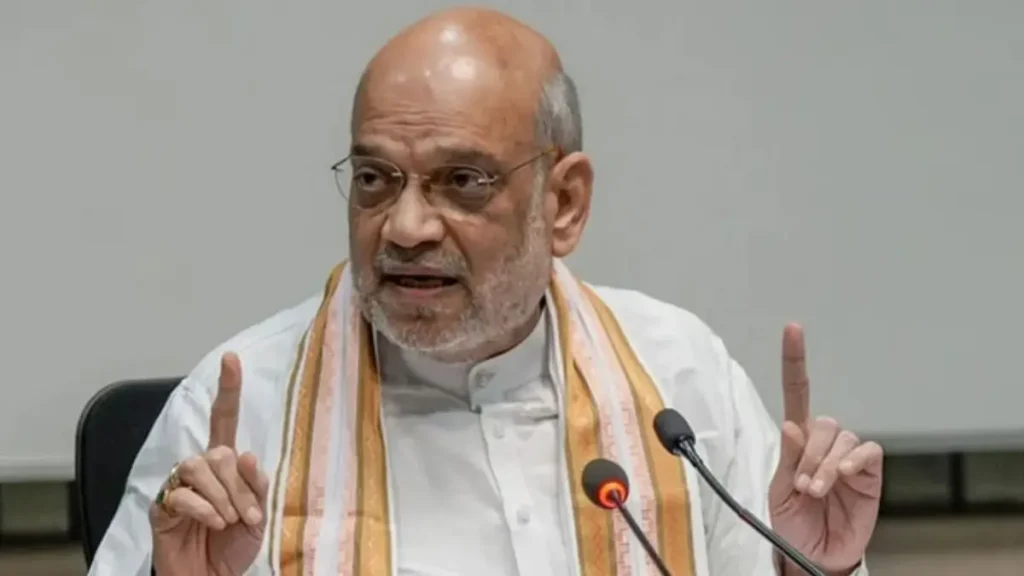
Central Zonal Council meeting Jagdalpur 2026 chaired by Amit Shah focused on cooperative federalism, tribal welfare, infrastructure development, and inter-state coordination among Central Indian states.
Central Zonal Council Meeting Held in Jagdalpur Under Amit Shah’s Chairmanship
🗞️ Major Administrative Meeting in Bastar Region
Union Home and Cooperation Minister Amit Shah chaired the 26th meeting of the Central Zonal Council in Jagdalpur, Chhattisgarh. The high-level meeting brought together the Chief Ministers of Chhattisgarh, Madhya Pradesh, Uttar Pradesh, and Uttarakhand along with senior officials from the Centre and states. This marked the first time the Central Zonal Council meeting was held in Bastar, a region earlier affected by Maoist violence, making the event symbolically significant for governance and development in the area.
🤝 Focus on Cooperative Federalism and Inter-State Coordination
The meeting primarily focused on strengthening cooperative federalism, improving coordination between states and the Centre, and resolving inter-state issues. Key discussions included infrastructure development, road and railway connectivity, telecom expansion, and welfare schemes for tribal communities. The council also reviewed measures related to law and order, internal security, and regional development priorities in the central zone states.
🌱 Emphasis on Tribal Development and Social Welfare
Special attention was given to improving living conditions in tribal and remote regions, especially in Bastar and adjoining areas. Issues such as healthcare, education, malnutrition, skill development, and access to government welfare schemes were highlighted. The meeting reflected the government’s broader agenda of inclusive development and ensuring last-mile delivery of public services in previously neglected regions.
🛡️ Internal Security and Development Linkage
Another important dimension of the meeting was internal security, especially the decline of Maoist (Naxal) influence in the region. Officials emphasized how improved security conditions are enabling faster infrastructure development and governance outreach in Bastar. The meeting also highlighted the transition of the region from a conflict-affected zone to a development-focused administrative hub.

⭐ Why This News is Important
📌 Governance and Exam Relevance
The Central Zonal Council meeting is an important example of India’s federal structure working through cooperative governance. For students preparing for UPSC, SSC, Banking, Railways, and State PSC exams, this news is significant because it highlights how inter-state coordination is strengthened through institutional mechanisms.
📌 Internal Security and Policy Perspective
The meeting reflects the government’s focus on linking internal security with development. Bastar, once affected by insurgency, is now being projected as a model for transformation. This is relevant for questions related to internal security, Naxalism, and government policy interventions in conflict areas.
📌 Development and Welfare Governance
The emphasis on tribal welfare, infrastructure, and social development makes this news important for questions on inclusive growth, governance reforms, and social justice initiatives in India. It shows how regional councils act as platforms for addressing grassroots issues.
📚 Historical Context
🏛️ Origin of Zonal Councils in India
Zonal Councils were established under the States Reorganisation Act, 1956, to promote cooperation among states and between the Centre and states. They serve as advisory bodies to resolve disputes and improve administrative coordination.
🔄 Role in Cooperative Federalism
Over the years, these councils have become important platforms for discussing issues such as law and order, infrastructure, economic development, and inter-state disputes. They help strengthen India’s model of cooperative federalism by ensuring dialogue and consensus-building.
⚔️ Bastar’s Transformation Context
Bastar region in Chhattisgarh has historically been affected by Left-Wing Extremism (Naxalism). In recent years, government policies combining security operations and development initiatives have aimed to bring stability and integrate the region into mainstream governance.
📊 Key Takeaways from “Amit Shah Chairs CZC Meeting”
| S. No. | Key Takeaway |
|---|---|
| 1 | Amit Shah chaired the 26th Central Zonal Council meeting in Jagdalpur, Chhattisgarh |
| 2 | Four Chief Ministers—Chhattisgarh, MP, UP, and Uttarakhand—participated in the meeting |
| 3 | First-ever CZC meeting held in Bastar, highlighting regional transformation |
| 4 | Focus areas included infrastructure, connectivity, tribal welfare, and internal security |
| 5 | Emphasis on cooperative federalism and inter-state coordination for development |
FAQs (Frequently Asked Questions)
Q1. What is the Central Zonal Council?
The Central Zonal Council is one of the five Zonal Councils in India, created to promote cooperation and coordination between the Centre and member states on administrative and policy matters.
Q2. Which states are part of the Central Zonal Council?
The Central Zonal Council includes Chhattisgarh, Madhya Pradesh, Uttar Pradesh, and Uttarakhand.
Q3. Who chaired the 26th Central Zonal Council meeting in Jagdalpur?
The meeting was chaired by Union Home and Cooperation Minister Amit Shah.
Q4. Why was the Jagdalpur meeting significant?
It was significant because it was the first-ever Central Zonal Council meeting held in Bastar, a region historically affected by Left-Wing Extremism.
Q5. What were the main issues discussed in the meeting?
Key issues included inter-state coordination, infrastructure development, tribal welfare, connectivity, and internal security.
Q6. When were Zonal Councils established in India?
Zonal Councils were established under the States Reorganisation Act, 1956.
Q7. What is the role of Zonal Councils in governance?
They act as advisory bodies to resolve inter-state disputes and promote cooperative federalism between states and the Centre.
Some Important Current Affairs Links

