
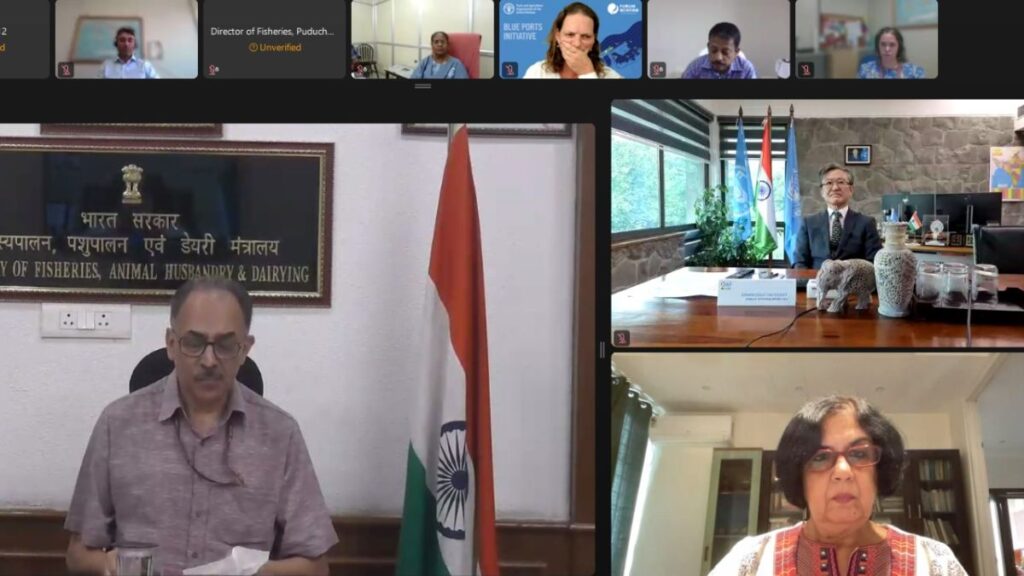
Blue Ports in India launched by FAO aim to modernize fisheries infrastructure, integrate AI and 5G, and support sustainable development under PMMSY.
India and FAO Launch Blue Ports for Smart Fisheries
Introduction to the Initiative
In a significant stride towards modernizing India’s fisheries infrastructure, the Department of Fisheries (DoF), under the Ministry of Fisheries, Animal Husbandry and Dairying, has partnered with the Food and Agriculture Organization (FAO) of the United Nations. This collaboration aims to develop world-class “Blue Ports”—smart, sustainable, and integrated fishing harbours that align with the principles of the blue economy.
Strategic Objectives and Pilot Projects
The FAO’s Technical Cooperation Programme (TCP) focuses on enhancing the technical capacities of fishing ports to address environmental, social, and economic challenges in the aquatic value chain. As part of this initiative, pilot projects are underway at Vanakbara (Diu) and Jakhau (Gujarat), with plans to expand to Karaikal (Puducherry). These projects are part of a broader ₹369.8 crore investment under the Pradhan Mantri Matsya Sampada Yojana (PMMSY), aiming to modernize post-harvest fisheries infrastructure across the country.
Technological Integration for Sustainable Development
The Blue Ports framework emphasizes the integration of advanced technologies such as 5G, artificial intelligence (AI), automation, and digital platforms. These technologies are expected to enhance operational efficiency, improve traceability, and promote sustainable practices within the fisheries sector. The initiative also focuses on environmental stewardship, incorporating features like rainwater harvesting, energy-efficient lighting, and waste management systems to minimize ecological footprints.
Capacity Building and Stakeholder Engagement
A key component of the initiative is capacity building. The DoF has organized a series of webinars and workshops to share global best practices and foster collaboration among stakeholders. The inaugural session highlighted successful case studies, including Spain’s Port of Vigo, showcasing sustainable and inclusive operations that reduce environmental impact and generate socio-economic benefits. These sessions aim to equip public and private stakeholders with the knowledge and tools necessary to implement the Blue Ports approach effectively.
Broader Implications for the Fisheries Sector
The development of Blue Ports is poised to transform India’s fisheries sector by creating safer, cleaner, and more efficient operations. This transformation is expected to bolster the livelihoods of fisherfolk, enhance food and nutritional security, and strengthen the competitiveness of the fisheries sector in the global market. By aligning with the blue economy principles, the initiative supports sustainable economic growth while preserving marine ecosystems.
Why This News Is Important
Significance for the Fisheries Sector
The collaboration between India and the FAO marks a pivotal moment in the modernization of India’s fisheries infrastructure. By adopting the Blue Ports framework, the initiative addresses critical issues such as environmental degradation, inefficient operations, and the need for technological advancement in the fisheries sector.
Alignment with National and Global Goals
This initiative aligns with national objectives under the PMMSY and contributes to global sustainable development goals. By focusing on sustainability and technological innovation, the Blue Ports initiative supports India’s commitment to responsible fisheries management and environmental conservation.
Implications for Policy and Governance
The development of Blue Ports necessitates a collaborative approach involving various stakeholders, including government agencies, local communities, and international organizations. This collaborative model can serve as a blueprint for future infrastructure projects, promoting inclusive governance and stakeholder engagement in policy implementation.
Historical Context
Evolution of India’s Fisheries Infrastructure
India’s fisheries sector has undergone significant transformations over the decades, from traditional fishing practices to more organized and mechanized operations. Historically, fishing harbours have been crucial for post-harvest activities, including landing, processing, and distribution of seafood. However, many existing harbours face challenges such as outdated infrastructure, environmental pollution, and inadequate facilities.
Introduction of the Blue Economy Concept
The concept of the blue economy emerged globally as a sustainable approach to ocean and marine resource management. In India, the government recognized the need to modernize the fisheries sector to enhance productivity, ensure sustainability, and improve the livelihoods of fisherfolk. This recognition led to initiatives like the PMMSY, which focuses on sustainable development and modernization of the fisheries sector.
Partnership with FAO
The partnership with the FAO represents a significant step towards integrating international expertise and best practices into India’s fisheries development strategies. The FAO’s Technical Cooperation Programme provides technical assistance and capacity-building support, facilitating the adoption of sustainable practices and technological innovations in fishing harbours.
Key Takeaways from “India and FAO Launch Blue Ports for Smart Fisheries”
| # | Key Takeaway |
|---|---|
| 1 | Partnership for Modernization: India and FAO have partnered to develop world-class Blue Ports, focusing on sustainable and technologically advanced fishing harbours. |
| 2 | Pilot Projects Initiated: Pilot projects are underway at Vanakbara (Diu) and Jakhau (Gujarat), with plans to expand to Karaikal (Puducherry), under a ₹369.8 crore investment. |
| 3 | Technological Integration: The initiative incorporates advanced technologies like AI, 5G, and automation to enhance operational efficiency and sustainability. |
| 4 | Capacity Building Efforts: A series of webinars and workshops are being conducted to share global best practices and foster stakeholder collaboration. |
| 5 | Alignment with National Goals: The initiative supports the objectives of the PMMSY and contributes to sustainable development goals by promoting responsible fisheries management. |
FAQs: Frequently Asked Questions
1. What are Blue Ports in India?
Blue Ports are smart, sustainable, and technologically advanced fishing harbours developed under the India-FAO collaboration. They aim to modernize fisheries infrastructure and align with the principles of the blue economy.
2. Which Indian government scheme funds the Blue Ports initiative?
The Blue Ports initiative is funded under the Pradhan Mantri Matsya Sampada Yojana (PMMSY) with an investment of ₹369.8 crore for modernizing fisheries infrastructure.
3. Which locations are part of the Blue Ports pilot projects?
The pilot projects are currently at Vanakbara (Diu), Jakhau (Gujarat), and will be expanded to Karaikal (Puducherry).
4. What technologies are integrated into Blue Ports?
Blue Ports use technologies such as artificial intelligence (AI), 5G, automation, digital platforms, rainwater harvesting systems, energy-efficient lighting, and waste management systems to enhance efficiency and sustainability.
5. How does the initiative benefit fisherfolk?
It creates safer, cleaner, and more efficient operations, enhancing livelihoods, improving market access, promoting sustainability, and contributing to food and nutritional security.
6. Which international organization is collaborating with India on this project?
The Food and Agriculture Organization (FAO) of the United Nations is collaborating with India to develop Blue Ports.
7. How does Blue Ports align with global goals?
It supports sustainable development goals (SDGs) by promoting environmental sustainability, responsible fisheries management, and inclusive economic growth.
8. Are there any training or capacity-building programs included?
Yes, webinars and workshops are organized to share global best practices and build technical capacities of stakeholders for sustainable fisheries management.
9. What is the significance of integrating AI and 5G in fishing harbours?
These technologies improve operational efficiency, enable better traceability of fish products, reduce wastage, and help monitor environmental impacts.
10. How does this initiative support India’s blue economy?
Blue Ports promote sustainable marine resource management, economic growth, and technological modernization in line with the blue economy principles.
Some Important Current Affairs Links

