
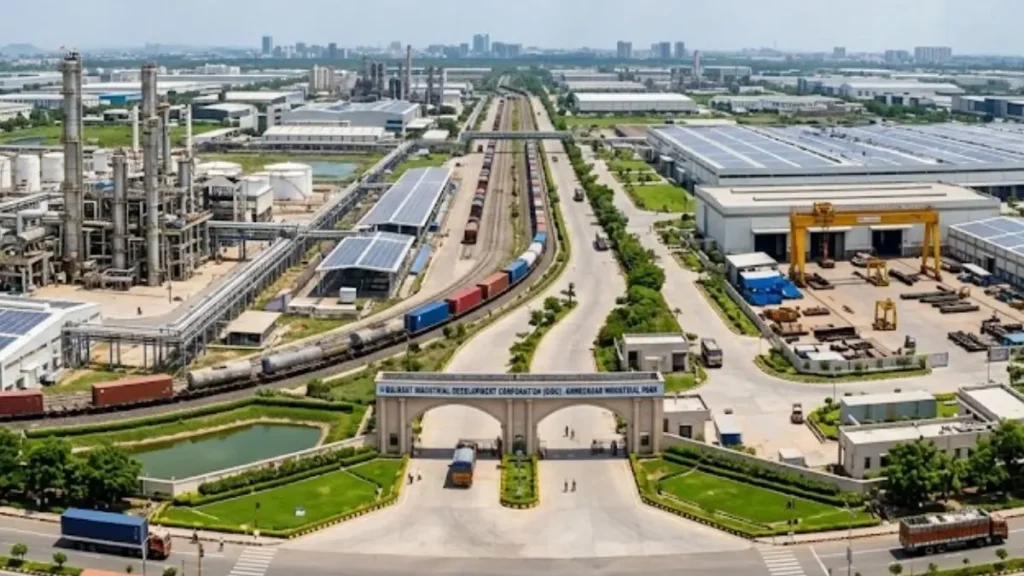
BHAVYA scheme 2026 objectives features benefits for investors explained in detail including industrial parks, plug-and-play infrastructure, government scheme for exams.
BHAVYA Scheme 2026: Objectives, Features and Benefits for Investors
Introduction to BHAVYA Scheme
The Government of India has introduced the BHAVYA (Bharat Audyogik Vikas Yojana) scheme as a major initiative to strengthen the country’s industrial infrastructure. Approved by the Union Cabinet with an outlay of ₹33,660 crore, the scheme aims to establish 100 plug-and-play industrial parks across India.
This initiative is expected to accelerate manufacturing growth, attract both domestic and foreign investment, and generate large-scale employment opportunities. The scheme reflects India’s vision of becoming a global manufacturing hub.
Objectives of the BHAVYA Scheme
The primary objective of the BHAVYA scheme is to boost industrial development by creating ready-to-use industrial ecosystems. These ecosystems will help reduce delays in project implementation and simplify business operations.
Another key objective is to enhance India’s manufacturing competitiveness by strengthening infrastructure and supply chains. The scheme also aims to attract foreign direct investment (FDI) and support initiatives like “Make in India.”
Key Features of BHAVYA Scheme
One of the standout features of the scheme is the development of industrial parks ranging from 100 to 1,000 acres. These parks will include essential infrastructure such as roads, drainage systems, underground utilities, and digital connectivity.
The government will provide financial assistance of up to ₹1 crore per acre for infrastructure development, including core, value-added, and social infrastructure. Additionally, support of up to 25% of project cost will be provided for external connectivity.
The scheme also emphasizes “plug-and-play” infrastructure, allowing industries to start operations quickly without facing delays related to land acquisition or approvals.
Plug-and-Play Industrial Parks Concept
The plug-and-play model is central to the BHAVYA scheme. It ensures that land, approvals, and infrastructure are pre-developed, enabling industries to begin operations immediately.
These industrial parks will include ready-built factory sheds, warehousing facilities, testing labs, and worker housing. This integrated approach will significantly reduce the time and cost required to set up industries.
Implementation and Institutional Framework
The scheme will be implemented by the National Industrial Corridor Development Corporation (NICDC) under the Department for Promotion of Industry and Internal Trade (DPIIT).
It will be executed in collaboration with state governments and private sector partners. The project selection will follow a challenge-based mechanism to ensure only high-quality and investment-ready proposals are approved.
Impact on Manufacturing and Employment
The BHAVYA scheme is expected to significantly boost India’s manufacturing sector by improving efficiency and reducing production costs. It is also projected to generate millions of direct and indirect jobs in sectors like manufacturing, logistics, and services.
By promoting cluster-based industrial development, the scheme will strengthen domestic supply chains and enhance India’s position in global markets.

Why This News is Important
Boost to India’s Industrial Growth
The approval of the BHAVYA scheme marks a crucial step in India’s industrial policy. By focusing on ready-to-use infrastructure, the government aims to address long-standing bottlenecks such as land acquisition delays and regulatory hurdles. This will significantly improve the ease of doing business in India.
Relevance for Competitive Exams
For aspirants preparing for exams like UPSC, SSC, Banking, and State PCS, the BHAVYA scheme is important under topics such as government schemes, economic development, and industrial policy. Questions may be asked about its objectives, implementing agency, and features.
Strengthening Make in India Initiative
The scheme aligns with flagship programs like Make in India and PM GatiShakti, reinforcing India’s goal of becoming a manufacturing hub. It also supports self-reliance (Atmanirbhar Bharat) by boosting domestic production.
Historical Context
Evolution of Industrial Infrastructure in India
India has long focused on industrial development through initiatives like Special Economic Zones (SEZs) and industrial corridors. The National Industrial Corridor Development Programme (NICDP) played a key role in developing industrial smart cities.
Shift Towards Plug-and-Play Model
Earlier industrial policies faced challenges such as delays in approvals and lack of infrastructure. The BHAVYA scheme represents a shift towards a plug-and-play model, where infrastructure and approvals are pre-arranged.
Continuity with Previous Initiatives
The scheme builds upon earlier efforts like industrial corridors and smart cities developed by NICDC. It aims to scale up these successes to create a nationwide industrial ecosystem.
Key Takeaways from This News
| S.No. | Key Takeaway |
|---|---|
| 1 | BHAVYA scheme approved with an outlay of ₹33,660 crore |
| 2 | Aims to develop 100 plug-and-play industrial parks across India |
| 3 | Provides financial assistance up to ₹1 crore per acre |
| 4 | Implemented by NICDC under DPIIT |
| 5 | Focuses on boosting manufacturing, investment, and employment |
FAQs: BHAVYA Scheme 2026
Q1. What is the BHAVYA Scheme?
The BHAVYA (Bharat Audyogik Vikas Yojana) Scheme is a Government of India initiative aimed at developing plug-and-play industrial parks to boost manufacturing and investment.
Q2. What is the total outlay of the BHAVYA Scheme?
The scheme has been approved with a financial outlay of approximately ₹33,660 crore.
Q3. How many industrial parks will be developed under this scheme?
Around 100 industrial parks will be developed across the country under the BHAVYA scheme.
Q4. Which organization is responsible for implementing the scheme?
The scheme will be implemented by the National Industrial Corridor Development Corporation (NICDC) under the DPIIT.
Q5. What is the “plug-and-play” concept in the BHAVYA Scheme?
It refers to ready-to-use infrastructure where industries can start operations immediately without delays related to approvals or basic facilities.
Q6. How does the BHAVYA scheme benefit investors?
It reduces project delays, lowers infrastructure costs, and provides ready-built facilities, making investment easier and faster.
Q7. Which sectors are expected to benefit from this scheme?
Manufacturing, logistics, warehousing, and allied service sectors will benefit significantly.
Q8. How is the scheme important for UPSC and other exams?
It is relevant under government schemes, economic development, infrastructure, and industrial policy topics.
Some Important Current Affairs Links

