
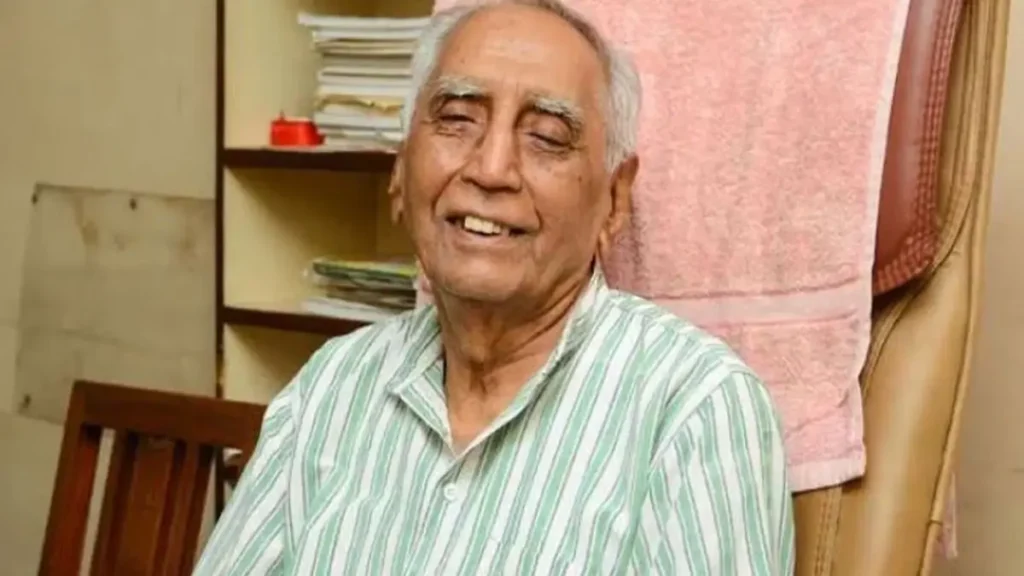
Veteran social activist Baba Adhav Death 2025 at 95, leaving a legacy in labour rights and social reforms. Learn about his contributions, activism, and key achievements.
Veteran Social Activist Baba Adhav Passes Away at 95 — A Life Dedicated to Labour Rights
Legendary Leader of Unorganised Workers’ Rights
Veteran social activist Dr. Babasaheb Pandurang “Baba” Adhav, one of the most prominent voices for workers in India’s unorganised sector, passed away on December 8, 2025, in Pune after a prolonged illness. He was 95 years old at the time of his death and remained an active campaigner for social justice till the final years of his life.
Born on June 1, 1930, in Pune, Maharashtra, Baba Adhav initially trained and practiced as an Ayurveda doctor. However, witnessing the hardships of daily wage workers such as porters, rickshaw pullers, and construction labourers propelled him from medical practice into a life of grassroots activism. In the 1950s, he joined key movements including protests against high food prices and later abandoned his medical career entirely to dedicate himself to uplifting the forgotten labour class.
Champion of the Unorganised Sector
Adhav firmly believed that informal workers deserved dignity, social protection, and legal recognition. He founded revolutionary organisations like the Hamal Panchayat to unify head loaders, porter workers, and other marginalised labourers. Under his leadership, these groups fought for minimum wages, fair working conditions, and policies that recognised their contributions to the economy
Beyond unions, Baba Adhav led impactful social campaigns. One of his notable initiatives was “Ek Gaav, Ek Panvatha” (One Village, One Water Source) — a movement aimed at combating caste discrimination and promoting community unity across rural Maharashtra.
Adhav’s activism often brought him into direct confrontation with authorities. Over decades of protests, sit-ins, and hunger strikes, he was jailed more than 50 times for his unwavering stance on workers’ rights and social equality. Despite hardships, his belief in non-political activism kept him focused on social reform rather than electoral politics.
National Recognition and Legacy
Leaders across the political spectrum paid tribute to Baba Adhav’s lifelong dedication to social work. His commitment helped shape landmark labour protections, including contributions to Maharashtra’s first social security legislation for unorganised workers in 1969. Adhav’s initiatives have inspired a generation of activists and continue to influence labour rights discussions today.
He is survived by his wife, Sheelatai, two sons — Aseem and Amber — and grandchildren. His death has been widely mourned as the loss of a pillar of labour movements and social justice in India.

Why This News Is Important
Relevance to Government Exam Aspirants
The passing of Baba Adhav is significant for students preparing for competitive examinations — especially for positions in civil services, banking, police, railways, and teaching — because it reflects ongoing social issues that are frequently tested in current affairs and general awareness sections. Adhav’s life work illustrates key themes in modern Indian society such as:
- Labour Rights and Social Justice – Understanding Adhav’s advocacy for unorganised workers helps students grasp the challenges faced by informal labour sectors in India, an area often discussed in sociology and governance questions.
- Grassroots Movements – His leadership in community mobilisation exemplifies how social movements influence public policy without direct political office, relevant to public administration and polity topics.
- Policy Impact – Adhav’s contributions to worker protections influenced state legislation, connecting current events to questions about labour law evolution and socio-economic reforms.
- Inspirational Leadership – Competitive exams often include questions about social change agents; Baba Adhav’s life provides a strong example of dedication and principles in action.
Therefore, this news is relevant to analytical essays, policy discussions, and broader understanding of India’s ongoing quests for inclusivity and worker welfare.
Historical Context
Background on Baba Adhav and Social Activism in India
The legacy of Baba Adhav must be understood within the broader history of labour and social reform movements in India. Post-Independence India grappled with integrating millions of informal workers into its growing economy. With limited legal protections, unorganised sector workers often lacked rights enjoyed by formal sector employees.
Baba Adhav emerged in the 1950s as a grassroots reformer, inspired by socialist leaders and movements seeking to address inequality. Influenced by Maharashtra’s rich history of social reform — including the Satyashodhak movement led by reformer Jyotirao Phule, which fought caste discrimination in the late 19th century — Adhav positioned his activism within a legacy of social equality and empowerment.
His establishment of Hamal Panchayat and advocacy for labour rights contributed to shaping protective frameworks for informal sector workers. These initiatives resonate with India’s constitutional commitment to social justice, equality, and dignity of the individual, principles at the core of contemporary public policy and governance syllabi. Students preparing for exams must understand how social activism influences policy and legislation in India’s democratic setup.
Key Takeaways from “Veteran Social Activist Baba Adhav Passes Away at 95”
| S.No. | Key Takeaway |
|---|---|
| 1 | Veteran social activist Dr. Baba Adhav passed away at age 95 in Pune after a prolonged illness. |
| 2 | Adhav was a champion of unorganised workers’ rights, organising porters, rickshaw drivers, and daily wage workers. |
| 3 | He founded Hamal Panchayat and led movements like “Ek Gaav, Ek Panvatha” to fight caste discrimination. |
| 4 | Over his lifetime, Adhav was jailed more than 50 times for protests and social activism. |
| 5 | His work influenced labour welfare policies and set examples for social reform movements in India. |
FAQs: Frequently Asked Questions
1. Who was Baba Adhav?
Baba Adhav, full name Dr. Babasaheb Pandurang Adhav, was a veteran social activist from Pune, Maharashtra, known for championing the rights of unorganised workers in India.
2. When did Baba Adhav pass away?
He passed away on December 8, 2025, at the age of 95 in Pune after a prolonged illness.
3. What were Baba Adhav’s major contributions?
He founded the Hamal Panchayat, advocated for informal sector workers’ rights, led campaigns against caste discrimination, and inspired labour welfare policies in Maharashtra.
4. How many times was Baba Adhav jailed?
Over his lifetime, he was jailed more than 50 times for his activism in social and labour movements.
5. Why is Baba Adhav important for current affairs and exams?
His activism highlights labour rights, grassroots movements, and social reforms in India, which are relevant for civil service, banking, police, railways, teaching, and other competitive exams.
6. Which social movement did he lead to fight caste discrimination?
He led “Ek Gaav, Ek Panvatha” (One Village, One Water Source) to promote community unity and combat caste-based discrimination.
7. Who survives Baba Adhav?
He is survived by his wife, Sheelatai, two sons — Aseem and Amber — and grandchildren.
Some Important Current Affairs Links

