
AYUSH insurance and research collaboration by AIIA enhances accessibility, evidence-based research, and holistic healthcare integration into India’s national health system.
AIIA Strengthens AYUSH Insurance and Research Collaborations
Introduction to AIIA’s Strategic Initiatives
The All India Institute of Ayurveda (AIIA), an autonomous institution under the Ministry of AYUSH, has recently intensified its efforts to integrate traditional medicine into India’s mainstream healthcare system. In a significant move, AIIA has launched the Project Management Unit (PMU) for AYUSH insurance-related matters, aiming to streamline and expand insurance coverage for AYUSH treatments across the country. This initiative aligns with the government’s vision to promote holistic healthcare and enhance accessibility to traditional medical practices.
Establishment of the Project Management Unit (PMU)
The PMU was inaugurated by Shri Prataprao Jadhav, Union Minister of State for AYUSH (Independent Charge), at AIIA. The unit is designed to serve as a central body coordinating, monitoring, and facilitating the implementation of AYUSH insurance schemes. By establishing this unit, AIIA aims to create a transparent and efficient framework that ensures timely delivery of insurance benefits to the public and fosters greater stakeholder participation.
Academic Collaborations to Advance AYUSH Research
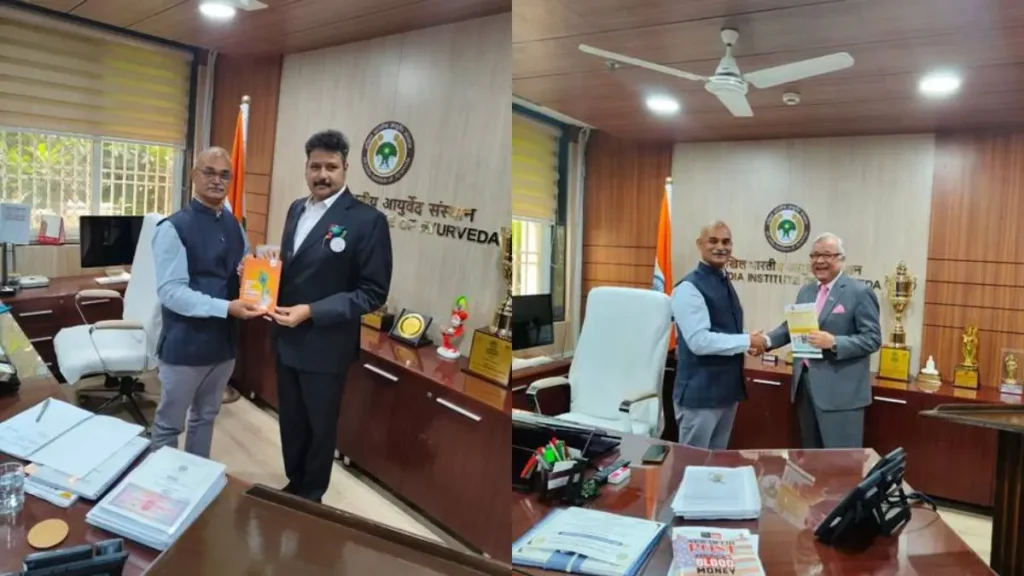
In addition to enhancing insurance coverage, AIIA is also focusing on strengthening academic partnerships to promote evidence-based research in Ayurveda. A recent meeting between Prof. (Dr.) Pradeep Kumar Prajapati, Director of AIIA, and Prof. Bejon Kumar Misra, Chairman of the Core Group of Experts for Insurance at the Ministry of AYUSH, underscored the importance of integrating academic research with policy development. Furthermore, discussions with Dr. Sanjay Srivastava, Vice Chancellor of Manav Rachna International Institute of Research and Studies (MRIIRS), explored avenues for collaborative research and academic exchange to bolster the credibility and effectiveness of AYUSH systems.
Integration of AYUSH into National Health Frameworks
The initiatives undertaken by AIIA are part of a broader strategy to integrate AYUSH systems into India’s national health frameworks. By expanding insurance coverage and fostering academic research, AIIA aims to position AYUSH as a viable and complementary component of the country’s healthcare system. This integration is expected to enhance public trust in traditional medicine and encourage its adoption alongside conventional medical practices.
Future Prospects and Policy Implications
Looking ahead, AIIA plans to scale up its efforts by collaborating with various stakeholders, including insurance providers, academic institutions, and research organizations. The goal is to develop comprehensive policies that support the sustainable growth of AYUSH systems and ensure their accessibility to all segments of society. These initiatives are expected to contribute significantly to the realization of the government’s vision of a holistic and inclusive healthcare system.
Why This News is Important
Significance of AYUSH Integration into Mainstream Healthcare
The integration of AYUSH systems into India’s mainstream healthcare framework represents a pivotal step towards promoting holistic health and wellness. By providing insurance coverage for AYUSH treatments, the government aims to make traditional medicine more accessible to the public, thereby offering a broader range of healthcare options. This move also reflects a growing recognition of the value of traditional medical practices in addressing contemporary health challenges.
Enhancing Public Trust and Participation
The establishment of the PMU and the expansion of insurance coverage are expected to enhance public trust in AYUSH systems. A transparent and efficient insurance framework will encourage greater participation from both healthcare providers and patients, leading to improved service delivery and patient satisfaction. This increased engagement is crucial for the successful integration of AYUSH into the national health system.
Promoting Evidence-Based AYUSH Practices
Strengthening academic collaborations and research initiatives is essential for validating and promoting evidence-based AYUSH practices. By fostering partnerships with academic institutions and research organizations, AIIA aims to generate scientific data that supports the efficacy and safety of AYUSH treatments. This evidence base will be instrumental in gaining acceptance among healthcare professionals and the public.
Aligning with National Health Policies
The initiatives undertaken by AIIA align with national health policies that emphasize the importance of integrating traditional medicine into the healthcare system. By expanding insurance coverage and supporting research, AIIA contributes to the realization of these policies, thereby advancing the government’s objectives of providing comprehensive and inclusive healthcare services.
Potential Impact on Healthcare Accessibility
The expansion of insurance coverage for AYUSH treatments has the potential to significantly improve healthcare accessibility, particularly in rural and underserved areas. By reducing financial barriers, more individuals can avail themselves of AYUSH services, leading to better health outcomes and a reduction in healthcare disparities.
Historical Context
Evolution of AYUSH Systems in India
India has a rich heritage of traditional medicine, encompassing systems like Ayurveda, Yoga, Unani, Siddha, and Homeopathy (collectively known as AYUSH). These systems have been practiced for centuries and are deeply rooted in the country’s cultural and spiritual traditions. Over time, there has been a growing interest in integrating these traditional practices with modern medicine to create a more holistic approach to healthcare.
Government Initiatives to Promote AYUSH
Recognizing the value of traditional medicine, the Indian government established the Ministry of AYUSH in 2014 to promote and develop these systems. The ministry has since launched various initiatives aimed at enhancing the quality and accessibility of AYUSH services, including the establishment of educational institutions, research centers, and policy frameworks.
Integration into National Health Policies
In recent years, there has been a concerted effort to integrate AYUSH systems into the national health policies. This includes incorporating AYUSH treatments into insurance schemes, promoting research to validate their efficacy, and establishing regulatory standards to ensure quality. These efforts are part of a broader strategy to create a more inclusive and comprehensive healthcare system in India.
Key Takeaways from “AIIA Strengthens AYUSH Insurance and Research Collaborations”
| S.No | Key Takeaway |
|---|---|
| 1. | AIIA has launched the Project Management Unit (PMU) to coordinate and expand AYUSH insurance coverage across India. |
| 2. | The PMU aims to create a transparent and efficient framework for the implementation of AYUSH insurance schemes. |
| 3. | Academic collaborations with institutions like MRIIRS are being strengthened to promote evidence-based AYUSH research. |
| 4. | The initiatives align with the government’s vision to integrate traditional medicine into mainstream healthcare. |
| 5. | Future plans include developing comprehensive policies to support the sustainable growth of AYUSH systems. |
FAQs: Frequently Asked Questions
1. What is AIIA and what role does it play in AYUSH healthcare?
The All India Institute of Ayurveda (AIIA) is an autonomous institute under the Ministry of AYUSH that promotes research, education, and integration of traditional Indian medicine systems like Ayurveda, Yoga, Unani, Siddha, and Homeopathy into mainstream healthcare.
2. What is the purpose of the Project Management Unit (PMU) launched by AIIA?
The PMU was established to coordinate, monitor, and implement AYUSH insurance schemes effectively. It aims to ensure transparency and timely delivery of insurance benefits for AYUSH treatments across India.
3. How is AIIA promoting research in AYUSH systems?
AIIA is fostering academic collaborations with institutions like MRIIRS to encourage evidence-based research. This helps validate the efficacy and safety of AYUSH treatments and supports policy formulation.
4. How do these initiatives impact public healthcare?
By expanding insurance coverage and integrating AYUSH into the national health system, these initiatives increase accessibility, reduce financial barriers, and promote holistic healthcare, especially in rural and underserved areas.
5. How does this news relate to government policies?
The initiatives align with national health policies emphasizing the inclusion of traditional medicine in mainstream healthcare, supporting the government’s goal of comprehensive and inclusive health services.
6. Who inaugurated the PMU at AIIA?
Shri Prataprao Jadhav, Union Minister of State for AYUSH (Independent Charge), inaugurated the PMU.
7. Which AYUSH systems are included in these initiatives?
Ayurveda, Yoga, Unani, Siddha, and Homeopathy are the primary systems included under these initiatives.
Some Important Current Affairs Links

