







Brahmaputra underwater tunnel project approved by the Cabinet Committee on Economic Affairs to build India’s first road-rail tunnel in Assam, boosting Northeast connectivity and strategic infrastructure development.
India’s First Underwater Road-Rail Tunnel Project Approved Under the Brahmaputra River
In a landmark decision, the Cabinet Committee on Economic Affairs (CCEA) chaired by Prime Minister Narendra Modi has given approval for a ₹18,662-crore twin-tube underwater road-cum-rail tunnel project under the Brahmaputra River in Assam, marking a major boost to India’s infrastructure and connectivity efforts.
🚆 Key Details of the Project
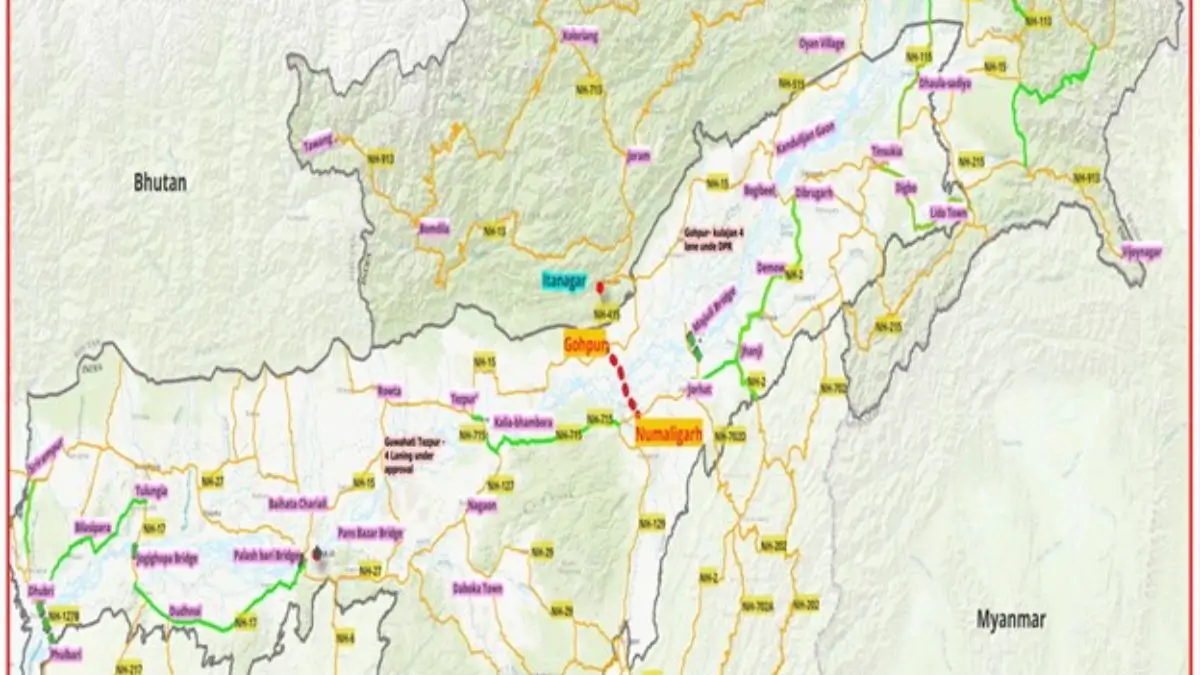
The project involves constructing a 33.7-kilometre greenfield corridor between Gohpur (on NH-15) and Numaligarh (on NH-715) in Assam. A 15.79-kilometre twin-tube tunnel will be built beneath the Brahmaputra River using advanced Tunnel Boring Machine (TBM) technology. One of the two tubes will be dedicated to road traffic, while the other will accommodate rail infrastructure, creating India’s first underwater road-rail tunnel and only the second of its kind in the world.
📍 Transforming Connectivity in the Northeast
Currently, the travel distance between Gohpur and Numaligarh is roughly 240 kilometres, requiring about 6 hours by road. The tunnel will reduce this distance to just about 34 kilometres and cut down travel time to approximately 20 minutes, drastically improving connectivity in the region.
🛠 Strategic Infrastructure and Economic Growth
This infrastructure initiative is expected to be a game-changer for both civilian mobility and defence logistics, benefiting states like Assam, Arunachal Pradesh, Nagaland, and other northeastern states. The project will enhance freight movement, reduce logistics costs, and promote regional economic growth by connecting key economic, social, tourist, and logistics nodes.
📈 Development Model and Investment
The tunnel and corridor will be executed under the Engineering, Procurement and Construction (EPC) model, ensuring streamlined planning and execution. Beyond connectivity, the project is expected to generate approximately 80 lakh person-days of employment, stimulate industrial growth, and boost trade and tourism.

Why This News Is Important
📌 Boost to National Infrastructure
This project represents a historic milestone in India’s infrastructure development as it is the first time the country is building an underwater tunnel capable of supporting both road and rail traffic. Such infrastructure is crucial for seamless connectivity and modern economic growth.
🌏 Strategic and Economic Impacts
The tunnel will significantly strengthen connectivity in the northeastern region, a strategic area with both economic potential and security considerations. By reducing travel time and improving accessibility, it will help integrate remote regions more closely with national economic systems and support logistics networks that facilitate trade, tourism, and defense mobilization.
🌐 Support for “Act East” Policy
The improved transport network aligns with India’s Act East Policy, emphasizing stronger engagement and connectivity with Southeast Asia. Quick movement of goods and people boosts economic linkages and supports regional development strategies that are central to the nation’s long-term growth.
👩🎓 Relevance for Government Exam Aspirants
For students preparing for competitive exams like UPSC Civil Services, PCS, SSC, banking, railways, and teaching exams, this news highlights government priorities in infrastructure, economic development in strategic regions, and policy initiatives that influence both national growth and socio-economic integration.
Historical Context: Evolution of Connectivity Projects in Northeast India
🚧 Persistent Connectivity Challenges
Assam and its neighbouring states have historically faced transportation and connectivity challenges due to difficult terrain, rivers like the Brahmaputra, and limited infrastructure. Before this project, travel between key cities often involved long routes and challenging conditions, restricting economic activities and limiting access to markets, healthcare, and education.
🛤 Previous Initiatives
Over the years, the Government of India has focused on improving infrastructure in the Northeast through rail link expansions, highways, and border roads. These projects have aimed to reduce isolation, connect remote areas, and integrate these states with broader national development plans. However, the underwater road-rail tunnel marks a leading edge in engineering and ambition.
🚀 Milestone in Engineering
Globally, underwater tunnels are rare and complex, requiring advanced engineering expertise. This project, by integrating road and rail transportation beneath a major river, sets a new benchmark for infrastructure projects in India, reflecting growing technical capabilities and commitment to transformative development.
Key Takeaways from “India’s First Underwater Road-Rail Tunnel Under Brahmaputra”
| S. No. | Key Takeaway |
|---|---|
| 1 | The Cabinet has approved a ₹18,662-crore road-rail tunnel project beneath the Brahmaputra River in Assam. |
| 2 | The tunnel will be India’s first underwater road-cum-rail tunnel and only the second such in the world. |
| 3 | The project will reduce travel distance from 240 km to 34 km and travel time from 6 hours to 20 minutes. |
| 4 | It will enhance connectivity for Assam and neighbouring Northeast states like Arunachal Pradesh and Nagaland. |
| 5 | The project is expected to generate significant employment and boost economic growth in the region. |
Frequently Asked Questions (FAQs)
1. Which river will host India’s first underwater road-rail tunnel?
The project will be constructed under the Brahmaputra River, one of the major rivers of India, flowing through Assam and playing a crucial role in the region’s economy and ecology.
2. Which authority approved the tunnel project?
The project was approved by the Cabinet Committee on Economic Affairs (CCEA), which is responsible for major economic and infrastructure decisions in India.
3. What is the total estimated cost of the project?
The estimated cost of the underwater road-cum-rail tunnel project is approximately ₹18,662 crore.
4. Between which two locations will the tunnel be constructed?
The tunnel will connect Gohpur and Numaligarh in Assam, significantly reducing travel distance and time.
5. What will be the total length of the project?
The entire corridor will be around 33.7 km long, including a 15.79 km twin-tube tunnel section under the river.
6. Why is this project strategically important?
The project enhances connectivity to northeastern states such as Arunachal Pradesh and Nagaland, strengthening both economic integration and defence logistics near the international borders.
7. Under which policy framework does this project gain importance?
It aligns with India’s Act East Policy, which focuses on strengthening connectivity and economic ties with Southeast Asia.
8. Which execution model will be used?
The project will be implemented under the Engineering, Procurement, and Construction (EPC) model.
9. How will it impact travel time?
The travel time between Gohpur and Numaligarh will reduce from nearly six hours to about 20 minutes.
10. Why is this news important for competitive exams?
Questions related to infrastructure projects, strategic connectivity, government committees, and regional development are frequently asked in UPSC, State PSC, SSC, Banking, Railway, Defence, and Police recruitment exams.
Some Important Current Affairs Links