

ASEAN India Maritime Cooperation 2026 declared by PM Modi at the 22nd ASEAN India Summit aims to enhance maritime security, blue economy, and Indo-Pacific partnership under India’s Act East Policy.
PM Modi Declares 2026 as the “ASEAN-India Year of Maritime Cooperation”
Strengthening Maritime Ties through the Indo-Pacific Horizon
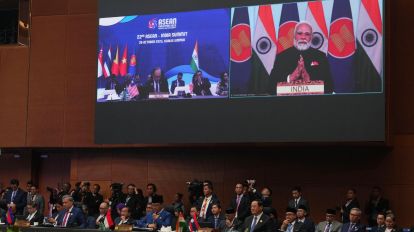
In his virtual address at the ASEAN-India Summit held on 26 October 2025, Narendra Modi emphasised that the “21st century is our century – it is India and ASEAN’s century”. He declared that 2026 will be celebrated as the “ASEAN-India Year of Maritime Cooperation”, marking a fresh phase of deepened collaboration between India and the Southeast-Asian bloc.
India’s relationship with ASEAN continues to evolve beyond trade and diplomacy: it now spans maritime security, the blue economy, disaster-relief cooperation and sustainable development. Modi underlined that India has stood firmly with its ASEAN friends in every crisis, especially in areas of Humanitarian Assistance & Disaster Relief (HADR), maritime security and the blue economy.
Why 2026 Matters – Maritime Focus & Strategic Partnerships
By declaring 2026 as the ASEAN-India Year of Maritime Cooperation, India signals an elevated priority on maritime connectivity, ocean governance and regional stability in the broader Indo-Pacific region. The move is designed to spur joint initiatives in:
- Strengthening maritime security and surveillance among the ASEAN-India partners.
- Promoting the blue economy, including marine resources, ocean research, shipping and logistics.
- Enhancing disaster-response capability in the maritime domain and uplifting infrastructure & connectivity (ports, coastal-states, waterways).
These goals are backed by India’s reaffirmation of support for “ASEAN centrality” and the ASEAN Outlook on the Indo‑Pacific (AOIP). Modi reiterated that India-ASEAN ties now act as a foundation for global stability and growth.
Key Announcements and Strategic Impulses
During the Summit, Modi announced several policy and cooperative steps:
- The implementation of the ASEAN‑India Free Trade Area (AIFTA) should be reviewed early to unleash greater economic potential.
- India will support the ASEAN-India Plan of Action under the Comprehensive Strategic Partnership (2026-2030).
- India proposes to organise the Second ASEAN-India Defence Ministers’ Meeting and the Second ASEAN-India Maritime Exercise focusing on a secure maritime environment.
- India will support the establishment of a Centre for Southeast Asian Studies at Nalanda University for regional expertise development, training 400 professionals in renewable energy for the ASEAN Power Grid initiative, and extension of Quick Impact Projects (QIPs) to Timor‑Leste.
Implications for Students and Exam Aspirants
For aspirants preparing for government exams (teaching, banking, railways, defence, civil services), this declaration is important because:
- It underscores India’s maritime security and strategic-connectivity thrust, which may appear in UPSC/PSC mains & GS papers.
- It ties to the “Act East Policy” (and also “Neighbourhood First” & “Security in the Indo-Pacific”) themes often asked in current- affairs.
- Maritime cooperation and blue economy are increasingly relevant in questions relating to economy (ports/utilisation), environment (marine resources), geography (sea lanes), and defence (naval diplomacy).
Outlook ahead
As 2026 unfolds under this banner, we can expect India and ASEAN to step up: joint naval drills, maritime infrastructure projects, improved port connectivity in the Bay of Bengal and Indian Ocean region, co-operation in marine research and ocean governance, and initiatives ensuring secure and sustainable sea routes. For students, watching how this unfolds will provide strong content for analyses in general studies, ethics & integrity (India’s role), and current affairs sections.
Why this News is Important
Strategic Significance for India-ASEAN Relations
The declaration of 2026 as the ASEAN-India Year of Maritime Cooperation highlights a major strategic milestone in India’s engagement with Southeast Asia. By prioritising maritime cooperation and the blue economy, India positions itself as a key partner in regional security and economic connectivity, especially amidst rising competition and changing power-dynamics in the Indo-Pacific.
Relevance for India’s Foreign Policy and Defence Posture
For India’s foreign policy and defence strategy, this move signals an enhanced emphasis on maritime diplomacy, sea-lane security, port and logistics infrastructure, and joint exercises. For candidates in civil services and defence exams, this translates into a rich area of content: India’s maritime doctrine, strategic partnerships with ASEAN, and regional maritime security frameworks.
Economic and Environmental Dimensions
The blue economy is now a growing frontier for jobs, growth, climate resilience and sustainable development. The 2026 initiative signals that cooperation will extend into areas like marine resource management, shipping, coastal tourism, renewable energy across maritime spaces and port logistics. For banking, railways (coastal logistics), and teaching aspirants, these are relevant interdisciplinary areas drawing attention.
Final Word
In short, this announcement is not just ceremonial—it marks India and ASEAN’s commitment to deeper maritime, economic, cultural and security cooperation. For students of government exams, it offers a current-affairs axis cutting across geography, economy, environment and defence, and therefore deserves close attention.
Historical Context
India-ASEAN Partnership: From Dialogue to Strategic Partnership
The relationship between India and the ASEAN bloc began as a sectoral partnership in 1992, was elevated to a full dialogue partnership in 1995, reached Summit-level in 2002, and became a Strategic Partnership in 2012.
Act East Policy & “ASEAN Centrality”
India’s “Act East Policy” (earlier Look East), aims to strengthen ties with East and Southeast Asia — covering trade, infrastructure, strategic, cultural and maritime domains. Central to this is ASEAN’s role as a hub or fulcrum of regional cooperation (“ASEAN centrality”) and India’s support for the ASEAN Outlook on the Indo-Pacific.
Maritime Dimension and Blue Economy
In recent years, maritime cooperation with ASEAN has gained ground via port connectivity (in the Andaman & Nicobar region, Bay of Bengal Initiative), joint naval exercises, maritime domain awareness and Blue Economy initiatives. Declaring 2026 the Year of Maritime Cooperation builds on this evolving trend.
Why 2026 — A Symbolic and Practical Step
By designating a year dedicated to maritime cooperation, India and ASEAN elevate the importance of sea-based connectivity, maritime security, and ocean governance in a region challenged by strategic contestation, supply-chain vulnerabilities and climate change impacts on coastal states. This gives a time-bound focus and signalling effect.
Key Takeaways from “2026 ASEAN-India Year of Maritime Cooperation”
Frequently Asked Questions (FAQs)
Q1. What has Prime Minister Narendra Modi declared for the year 2026 regarding ASEAN?
Prime Minister Modi declared 2026 as the “ASEAN-India Year of Maritime Cooperation” to promote collaboration in maritime security, blue economy, connectivity and sustainable ocean management.
Q2. At which summit was this announcement made?
The announcement was made during the 22nd ASEAN-India Summit held virtually on 26 October 2025.
Q3. What is the significance of the ASEAN-India Year of Maritime Cooperation for India’s foreign policy?
It reinforces India’s Act East Policy, supports ASEAN centrality, and strengthens its role in the Indo-Pacific maritime framework by enhancing strategic and economic cooperation.
Q4. How does the initiative contribute to the Blue Economy?
It promotes joint ocean research, port connectivity, maritime transport, sustainable fisheries and renewable energy, supporting both environmental protection and economic growth.
Q5. What other cooperative steps were announced along with the Year of Maritime Cooperation?
India proposed the Second ASEAN-India Defence Ministers’ Meeting, Second ASEAN-India Maritime Exercise, training of 400 professionals for the ASEAN Power Grid, and establishment of a Centre for Southeast Asian Studies at Nalanda University.
Q6. How can this topic be useful for exam preparation?
It can appear in UPSC, State PCS, SSC, Defence, Banking and Teaching exams under topics like India’s foreign relations, Act East Policy, Indo-Pacific cooperation, maritime security and blue economy.
Q7. Which countries are part of ASEAN?
The ten ASEAN member states are Brunei Darussalam, Cambodia, Indonesia, Lao PDR, Malaysia, Myanmar, the Philippines, Singapore, Thailand and Viet Nam.
Q8. What is the meaning of “ASEAN centrality”?
It refers to ASEAN’s pivotal role in maintaining regional stability and steering dialogue among major powers in the Indo-Pacific region.
Q9. What is the ASEAN Outlook on the Indo-Pacific (AOIP)?
AOIP is a vision document adopted by ASEAN that promotes inclusivity, transparency, maritime cooperation and sustainable development in the Indo-Pacific region.
Q10. Why is maritime cooperation important for India?
Because nearly 90% of India’s trade by volume and 77% by value moves through the seas. Ensuring secure sea lanes and cooperative maritime governance is vital for India’s economic and strategic interests.
Some Important Current Affairs Links

