
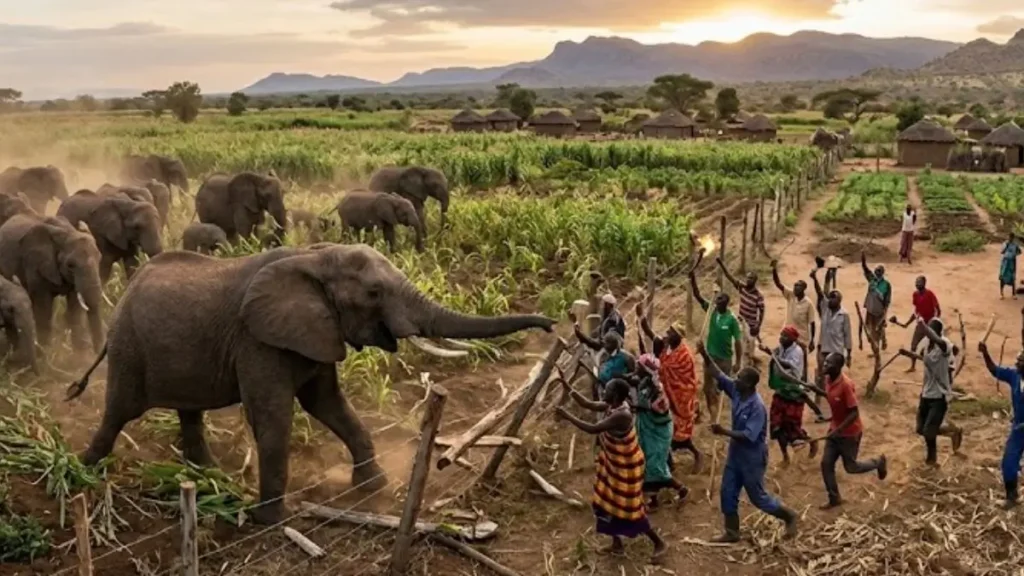
Project HANUMAN human wildlife conflict initiative launched in Andhra Pradesh to reduce man-animal clashes using AI monitoring, rapid response teams, and wildlife rescue infrastructure.
Project HANUMAN Launched to Address Growing Human–Wildlife Conflict
Introduction: A New Initiative for Wildlife Protection and Human Safety
The Government of Andhra Pradesh has launched Project HANUMAN, a major initiative aimed at reducing the increasing cases of human–wildlife conflict in the state. The project was launched on 3 March 2026, coinciding with World Wildlife Day, by Deputy Chief Minister and Forest Minister Pawan Kalyan. The initiative seeks to ensure safety for both rural communities and wildlife by using a combination of technology, rapid response teams, and community participation.
Human–wildlife conflict has become a growing challenge in many parts of India, especially in areas located near forests. Animals such as elephants, leopards, and wild boars often stray into villages in search of food and water, causing damage to crops and property and sometimes leading to injuries or loss of life. Project HANUMAN is designed to tackle these issues through scientific monitoring and improved rescue infrastructure.
Meaning and Objectives of Project HANUMAN
Project HANUMAN stands for “Healing and Nurturing Units for Monitoring, Aid and Nursing of Wildlife.” It is a comprehensive wildlife management program that focuses on rescuing, treating, rehabilitating, and monitoring wildlife while protecting people living near forest areas.
The main objective of the project is to create a coordinated system for addressing wildlife emergencies. Instead of reacting after incidents occur, authorities aim to predict and prevent conflicts through monitoring and early-warning systems. The initiative also aims to improve cooperation between government departments, forest officials, and local communities to manage wildlife-related issues more effectively.
Rapid Response Teams and Rescue Infrastructure
A major component of Project HANUMAN is the creation of a rapid response infrastructure to address wildlife emergencies. Under the project, the government has deployed 100 specialised vehicles, including 93 rapid response vehicles and 7 wildlife ambulances, to ensure quick action in conflict situations.
Each vehicle is staffed by a team of forest officials, veterinarians, and trained personnel who can provide immediate medical care to injured animals and safely relocate wildlife away from human settlements. In addition, four wildlife rescue and treatment centres have been established at Visakhapatnam, Rajamahendravaram, Tirupati, and Birlut to provide long-term care and rehabilitation for injured animals.
Technology and Artificial Intelligence for Wildlife Monitoring
One of the most innovative aspects of the project is the integration of Artificial Intelligence (AI) for wildlife monitoring. AI-based systems will track animal movements near forest boundaries and send early warnings to authorities and nearby communities when animals approach human settlements.
The project also includes a digital application that will allow forest officials to report incidents, track wildlife activity, and coordinate rescue operations more efficiently. This use of technology will help shift the focus from reactive responses to preventive measures, thereby reducing risks to both humans and animals.
Community Participation and Village-Level Teams
Project HANUMAN also emphasizes community involvement in wildlife conservation. The government plans to create village-level “Vajra” (Wildlife Rakshak) teams composed of trained local volunteers. These teams will help manage minor wildlife incidents such as snake rescues and alert forest officials about animal movement.
Community participation is crucial because many wildlife encounters occur in rural areas near forests. By involving local residents, authorities hope to prevent panic-driven reactions that can lead to unnecessary harm to animals or people. Awareness campaigns will also be conducted to educate communities about safe practices when encountering wildlife.
Compensation and Relief for Victims
The Andhra Pradesh government has also strengthened the compensation system for victims of wildlife attacks. Under the revised policy, compensation for deaths caused by wildlife attacks has been increased from ₹5 lakh to ₹10 lakh, while compensation for injuries has been raised to ₹2 lakh. Livestock losses will be compensated according to the market value of the animal.
These measures are intended to reduce financial hardship for affected families and ensure timely relief. By providing adequate compensation, the government also aims to reduce negative attitudes toward wildlife conservation among local communities.

Why This News Is Important for Exams
Growing Challenge of Human–Wildlife Conflict in India
Human–wildlife conflict has become a serious environmental and social issue in India. Rapid urbanization, agricultural expansion, and shrinking forest habitats have forced wildlife to move closer to human settlements. As a result, incidents involving elephants, leopards, and other animals entering villages have increased significantly in recent years.
Project HANUMAN is important because it represents a structured and technology-driven approach to addressing this challenge. Instead of only reacting to wildlife incidents, the project focuses on early warning systems, rapid response teams, and community involvement to prevent conflicts. This approach reflects modern wildlife management strategies and may serve as a model for other states.
Importance for Environmental Governance and Policy
The initiative is also significant from the perspective of environmental governance and conservation policy. It highlights how state governments are integrating technology, scientific monitoring, and local participation to manage biodiversity and protect ecosystems.
For competitive exams such as UPSC, State PSC, SSC, and banking exams, such initiatives are important because they reflect India’s efforts to balance development with environmental conservation. Questions related to wildlife protection programs, environmental policies, and human–wildlife conflict frequently appear in exam syllabi.
Additionally, the project was launched on World Wildlife Day (3 March), which further emphasizes global awareness of wildlife conservation issues. Therefore, understanding the objectives and features of Project HANUMAN is useful for candidates preparing for exams related to environment, ecology, and governance.
Historical Context: Human–Wildlife Conflict in India
Human–wildlife conflict has existed for centuries, but it has intensified in recent decades due to rapid population growth and development. As forests are cleared for agriculture, infrastructure, and urban expansion, wildlife habitats have become fragmented. This forces animals to move outside protected areas in search of food and water.
India is home to diverse wildlife species such as elephants, tigers, leopards, and bears. While conservation efforts have successfully increased populations of some species, limited habitat expansion has led to more frequent encounters between humans and animals. Climate change and irregular rainfall patterns have also disrupted natural food sources, pushing wildlife toward human settlements.
To address this challenge, governments and conservation organizations have introduced various measures such as wildlife corridors, rescue centers, and community awareness programs. Project HANUMAN is part of this broader effort to promote peaceful coexistence between humans and wildlife while protecting biodiversity.
Key Takeaways from Project HANUMAN Initiative
| S. No. | Key Takeaway |
|---|---|
| 1 | Project HANUMAN was launched by the Government of Andhra Pradesh on 3 March 2026 (World Wildlife Day) to reduce human–wildlife conflict. |
| 2 | HANUMAN stands for Healing and Nurturing Units for Monitoring, Aid and Nursing of Wildlife. |
| 3 | The project includes 100 specialised vehicles (93 rapid response units and 7 wildlife ambulances) for wildlife rescue operations. |
| 4 | AI-based monitoring systems and a digital app will track wildlife movement and provide early warnings to communities. |
| 5 | Compensation for wildlife attack victims has been increased to ₹10 lakh for death and ₹2 lakh for injuries, with livestock losses compensated at market value. |
FAQs: Frequently Asked Questions
1. What is Project HANUMAN?
Project HANUMAN is a wildlife management initiative launched by the Government of Andhra Pradesh to reduce human–wildlife conflict. It focuses on wildlife rescue, monitoring, and rehabilitation while protecting people living near forest areas.
2. What does the acronym HANUMAN stand for?
HANUMAN stands for “Healing and Nurturing Units for Monitoring, Aid and Nursing of Wildlife.” The project aims to improve scientific wildlife management and ensure safe coexistence between humans and animals.
3. Which state launched Project HANUMAN?
The initiative was launched by the Government of Andhra Pradesh and inaugurated by Deputy Chief Minister and Forest Minister Pawan Kalyan in 2026.
4. When was Project HANUMAN launched?
The project was launched on 3 March 2026, which is celebrated globally as World Wildlife Day to raise awareness about wildlife conservation.
5. What is the main objective of Project HANUMAN?
The main objective is to reduce human–wildlife conflict, protect rural communities from wildlife attacks, and ensure the conservation and rehabilitation of wild animals.
6. What technological features are included in Project HANUMAN?
The project uses Artificial Intelligence (AI), wildlife monitoring systems, GPS tracking, and a digital reporting app to detect animal movement and provide early warnings to villages near forests.
7. How many rapid response vehicles are deployed under the project?
The project includes 100 specialized vehicles, including 93 rapid response units and 7 wildlife ambulances, to handle wildlife emergencies quickly.
8. What compensation is provided to victims of wildlife attacks?
The compensation amount has been increased to ₹10 lakh for death and ₹2 lakh for injuries caused by wildlife attacks, with livestock losses compensated based on market value.
9. What are ‘Vajra’ teams in Project HANUMAN?
‘Vajra teams’ are village-level wildlife protection volunteer groups that assist in handling minor wildlife incidents and reporting animal movement to authorities.
10. Why is Project HANUMAN important for competitive exams?
The project is important because it highlights India’s environmental governance, wildlife conservation strategies, and technological approaches to solving ecological problems, which are frequently asked topics in exams like UPSC, State PSC, SSC, and banking exams.
Some Important Current Affairs Links

