

Adi Karmayogi Abhiyan, launched in August 2025, is the world’s largest tribal leadership programme to train 20 lakh change leaders across 1 lakh villages for responsive governance and Viksit Bharat 2047.
Adi Karmayogi Abhiyan: Empowering Tribal Leadership for Responsive Governance
1. Article (≈300+ words, with Paragraph Headings)
Introduction to Adi Karmayogi Abhiyan
The Adi Karmayogi Abhiyan, launched by the Ministry of Tribal Affairs on August 19, 2025, is designed to be the world’s largest tribal grassroots leadership programme. It aims to empower tribal communities, enhance responsive governance, and foster local leadership across India’s tribal heartlands
Vision and Core Philosophy
Rooted in the principles of Sewa (Service), Sankalp (Resolve), and Samarpan (Dedication), the Abhiyan is aligned with the mission of “Sabka Saath, Sabka Vikas, Sabka Prayas, Sabka Vishwas”. It forms a critical part of the Janjatiya Gaurav Varsh celebrations and supports the long-term mission of Viksit Bharat by 2047
Program Coverage and Reach
This ambitious initiative plans to mobilize 20 lakh change leaders across 1 lakh tribal-dominated villages in 550 districts, spanning 30 States/UTs These leaders will act as the backbone of grassroots governance, strengthening the delivery of schemes and ensuring community participation.
Training and Institutional Framework
The framework includes a cascading model of capacity-building:
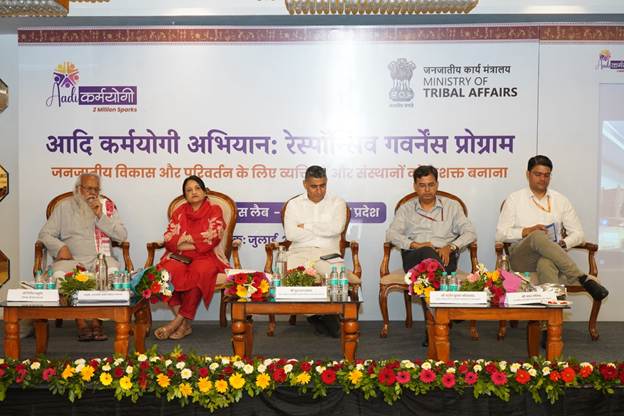
- Governance Lab Workshops (also known as Process Labs) are already underway—from state level down to district, block, and village levels—to train State, District, and Block Master Trainers since July 10, 2025
- Regional Process Labs (RPLs) serve as training hubs, with one recently held in Bhubaneswar under the broader Dharti Aaba Janjatiya Gram Utkarsh Abhiyan
- State governments, like Odisha, have convened high-level reviews to ensure smooth implementation, emphasizing inter-departmental coordination and local leadership training
Local Governance Structures
Village-level Adi Sewa Kendras will be set up in tribal areas where village officials and residents dedicate 1–2 hours fortnightly as Adi Sewa Samay. These centres will serve as hubs to address local issues, mentor youth, and facilitate scheme delivery
Participatory Planning: Vision 2030
A standout feature is the Tribal Village Action Plan (Vision 2030)—a roadmap co-created by villagers and government officers. These plans aim for grassroots development aligned with India’s national goals and the Sustainable Development Goals (SDGs)
Volunteer Cadre: Adi Sahyogi & Adi Saathi
Volunteers play a central role:
- Adi Sahyogi: Professionals like teachers, doctors, and specialists who mentor and mobilize communities.
- Adi Saathi: Grassroots champions such as SHG members, tribal elders, youth, and local leaders coordinating outreach and implementation
Empowerment and Sustainable Governance
By converting tribal communities from welfare recipients into active leaders, the Abhiyan promotes empowerment, builds trust in institutions, mitigates alienation, and supports sustainable development across tribal areas
2. Why This News Is Important
Strengthening Grassroots Governance
The Adi Karmayogi Abhiyan marks a paradigm shift in tribal policy—from welfare delivery to nurturing tribal leadership. By building a network of 20 lakh trained leaders, the initiative strengthens grassroots governance and ensures last-mile delivery of schemes.
Inclusive Development and Social Cohesion
By encouraging local co-creation and regular engagement through Adi Sewa Kendras, the programme embeds participatory governance, fostering trust and reducing alienation. This approach contributes to social harmony and empowerment of tribal communities.
Strategic Vision Aligned with National Goals
This mission aligns with Janjatiya Gaurav Varsh, Viksit Bharat 2047, and Vision 2030 at the tribal village level. It reflects integrated development strategy—tying local planning to national framework and SDGs.
Capacity Building at Scale
The cascading training model—State to village level trainers—ensures mass-scale capacity building and uniformity in governance processes. It prepares a cadre that can sustain governance even in remote tribal regions.
Exam Relevance
For students preparing for exams like UPSC, Banking, Railways, Teaching, and Civil Services, this initiative is a pivotal example under GS II/Government Policies & Interventions. Understanding its structure, aims, and implementation is crucial for current affairs and policy analysis sections.
3. Historical Context
Background Evolution
India has long pursued tribal welfare through various schemes. Yet, many tribal areas remained marginalised. Recognizing this, the government initiated Janjatiya Gaurav Varsh and aligned it with the 100th year of Independence—focusing on dignity and heritage.
From Welfare to Leadership
Previous efforts like PM Janjati Adivasi Nyaya Maha Abhiyan, Dharti Aaba Gram Utkarsh Abhiyan, and the National Sickle Cell Anaemia Elimination Mission focused on welfare. Adi Karmayogi moves beyond by institutionalizing local leadership.
Systemic Shift in Policy Approach
This marks a shift from top-down schemes to bottom-up co-created governance, training local leaders and involving communities directly in planning. The movement is a significant step in India’s evolving tribal policy framework.
4. Key Takeaways from Adi Karmayogi Abhiyan
| Serial No. | Key Takeaway |
|---|---|
| 1 | Launched on 19 August 2025 as the world’s largest tribal grassroots leadership initiative |
| 2 | Aims to mobilize 20 lakh change leaders across 1 lakh tribal villages in 550 districts across 30 States/UTs |
| 3 | Built around Sewa, Sankalp, Samarpan, and aligned with national goals: Janjatiya Gaurav Varsh and Viksit Bharat 2047 |
| 4 | Features Governance Process Labs, cascading training from state to village levels, and establishment of Adi Sewa Kendras in tribal villages |
| 5 | Encourages community involvement through Adi Sahyogi (mentors) and Adi Saathi (community partners) and co-creation of Vision 2030 Tribal Village Action Plans |
Frequently Asked Questions (FAQs)
1. What is the Adi Karmayogi Abhiyan?
It is the world’s largest tribal grassroots leadership programme, launched on 19 August 2025 by the Ministry of Tribal Affairs to empower tribal communities through responsive governance.
2. How many leaders will the initiative train?
The programme aims to mobilize and train 20 lakh change leaders across tribal regions of India.
3. How many villages and districts are covered under the programme?
The Abhiyan will cover 1 lakh tribal-dominated villages in 550 districts spread across 30 States and Union Territories.
4. What are the guiding principles of the initiative?
The programme is based on Sewa (Service), Sankalp (Resolve), and Samarpan (Dedication).
5. What is an Adi Sewa Kendra?
These are village-level centres where tribal communities and local officials dedicate time to governance, grievance redressal, and mentoring activities.
6. Who are Adi Sahyogi and Adi Saathi?
- Adi Sahyogi: Professionals like teachers, doctors, and specialists who guide and mentor communities.
- Adi Saathi: Grassroots volunteers such as SHG members, youth, and tribal elders who facilitate implementation.
7. How is training delivered?
Training follows a cascading model with Governance Process Labs (GPLs) at state, district, block, and village levels, creating trained master trainers.
8. What is Vision 2030 under this programme?
Each tribal village will prepare a Village Action Plan (Vision 2030) to align local development with national priorities and SDGs.
9. Why is this programme significant for competitive exams?
It is a landmark policy initiative under GS-II topics (Government Policies and Interventions), relevant for UPSC, PSCs, Banking awareness, and general studies sections.
10. How does this initiative link to Viksit Bharat 2047?
By empowering tribal communities as active leaders rather than passive beneficiaries, it contributes directly to the long-term mission of Viksit Bharat 2047.
Some Important Current Affairs Links

