
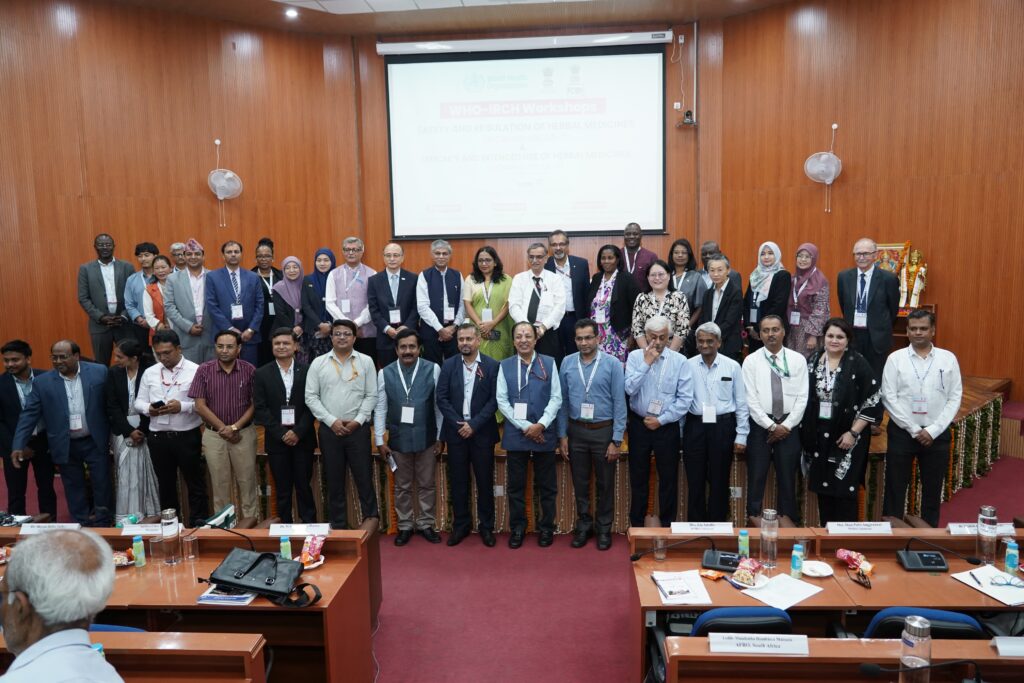
WHO Herbal Medicine Workshop 2025 hosted by India in Ghaziabad focuses on safety and regulation of traditional medicines. Led by the Ministry of Ayush and WHO–IRCH, the event enhances global collaboration and pharmacovigilance practices.
India to Host WHO–IRCH Workshop on Herbal Medicine Safety and Regulations
Global Technical Workshop for Herbal Medicine Regulation
From August 6 to 8, 2025, India is hosting a prestigious global workshop — the WHO–International Regulatory Cooperation for Herbal Medicines (IRCH) — at the Hotel Fortune District Centre in Ghaziabad. Organized by the Ministry of Ayush in partnership with the World Health Organization (WHO), and supported by the Pharmacopoeia Commission for Indian Medicine & Homoeopathy (PCIM&H), the three-day workshop brings together regulators, researchers, and experts from across the world.
Distinguished Inauguration and International Participation
The event was inaugurated by Vaidya Rajesh Kotecha (Secretary, Ministry of Ayush) and Dr. Kim Sungchol (Chairperson, WHO–IRCH). Delegates are participating from countries such as Bhutan, Brunei, Cuba, Ghana, Indonesia, Japan, Nepal, Paraguay, Poland, Sri Lanka, Uganda, and Zimbabwe, with Brazil, Egypt, and the USA joining in virtually.
Core Objectives and Technical Sessions
The workshop is structured around five key goals: fostering international collaboration, reinforcing safety and efficacy mechanisms, encouraging regulatory convergence, and empowering traditional medicine systems worldwide. Sessions will cover WHO–IRCH’s Working Groups 1 & 3 (focused on safety and intended use), pre-clinical research protocols, regulatory frameworks, and detailed case studies — including Ashwagandha (Withania somnifera).
Hands-On Training and Pharmacovigilance Launch
Participants will engage in practical training covering herbal drug identification, heavy metal testing, and chemo-profiling through HPTLC techniques—hosted at PCIM&H labs. The workshop will also introduce the Ayush Suraksha (Pharmacovigilance) Programme, aimed at bolstering safety surveillance of traditional medicines.
Exposure to India’s Integrative Health Infrastructure
Delegates will visit key Indian institutions, including PCIM&H, the National Institute of Unani Medicine (NIUM) in Ghaziabad, and the All India Institute of Ayurveda (AIIA) in New Delhi. These site visits are designed to give a comprehensive view of India’s traditional medicine ecosystem.

Why This News Is Important
Heading: Strengthening Global Standards in Herbal Medicine
The workshop underscores India’s leadership in standardizing herbal medicine regulations. As the lead country for WHO–IRCH’s Working Groups 1 & 3, India is setting global benchmarks in safety, efficacy, and regulation of traditional medicines.
Heading: Enhancing Regulatory Convergence and Safety
This initiative marks a pivotal step toward harmonization of herbal medicine norms worldwide. By introducing Ayush Suraksha and encouraging international best-practice exchange, India is reinforcing regulatory convergence and elevating safety monitoring, which is crucial for public health and well-being.
Heading: Boost for Exam-Relevant Knowledge
For aspirants preparing for teaching, police, banking, railways, defence, and civil services including PCS and IAS, understanding this event supports multiple syllabus areas — from international cooperation, public health policy, Ministry of Ayush’s role, to traditional medicine’s integration with global health agendas.
Historical Context: Background of India’s Role in Traditional Medicine Regulation
Heading: Ministry of Ayush and Its Mandate
Established as a full-fledged ministry in 2014, the Ministry of Ayush oversees education, research, and advocacy for systems like Ayurveda, Yoga, Unani, Siddha, Sowa-Rigpa, and Homeopathy. Its creation signaled increased institutional support for traditional medicine in India.
Heading: India’s Regulatory Leadership in Traditional Medicine
Through institutions like PCIM&H, India has been actively working on pharmacopoeial standards, quality control, and scientific validation of Ayush medicines. The country’s leadership in WHO–IRCH Working Groups amplifies its role in shaping global policies for herbal medicine regulation.
Heading: WHO’s Efforts in Herbal Medicine Quality Assurance
The World Health Organization has been a central authority in establishing quality control measures for medicinal plants since publishing its standards in 1998. These frameworks underpin efforts like the current workshop in harmonizing herbal medicine practices globally.
Key Takeaways from This News
| S. No. | Key Takeaway |
|---|---|
| 1 | India hosted the WHO–IRCH Workshop on herbal medicine regulation from August 6–8, 2025. |
| 2 | The event was organized by the Ministry of Ayush in collaboration with WHO and PCIM&H. |
| 3 | Sessions addressed safety, regulation, efficacy, with hands-on training and a pharmacovigilance launch. |
| 4 | India leads WHO–IRCH Working Groups on safety and intended use of herbal medicines. |
| 5 | International delegates from numerous countries participated physically and virtually. |
FAQs: Frequently Asked Questions
1. What is the WHO–IRCH?
The World Health Organization – International Regulatory Cooperation for Herbal Medicines (WHO–IRCH) is a global network of regulatory authorities aiming to ensure the safety, efficacy, and quality of herbal medicines worldwide.
2. When and where is the WHO–IRCH workshop taking place in India?
The workshop is being held from August 6 to 8, 2025, at Hotel Fortune District Centre, Ghaziabad, Uttar Pradesh.
3. Who are the main organizers of the WHO–IRCH workshop in India?
The Ministry of Ayush, in collaboration with the World Health Organization (WHO) and support from PCIM&H, is organizing the event.
4. What is the aim of the Ayush Suraksha (Pharmacovigilance) Programme?
It aims to strengthen the safety monitoring system for herbal and traditional medicines in India.
5. How is India contributing to WHO–IRCH’s goals?
India is leading Working Groups 1 and 3 of WHO–IRCH, focusing on the safety and intended use of herbal medicines.
6. Which countries are participating in the workshop?
Countries such as Japan, Indonesia, Poland, Cuba, Ghana, Sri Lanka, Uganda, Zimbabwe, and many more, including virtual participation from Brazil, Egypt, and the USA, are involved.
7. What is PCIM&H?
The Pharmacopoeia Commission for Indian Medicine & Homoeopathy (PCIM&H) is a body under the Ministry of Ayush that formulates pharmacopoeial standards and quality control methods for Ayush systems.
8. Why is this event important for competitive exams?
It relates to public health, traditional medicine policy, international cooperation, and India’s soft power in health diplomacy, making it relevant for UPSC, State PCS, railways, defence, and banking exams.
9. What practical sessions are included in the workshop?
Hands-on training includes HPTLC chemo-profiling, heavy metal analysis, and herbal identification techniques.
10. Which herbs are being used in case studies?
Ashwagandha (Withania somnifera) is one of the key herbs being examined in detail.
Some Important Current Affairs Links

