
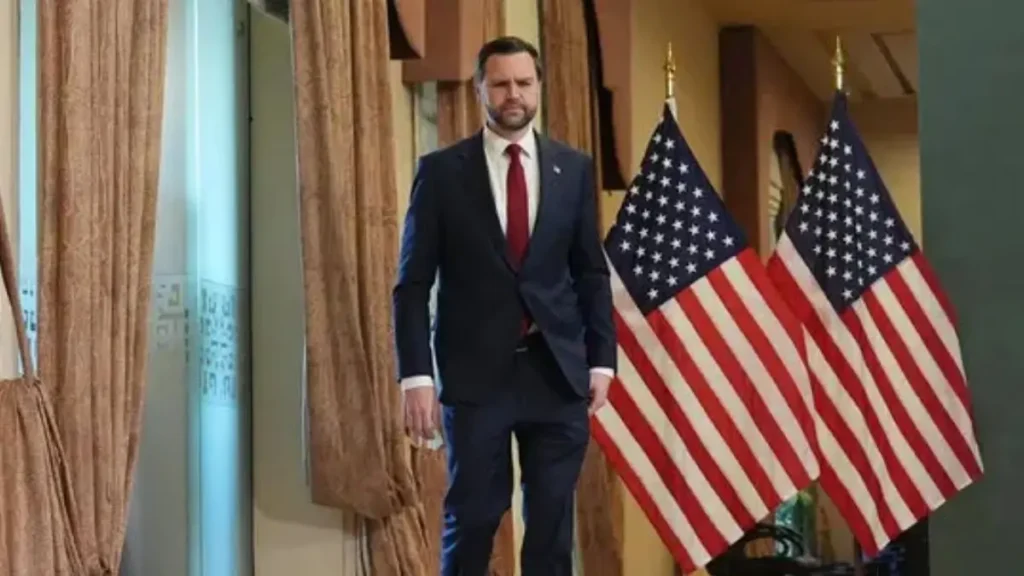
US Iran peace talks collapse in Islamabad 2026 after major disagreements on nuclear program and sanctions relief, raising global oil crisis concerns and West Asia tensions.
US–Iran Peace Talks Collapse in Islamabad (2026)
🔷 High-Level Diplomatic Talks End Without Breakthrough
The much-anticipated US–Iran peace talks held in Islamabad, Pakistan, have collapsed after nearly 21 hours of continuous negotiations without any agreement. The talks were seen as a historic diplomatic effort aimed at reducing escalating tensions in West Asia and stabilizing a fragile ceasefire situation.
The discussions were led by senior delegations from both countries, including top US officials and Iranian representatives. Despite intense back-channel diplomacy and mediation efforts by Pakistan, both sides failed to bridge differences on core issues such as Iran’s nuclear program, sanctions relief, and control over strategic maritime routes.
🔷 Key Issues Behind the Breakdown of Talks
According to official statements and diplomatic sources, the negotiations collapsed mainly due to:
- Iran’s refusal to fully halt or limit its nuclear enrichment activities
- US demands for strict verification and long-term guarantees
- Disputes over sanctions relief and frozen Iranian assets
- Tensions over the strategic Strait of Hormuz, a key global oil shipping route
- Mutual distrust and disagreement on ceasefire implementation
The US delegation stated that Iran “did not accept proposed terms,” while Iranian officials accused Washington of making “excessive demands.”
🔷 Rising Regional Tensions After Failed Negotiations
Following the collapse of talks, geopolitical tensions have escalated sharply. Reports indicate that the United States has already moved toward stricter maritime measures, including a planned blockade of Iranian ports and coastal areas.
This development has raised global concerns over:
- Possible disruption in global oil supply chains
- Increase in crude oil prices
- Risk of wider military escalation in the Gulf region
- Instability affecting neighbouring West Asian countries
The Strait of Hormuz remains a major flashpoint, as nearly one-fifth of global oil trade passes through it.
🔷 Pakistan’s Role as Mediator
Pakistan played a central role as the host and facilitator of the negotiations in Islamabad. It had previously helped broker a temporary ceasefire between the two sides and attempted to revive diplomatic engagement.
Despite the failure of the talks, diplomatic channels remain open, and further rounds of negotiations have not been ruled out by mediating nations.

📌 Why This News is Important
🔷 Global Security and Strategic Stability
The collapse of US–Iran talks is a major setback for global peace efforts. The disagreement between two influential geopolitical powers directly impacts international security, energy stability, and regional balance in West Asia.
🔷 Economic and Energy Market Impact
The Strait of Hormuz is one of the world’s most critical oil routes. Any escalation between the US and Iran can lead to:
- Sharp rise in global oil prices
- Supply chain disruptions
- Inflationary pressure on importing nations
🔷 Diplomatic Significance
These talks were among the highest-level direct US–Iran negotiations in decades, making their failure a significant diplomatic setback. It reflects deep mistrust and the difficulty of resolving long-standing conflicts through dialogue.
🔷 Implications for India and Asia
India and other Asian economies heavily dependent on Middle Eastern energy imports may face indirect economic pressure due to instability in oil markets and shipping routes.
📜 Historical Context
The United States and Iran have had strained relations since the 1979 Iranian Revolution, which led to the breakdown of formal diplomatic ties. Over the decades, tensions have intensified due to:
- Iran’s nuclear program disputes
- US sanctions and military presence in the Gulf
- Regional conflicts involving allied groups and nations
- Previous failed nuclear agreements and negotiations
A major attempt at diplomacy was the 2015 Iran nuclear deal (JCPOA), which later collapsed after US withdrawal. Since then, relations have remained tense, with periodic escalation and sanctions.
The 2026 Islamabad talks were considered the most direct and high-level engagement since 1979, making their failure historically significant.
📊 Key Takeaways from US–Iran Islamabad Talks Collapse
📌 Key Takeaways from US–Iran Peace Talks Breakdown
| S. No. | Key Takeaway |
|---|---|
| 1 | US–Iran peace talks in Islamabad collapsed after ~21 hours without any agreement |
| 2 | Major disagreements included Iran’s nuclear program and sanctions relief demands |
| 3 | The Strait of Hormuz remained a critical dispute point due to its global oil importance |
| 4 | The breakdown increases risk of regional instability and global oil price volatility |
| 5 | Pakistan acted as mediator, but diplomatic negotiations remain unresolved |
Frequently Asked Questions (FAQs)
1. What was the main objective of the US–Iran talks in Islamabad?
The main objective was to reduce escalating tensions between the United States and Iran, address concerns over Iran’s nuclear program, and explore possibilities for sanctions relief and regional stability in West Asia.
2. Why did the US–Iran peace talks collapse?
The talks collapsed due to deep disagreements on key issues such as Iran’s nuclear enrichment limits, US demands for strict verification mechanisms, sanctions relief conditions, and strategic control over the Strait of Hormuz.
3. Which country mediated the US–Iran negotiations?
Pakistan acted as the host and mediator for the peace talks in Islamabad and also played a role in facilitating earlier ceasefire-related discussions between the two sides.
4. Why is the Strait of Hormuz important in this conflict?
The Strait of Hormuz is one of the world’s most important oil shipping routes, with nearly one-fifth of global oil passing through it. Any disruption can significantly impact global energy prices and supply chains.
5. How does the collapse of talks affect global economy?
The breakdown increases geopolitical uncertainty, which may lead to rising crude oil prices, inflation in importing countries, and potential disruptions in global trade and energy supply routes.
6. Have US–Iran relations ever improved in the past?
Yes, relations briefly improved under the 2015 Iran nuclear deal (JCPOA), but tensions rose again after the US withdrew from the agreement, leading to renewed sanctions and diplomatic breakdown.
7. Is further negotiation between US and Iran still possible?
Although the talks collapsed, diplomatic channels remain open, and mediating countries may attempt to resume negotiations in the future.
Some Important Current Affairs Links

