
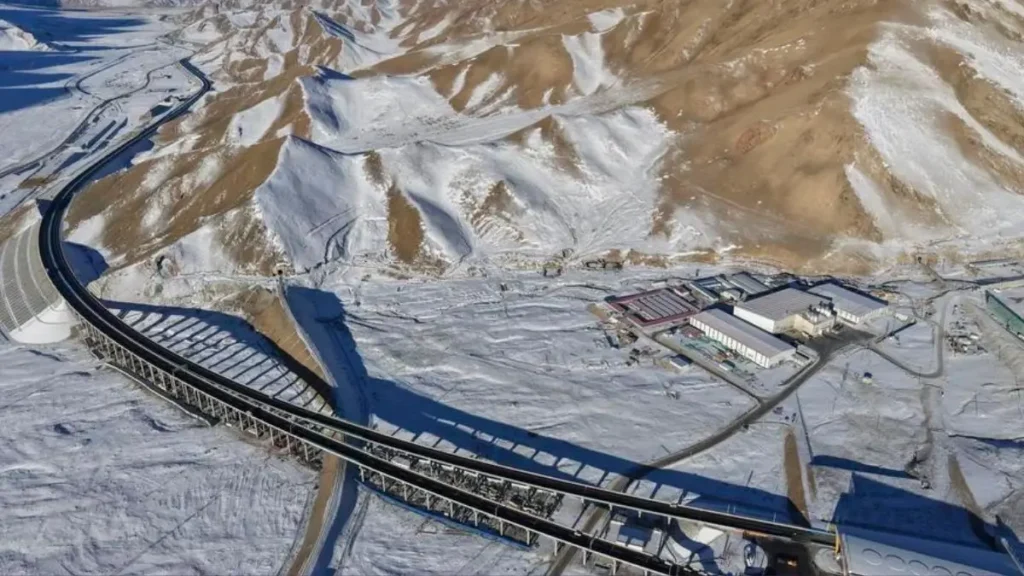
Tianshan Shengli Tunnel China sets a new world record as the longest expressway tunnel at 22.13 km in Xinjiang, boosting regional connectivity, trade, and economic growth.
China Opens World’s Longest Expressway Tunnel in Xinjiang
Overview: A New Milestone in Global Infrastructure
China has inaugurated the world’s longest expressway tunnel, known as the Tianshan Shengli Tunnel, in the Xinjiang Uygur Autonomous Region. Stretching 22.13 kilometres, this mega-infrastructure achievement was officially opened to traffic on 26 December 2025. It stands as a testament to China’s advancing engineering capabilities and strategic transport development.
This tunnel is a crucial part of the G0711 Urumqi–Yuli Expressway, cutting through the Tianshan Mountain range, one of the most challenging terrains in northwest China. Before this tunnel existed, crossing the Tianshan Mountains involved navigating winding roads and multiple mountain passes, often taking several hours. With the tunnel operational, travel across this section now takes about 20 minutes at a designed speed of 100 km/h — dramatically increasing efficiency.
Engineering Feat: Challenges and Innovation
Building the Tianshan Shengli Tunnel was a remarkable engineering achievement. Construction teams faced extreme geological challenges, including high altitude, severe cold, seismic fault zones, and high ground stress. The tunnel traverses 16 different geological fault zones, reaching burial depths of over 1,100 metres beneath the mountain surface.
To ensure safety and driver comfort over such a long stretch, engineers incorporated features like multiple vertical shafts for air circulation and scenic zones to reduce driver fatigue. This blend of utility and comfort highlights the advanced planning behind the project.
Regional Connectivity and Economic Integration
The tunnel has significantly strengthened regional connectivity within Xinjiang, linking the northern city of Urumqi to the southern city of Korla. Previously, travel between these two cities could take up to seven hours. With the tunnel and expressway fully operational, this journey has been reduced to approximately three hours, boosting logistics, trade, and daily commuting convenience.
This infrastructure is expected to enhance the movement of goods such as energy resources, agricultural products, and manufactured items — contributing positively to local and international trade through better intercity integration.
Strategic Importance for China and Beyond
Beyond local improvements, the tunnel and expressway are part of China’s broader strategy to develop its western regions. Strengthened transport corridors help reduce regional disparities, promote economic activity, and facilitate access to remote areas. The project complements China’s initiatives like the Belt and Road Initiative (BRI), which aims to enhance connectivity across Asia, Africa, and Europe.
This development underscores China’s commitment to transform its transportation landscape and expand its role in global infrastructure. Emerging as a vital economic artery, the tunnel also symbolizes the importance of innovation in large-scale engineering projects.

Why This News is Important for Exam Aspirants
Relevance in General Studies and Current Affairs
Understanding this development is crucial for competitive exam aspirants across disciplines like UPSC, State PSC, SSC, Banking, Railways, Teaching and Defence as it ties into current international events, infrastructure development, and geopolitics. Infrastructure projects of this scale reflect how countries leverage engineering excellence to solve geographical barriers and improve economic connectivity — a key theme in General Studies.
Cross-Sectoral Importance
This news intersects multiple exam subjects:
- Geography & Environment: Construction in extreme terrains, environmental considerations.
- Economy & Trade: Enhancing logistics and regional integration.
- Science & Technology: Use of advanced engineering, tunnel-boring machines, and safety designs.
- International Relations: Impact on China’s connectivity with Eurasian regions and its role in global infrastructure initiatives like the BRI.
Exam-Oriented Value
For UPSC/PSC interviews, students can discuss the socio-economic impact of large infrastructure projects and how technology can overcome natural obstacles. For banking and railways, knowledge about transport corridors and connectivity improvements is useful in contextual comprehension sections. Teachers and defence aspirants can use this news to explain modern engineering challenges and strategic infrastructure planning.
Historical Context: Evolution of Long Road Tunnels
Early Global Pioneers in Tunnel Engineering
Long tunnels have historically redefined transport and connectivity. One of the earliest milestones was the Mount Erlang Tunnel in Sichuan, China, opened in 1999, spanning about 4.176 km through mountainous terrain.
Prior to the Tianshan Shengli Tunnel, several long road tunnels existed worldwide, including the Lærdal Tunnel in Norway (about 24.5 km), which remains one of the longest road tunnels globally for general traffic purposes.
China’s Infrastructure Growth
China has been aggressively expanding its road and tunnel network to improve connectivity across its vast territory. The Tianshan Shengli Tunnel represents the latest and most significant leap in this trajectory, overcoming complex terrain and environmental challenges.
This tunnel not only holds a length record but also showcases advanced construction techniques that reflect decades of engineering evolution in the region, aligning with China’s broader strategic infrastructure goals
Key Takeaways from “China Opens World’s Longest Expressway Tunnel in Xinjiang”
| S. No. | Key Takeaway |
|---|---|
| 1 | The Tianshan Shengli Tunnel in Xinjiang is the world’s longest expressway tunnel at 22.13 km. |
| 2 | It is part of the G0711 Urumqi–Yuli Expressway that improves connectivity across the Tianshan Mountains. |
| 3 | The tunnel reduces travel time across the mountains from several hours to about 20 minutes. |
| 4 | It required overcoming extreme geological challenges, including 16 fault zones and high altitude. |
| 5 | The project boosts regional trade, economic integration, and supports China’s wider infrastructure strategy. |
FAQs: Frequently Asked Questions
1. What is the Tianshan Shengli Tunnel?
The Tianshan Shengli Tunnel is the world’s longest expressway tunnel located in the Xinjiang Uygur Autonomous Region of China, stretching 22.13 km and forming part of the G0711 Urumqi–Yuli Expressway.
2. When was the Tianshan Shengli Tunnel opened to traffic?
The tunnel was officially opened to traffic on 26 December 2025.
3. Why is the Tianshan Shengli Tunnel strategically important?
It reduces travel time across the Tianshan Mountains from several hours to about 20 minutes, improves logistics, enhances regional connectivity, and supports China’s broader economic and Belt and Road Initiative goals.
4. What engineering challenges were faced during the tunnel construction?
Engineers had to navigate 16 geological fault zones, high altitudes, extreme cold, high ground stress, and seismic activity, making it one of the most challenging tunnel projects globally.
5. How does the tunnel benefit Xinjiang and China’s economy?
It boosts regional trade by facilitating faster transport of goods and passengers, promotes economic integration, supports industrial logistics, and strengthens China’s infrastructure in western regions.
6. What is the maximum designed speed inside the tunnel?
The tunnel has a designed speed of 100 km/h to ensure safe and efficient travel.
7. How does the tunnel connect major cities in Xinjiang?
It links Urumqi in the north to Korla in the south, reducing the previous journey time from seven hours to approximately three hours.
8. Which mountains does the tunnel pass through?
The tunnel passes through the Tianshan Mountain range, one of the most challenging terrains in northwest China.
9. What advanced features are included in the tunnel for safety?
It includes multiple vertical shafts for air circulation, scenic zones to reduce driver fatigue, and modern lighting and ventilation systems.
10. How does this tunnel compare globally?
The Tianshan Shengli Tunnel is now the longest expressway tunnel in the world, surpassing previous tunnels such as Norway’s Lærdal Tunnel.
Some Important Current Affairs Links

