
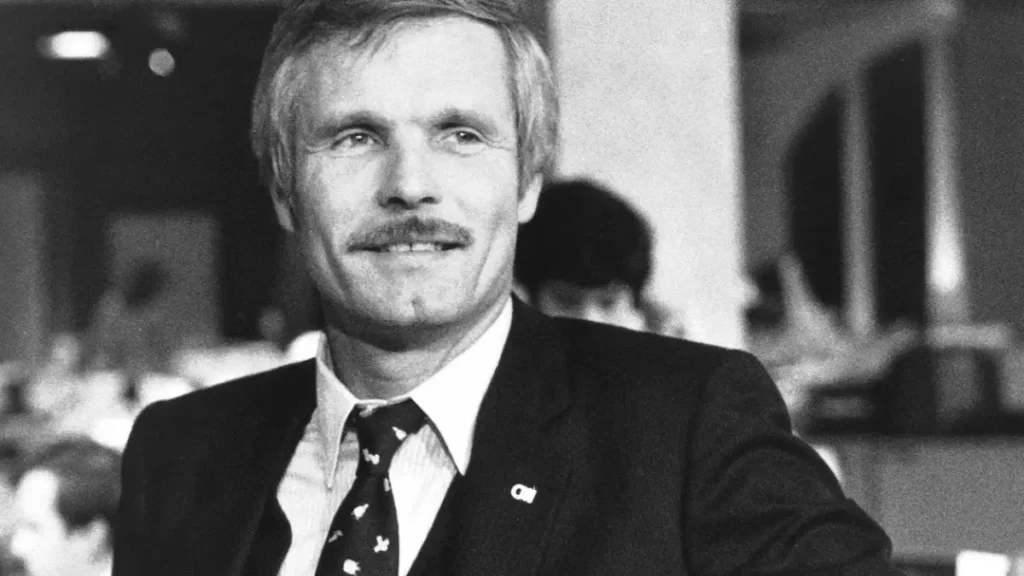
Ted Turner CNN founder death news explains the life, achievements, and media revolution created by the founder of the world’s first 24-hour news channel. Important for UPSC, SSC, Banking, Railways, Defence, and PCS exams.
Introduction: A Media Visionary Passes Away
Ted Turner, the man credited with transforming global television journalism through the launch of the world’s first 24-hour news channel, has died at the age of 87. Turner revolutionized the media industry by establishing CNN in 1980, permanently changing how the world consumes news. Reports stated that he died after a long battle with Lewy body dementia at his residence in the United States.
His death marks the end of an era in global journalism and media innovation. Turner’s influence extended far beyond news broadcasting, as he also played major roles in sports, entertainment, environmental conservation, and philanthropy.
The Creation of the World’s First 24-Hour News Channel
Before CNN was launched, television news was limited to short scheduled bulletins broadcast once or twice a day. Ted Turner believed that people needed continuous access to information. Acting on this vision, he launched CNN on June 1, 1980, introducing the concept of round-the-clock news coverage.
Initially, critics mocked the idea and called CNN the “Chicken Noodle Network.” However, Turner remained confident in his belief that people would eventually rely on live, continuous news coverage during important events.
CNN’s real breakthrough came during major international developments such as the Gulf War, the fall of the Berlin Wall, and the Tiananmen Square protests. CNN provided live reporting directly from conflict zones, setting a new standard for global journalism.
Expansion of Turner’s Media Empire
Ted Turner did not stop with CNN. He transformed a small Atlanta television station into a massive media empire called Turner Broadcasting System. Over the years, he launched several influential television channels, including TNT, TBS, Cartoon Network, and Turner Classic Movies.
He also owned major sports teams such as the Atlanta Braves baseball team and the Atlanta Hawks basketball team. Under his ownership, the Braves won the 1995 World Series championship. Turner was also a successful yachtsman and won the America’s Cup sailing competition in 1977.
Philanthropy and Environmental Contributions
Beyond media, Ted Turner became widely respected for his philanthropic work. In 1997, he pledged $1 billion to support the United Nations, leading to the creation of the United Nations Foundation. He supported causes related to climate change, nuclear disarmament, wildlife conservation, and global health.
Turner also became one of the largest private landowners in the United States and played an important role in bison conservation. His environmental activism inspired educational programs such as the animated television series Captain Planet and the Planeteers.
Illness and Final Years
In 2018, Ted Turner publicly revealed that he had been diagnosed with Lewy body dementia, a progressive neurological disorder. Due to his declining health, he gradually withdrew from public life. Despite this, he remained a respected figure in journalism and philanthropy.
Following his death, tributes poured in from media organizations, political leaders, and journalists worldwide. Many described him as a visionary who reshaped modern communication and transformed the global news industry forever.

Why This News is Important
Importance for Current Affairs and Competitive Exams
The death of Ted Turner is highly important for students preparing for government examinations because it is connected to media studies, international affairs, communication technology, and notable global personalities. Questions related to founders of major institutions, important inventions in communication, and pioneers in journalism frequently appear in competitive exams such as UPSC, SSC, Banking, Railways, Defence, and State PCS examinations.
Ted Turner’s contribution is particularly significant because he introduced the 24-hour news broadcasting model, which completely changed modern journalism. Today, nearly every major television news network across the world follows the system pioneered by CNN.
Impact on Global Media and Journalism
Turner’s innovations demonstrated the growing influence of satellite television and live broadcasting in shaping public opinion and international politics. CNN’s live coverage during wars and global crises changed how governments, citizens, and policymakers reacted to world events.
The rise of continuous news broadcasting also led to the development of digital journalism, social media reporting, and instant news culture. Therefore, Ted Turner’s role is considered a landmark chapter in media history and communication studies.
Relevance in International Relations and Technology
The growth of CNN reflected the increasing importance of globalization and information technology in international relations. During conflicts such as the Gulf War, live broadcasting influenced diplomatic responses and public awareness worldwide.
Students preparing for exams should understand how media organizations can shape global narratives and public policy. Questions about media evolution, influential personalities, and communication revolutions are common in essay papers, interviews, and general studies sections.
Historical Context
Evolution of Television News Before CNN
Before the 1980s, television news broadcasts were generally limited to fixed time slots. Major American networks such as ABC, CBS, and NBC provided evening news bulletins lasting around 30 minutes.
The rapid growth of satellite communication technology during the 1970s created opportunities for real-time broadcasting. Ted Turner recognized this potential and introduced a revolutionary idea — a channel that would broadcast news continuously throughout the day and night.
Rise of Cable Television in America
The 1970s and 1980s witnessed the rapid expansion of cable television in the United States. Turner used satellite technology to convert his local Atlanta television station into a national “superstation.” This success encouraged him to launch CNN in 1980.
Initially, many media experts believed the idea would fail because there was not enough news content to sustain a 24-hour schedule. However, international crises soon proved the value of continuous reporting.
CNN’s Role in Major Historical Events
CNN gained worldwide credibility during the Gulf War of 1991 when it provided live battlefield reporting directly from Baghdad. The network also covered the fall of the Soviet Union, the Tiananmen Square protests, and many other historic global developments.
These broadcasts established the concept of “real-time journalism” and influenced the future of television and digital news worldwide. Many modern news channels, including those in India, adopted the 24-hour news model pioneered by Ted Turner.
Key Takeaways from Ted Turner and CNN News
| S.No. | Key Takeaway |
|---|---|
| 1 | Ted Turner founded CNN in 1980, creating the world’s first 24-hour news channel. |
| 2 | He died at the age of 87 after battling Lewy body dementia. |
| 3 | CNN transformed global journalism through continuous live news coverage. |
| 4 | Turner also launched networks such as TNT, TBS, Cartoon Network, and Turner Classic Movies. |
| 5 | He was a major philanthropist and donated $1 billion to support United Nations initiatives. |
FAQs Related to Ted Turner and CNN
1. Who was Ted Turner?
Ted Turner was an American media entrepreneur and philanthropist best known for founding CNN, the world’s first 24-hour news channel.
2. Why is Ted Turner famous in media history?
Ted Turner revolutionized global journalism by launching CNN in 1980, introducing continuous news broadcasting for the first time in television history.
3. What is CNN?
CNN stands for Cable News Network. It is a global television news channel founded by Ted Turner.
4. When was CNN launched?
CNN was launched on June 1, 1980.
5. What was unique about CNN?
CNN became the world’s first television channel to provide news coverage 24 hours a day.
6. Which major events increased CNN’s popularity?
CNN gained worldwide popularity during events such as the Gulf War, the fall of the Berlin Wall, and the Tiananmen Square protests.
7. What illness did Ted Turner suffer from?
Ted Turner suffered from Lewy body dementia, a progressive neurological disorder.
8. What are some other channels launched by Ted Turner?
Ted Turner launched TNT, TBS, Cartoon Network, and Turner Classic Movies.
9. What is the significance of 24-hour news broadcasting?
It allows continuous real-time coverage of global events, disasters, wars, elections, and emergencies.
10. Why is this topic important for competitive exams?
Questions related to important personalities, media organizations, communication technology, and international developments frequently appear in UPSC, SSC, Banking, Railways, Defence, and PCS exams.
Some Important Current Affairs Links

