
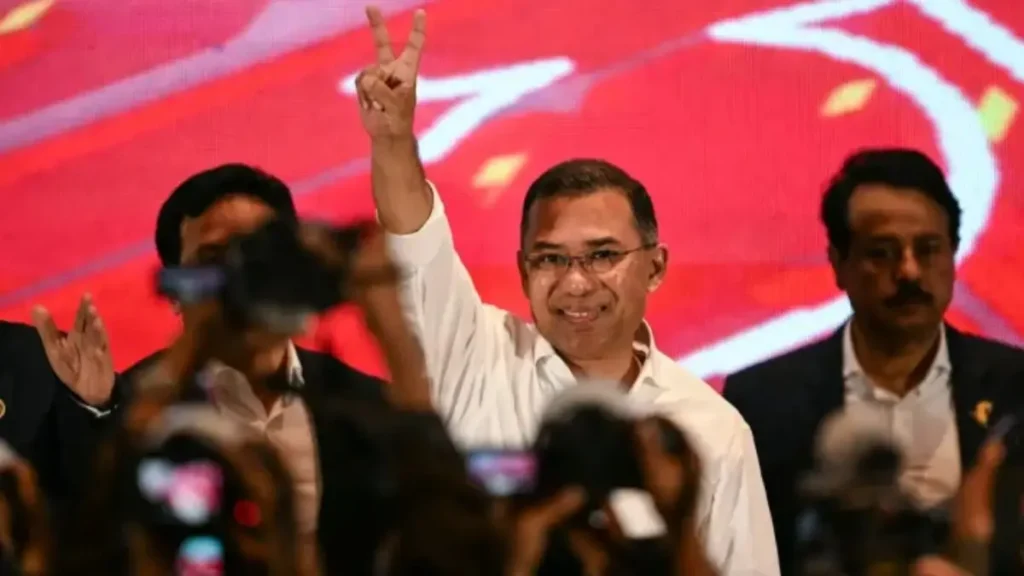
Tarique Rahman Bangladesh Prime Minister: BNP chairman Tarique Rahman sworn in as Prime Minister in 2026, marking a historic political transition in Bangladesh. Know key takeaways and FAQs.
Tarique Rahman Takes Oath as Bangladesh’s New Prime Minister
Dhaka, February 17, 2026: In a historic political development, Tarique Rahman — Chairman of the Bangladesh Nationalist Party (BNP) — has been sworn in as the 11th Prime Minister of the People’s Republic of Bangladesh after his party secured a decisive victory in the 13th National Parliamentary Elections held on 12 February 2026.
The oath‑taking ceremony took place at the South Plaza of the Jatiya Sangsad Bhaban (National Parliament building) in Dhaka and was administered by President Mohammed Shahabuddin. A large number of national and international dignitaries, including representatives from neighbouring countries, attended the ceremony.
Rahman’s party — the Bangladesh Nationalist Party (BNP) — won a clear majority by securing 209 out of 297 contested seats, marking one of the most significant political transitions in Bangladesh in recent decades. This victory ended years of rule under the previous regime and marked the return of BNP to power.
Following his swearing‑in, the new Prime Minister presided over his first cabinet meeting and emphasised national unity, economic revival, and institutional reforms as top priorities for the government.
Major Political Shift and Governance Focus
Rahman’s elevation to the premiership follows a period of political turbulence in Bangladesh, including mass protests in 2024, the exit of the former long‑standing government, and an interim administration that oversaw the transition.
Facing a host of economic and diplomatic challenges, the new government has pledged to promote political reconciliation, strengthen democratic institutions, and improve economic conditions. Bangladesh’s strategic relations with neighbouring countries — especially India and the United States — are expected to be key areas of focus in his foreign policy agenda.
In his first official engagements, Prime Minister Rahman visited the Prime Minister’s Office in Tejgaon, marking a symbolic moment as he transitioned from ceremonial to executive duties.
Impacts on Domestic Politics and Economy
Under his leadership, the government plans to address key national issues:
- Tackling inflation and strengthening the textile sector, a backbone of the Bangladeshi economy.
- Addressing minority rights and political stability following a period of unrest.
- Rebuilding diplomatic ties with neighbouring states to foster socio‑economic cooperation.
The new parliament is expected to convene its first session by early March 2026, where the government will begin legislative business, including key policy discussions and elections for parliamentary leadership roles.

Why This News is Important for Government Exam Aspirants
Significance in International Politics
This event marks a major political transition in Bangladesh, one of South Asia’s most populous and strategically significant nations. The change underscores how democratic processes and electoral mandates shape regional leadership dynamics. Students preparing for UPSC, PSC, or diplomacy‑oriented exams must understand the following:
- Political power shifts in neighboring countries can influence regional geopolitics and security strategies.
- Bangladesh plays a vital role in SAARC and BIMSTEC, making its governance and foreign policy direction crucial for India‑South Asia relations.
- Diplomatic interactions — such as congratulatory messages from global leaders — reflect bilateral ties and future cooperation areas (trade, defence, border management).
Relevance to Governance and Public Policy
Exam aspirants should note:
- How electoral mandates shape public policy priorities.
- The role of parliamentary majorities in democratic governance.
- New leadership’s approach to economic reforms and institutional strengthening.
Understanding the context and implications of such political headlines enhances one’s grasp of world affairs, governance models, and public administration principles — common themes in competitive exams.
Historical Context: Bangladesh’s Political Landscape Leading to This Change
Bangladesh has experienced alternating leadership primarily between two major parties — the Awami League and the Bangladesh Nationalist Party (BNP) — since its independence in 1971. Former Prime Minister Sheikh Hasina of the Awami League led the government for over 15 years until mass protests in 2024 culminated in her departure and the installation of an interim government.
Tarique Rahman — son of former Prime Minister Khaleda Zia and former President Ziaur Rahman — spent 17 years in self‑imposed exile in London before returning to Bangladesh in late 2025. His leadership marked a symbolic return for the BNP and a shift from decades of political dominance by the Awami League.
The recent election is widely seen as a watershed moment, reinforcing democratic norms and ending a prolonged period of political uncertainty. Bangladesh’s democratic journey continues to evolve with this new leadership at the helm.
Key Takeaways from Tarique Rahman Becomes Bangladesh Prime Minister
| S.No. | Key Takeaway |
|---|---|
| 1 | Tarique Rahman sworn in as the 11th Prime Minister of Bangladesh on 17 February 2026. |
| 2 | His party (BNP) won a decisive majority — 209 of 297 seats — in the 13th parliamentary elections. |
| 3 | The oath ceremony was held at the South Plaza of Jatiya Sangsad Bhaban and attended by global dignitaries. |
| 4 | Rahman began his official duties, prioritising unity, economic revival, and institutional strengthening. |
| 5 | Diplomatic engagement with India and other countries highlights regional geopolitical significance. |
FAQs: Frequently Asked Questions
1. Who is Tarique Rahman?
Tarique Rahman is the chairman of the Bangladesh Nationalist Party (BNP) and the son of former Prime Minister Khaleda Zia. He has recently been sworn in as the 11th Prime Minister of Bangladesh in February 2026.
2. When did Tarique Rahman take oath as Prime Minister?
He took oath on 17 February 2026 at the South Plaza of the Jatiya Sangsad Bhaban in Dhaka.
3. Which party won the recent parliamentary elections in Bangladesh?
The Bangladesh Nationalist Party (BNP) won a decisive majority in the 13th National Parliamentary Elections, securing 209 of 297 contested seats.
4. Who administered the oath of Prime Minister Tarique Rahman?
The oath was administered by President Mohammed Shahabuddin of Bangladesh.
5. What are the key priorities of the new government?
The government aims to focus on national unity, economic revival, strengthening democratic institutions, and improving Bangladesh’s foreign relations, particularly with India and the United States.
6. What is the historical significance of Tarique Rahman’s election?
His election marks the return of BNP to power after years of rule by the Awami League and follows his return from 17 years of self-imposed exile.
7. How does this news impact South Asian politics?
The political transition in Bangladesh affects regional geopolitics, economic cooperation, and security dynamics within SAARC and BIMSTEC member nations.
Some Important Current Affairs Links

