
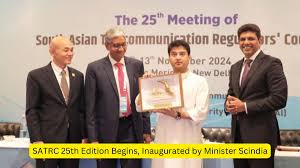
SATRC 25th Edition Begins, Inaugurated by Minister Scindia
The 25th edition of the South Asia Telecommunications Regulators’ Council (SATRC) conference has officially commenced, with the inaugural ceremony being led by India’s Union Minister for Civil Aviation, Jyotiraditya Scindia. This annual event is significant as it brings together telecommunications regulators and industry stakeholders from across South Asia to discuss important issues related to the region’s telecommunications sector. The main goal of this conference is to promote collaboration and foster a deeper understanding of the regulatory landscape across nations, creating an opportunity for growth and innovation.
Objectives of SATRC 2024
The SATRC 2024 edition aims to address key challenges in the telecommunications industry, such as digital transformation, regulatory frameworks, cybersecurity, and 5G rollout. The conference also focuses on ensuring equitable access to telecommunications services, bridging the digital divide, and enhancing regional cooperation for sustainable development in South Asia.
Importance of the 25th Edition
This year’s edition is especially crucial as the region experiences rapid technological advancements. The SATRC conference will provide insights into policy-making, offer solutions to pressing issues, and explore ways to create a more inclusive digital future for South Asia. Minister Scindia’s presence and remarks underscore India’s commitment to leading the dialogue on telecommunications in the region, given the country’s growing role as a technology hub.

Why this News is Important
Enhancing Regional Cooperation in Telecommunications
The 25th edition of SATRC, inaugurated by Minister Scindia, underscores the growing importance of regional cooperation in the field of telecommunications. South Asia, with its diverse economies and evolving digital landscapes, faces a unique set of challenges and opportunities. By bringing together key regulators and industry leaders, the conference serves as a platform to align policies and share best practices, ensuring that countries in the region can collectively advance towards digital inclusion.
Focus on Digital Transformation and 5G Development
As digital transformation accelerates, the SATRC conference offers a critical opportunity to discuss the regulatory frameworks necessary for supporting 5G development and the future of mobile internet. With 5G expected to revolutionize industries and create new opportunities, the conference provides a space for regulators to collaborate on the challenges of deployment, cybersecurity concerns, and data protection laws, which are paramount to the successful rollout of this technology.
Strengthening India’s Leadership Role
The event highlights India’s growing leadership in the global telecommunications space. The country has made remarkable strides in adopting innovative technologies, and hosting such an influential event places India at the center of discussions surrounding telecom policy, development, and regulation. By advocating for shared resources and effective regulatory approaches, India aims to drive South Asia towards a more connected and competitive future.
Historical Context
The Birth of SATRC
The South Asia Telecommunications Regulators’ Council (SATRC) was established in the late 1990s to address the unique challenges of the telecommunications industry in South Asia. The council aims to foster collaboration and information-sharing among regulators across member countries, which include Afghanistan, Bangladesh, Bhutan, India, Maldives, Nepal, Pakistan, and Sri Lanka. Over the years, SATRC has grown in influence, becoming an essential forum for discussing regulatory policies and promoting best practices in the region.
Evolution of South Asia’s Telecommunications Sector
South Asia’s telecommunications sector has evolved significantly since SATRC’s inception. While early years were focused on introducing basic telecommunications infrastructure, the last decade has seen rapid growth in mobile penetration, internet access, and broadband services. However, challenges like spectrum allocation, cybersecurity, and digital inclusion remain. SATRC’s role in guiding regulatory frameworks and addressing these issues has been instrumental in shaping the current landscape of the industry.
Key Takeaways from SATRC 25th Edition Inauguration
| S.No. | Key Takeaway |
|---|---|
| 1 | The 25th edition of SATRC was inaugurated by Union Minister Jyotiraditya Scindia. |
| 2 | SATRC aims to address key issues like digital transformation, regulatory frameworks, cybersecurity, and 5G rollout in South Asia. |
| 3 | The conference focuses on promoting regional cooperation and equitable access to telecom services. |
| 4 | India’s leadership role in regional telecommunications is reinforced through hosting this influential event. |
| 5 | The conference provides a platform for sharing best practices and creating solutions to the region’s digital challenges. |
Important FAQs for Students from this News
1. What is SATRC?
The South Asia Telecommunications Regulators’ Council (SATRC) is a platform for telecommunications regulators from South Asian countries to collaborate, share best practices, and address the regulatory challenges in the telecommunications sector.
2. Who inaugurated the 25th edition of SATRC?
The 25th edition of SATRC was inaugurated by Jyotiraditya Scindia, the Union Minister for Civil Aviation of India.
3. What is the focus of the 25th edition of SATRC?
The primary focus of SATRC 2024 is on digital transformation, the regulatory frameworks for 5G rollout, cybersecurity, and ensuring equitable access to telecommunications services across South Asia.
4. Why is the 25th edition of SATRC significant?
This edition marks a milestone for SATRC and South Asia’s telecommunications sector, as it addresses crucial issues such as digital inclusion, 5G development, and regional cooperation for improving the digital infrastructure in the region.
5. Which countries participate in SATRC?
SATRC includes telecommunications regulators from South Asian countries, including Afghanistan, Bangladesh, Bhutan, India, Maldives, Nepal, Pakistan, and Sri Lanka.
Some Important Current Affairs Links

